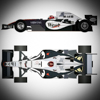
F1 car setup

Post anything that doesn't belong in any other forum, including gaming and topics unrelated to motorsport. Site specific discussions should go in the site feedback forum.

Post Thu May 08, 2008 6:55 pm

mep wrote:Has anyone some links where the reading of friction graphs is explained?


Jersey Tom´s explanation is very good.
Maybe you didn´t understood the explanation I posted, then check this links:

http://www.auto-ware.com/setup/fc1.htm
http://www.damdrivingschool.com/pages/FrictionCircle/FrictionCircle.html
"You need great passion, because everything you do with great pleasure, you do well." -Juan Manuel Fangio

"I have no idols. I admire work, dedication and competence." -Ayrton Senna
Belatti
 
Joined: 10 Jul 2007
Location: Argentina

Post Fri May 09, 2008 2:37 pm

Thanks for the pdf Jersey Tom , very informative.

plus I never thought to highlight the friction graph on a per-corner basis. Thanks.
kensaundm31
 
Joined: 1 Apr 2008

Post Tue Jun 10, 2008 3:14 am

I'm no expert, but at least know how to read telemetry.

I've been trying to measure downforce through straight line testing and suspension travel analysis. I'm trying to determine the right approach to achive this (if possible). I play Grand Prix 4, out of the box, no mod's installed other than official patches.

First, I tweaked the physics to have 50-50 weight distribution and then fitted front and rear springs with the same stiffness (800 lbs/in or 14.3 kg/mm if you like).

When stopped, I got 30 and 70mm of travel on front and rear suspensions respectively. With maximum wing settings, I set the car up to slightly rub the plank on the ground (front and rear) when reaching top speed (309km/h at Indianapolis). Then telemtry says I have 3 and 34mm of remaining suspension travel (front and rear at 309km/h).

In other words, I can say the front spring compressed 27mm and the rear compressed 36mm, which means:

14.3 * 27 = 386 kg of front downforce

14.3 * 36 = 515 kg of rear downforce

Those figures are obviously wrong and/or I completely missed the right approach.

Any thoughts?
mariof1
 
Joined: 10 Feb 2008

Post Tue Jun 10, 2008 5:54 pm

Do you know how is suspension modeled in GP4?

I´m sure there is no 3rd spring (cause you cant setup it)

Can be that torsion bar "works" in straight line like a non-independant suspension adding resistence to the springs?

It should only add compresion resistence when turning, not in straight line. If it is adding, you downforce figures would be increased.
"You need great passion, because everything you do with great pleasure, you do well." -Juan Manuel Fangio

"I have no idols. I admire work, dedication and competence." -Ayrton Senna
Belatti
 
Joined: 10 Jul 2007
Location: Argentina

Post Tue Jun 10, 2008 8:37 pm

mariof1 wrote:I'm no expert, but at least know how to read telemetry.

I've been trying to measure downforce through straight line testing and suspension travel analysis. I'm trying to determine the right approach to achive this (if possible). I play Grand Prix 4, out of the box, no mod's installed other than official patches.

First, I tweaked the physics to have 50-50 weight distribution and then fitted front and rear springs with the same stiffness (800 lbs/in or 14.3 kg/mm if you like).

When stopped, I got 30 and 70mm of travel on front and rear suspensions respectively. With maximum wing settings, I set the car up to slightly rub the plank on the ground (front and rear) when reaching top speed (309km/h at Indianapolis). Then telemtry says I have 3 and 34mm of remaining suspension travel (front and rear at 309km/h).

In other words, I can say the front spring compressed 27mm and the rear compressed 36mm, which means:

14.3 * 27 = 386 kg of front downforce

14.3 * 36 = 515 kg of rear downforce

Those figures are obviously wrong and/or I completely missed the right approach.

Any thoughts?


My questions would be..

(a) Why do you want to measure downforce?

(b) Why did you go with a 50/50 mass distribution? For a traction limited RWD car my feeling is you want more mass biased toward the rear. How much is hard to say. But it will give you better traction out of the slow speed corners leading to the long straights (very important) and will give you better braking ability (important for overtaking). Given that the rear tires on said cars tend to be bigger anyway, even with more rear mass you can still balance the car out fairly neutral.
Grip is a four letter word.

2 is the new #1.
Jersey Tom
 
Joined: 29 May 2006
Location: Huntersville, NC

Post Tue Jun 10, 2008 10:04 pm

Belatti,
Yes, there's no 3rd spring in GP4, which is sometimes annoying - particulary when I'm forced to run on bump rubbers instead to setting up the 3rd spring. I haven't checked any anti-roll bars influence. As you said, they should not do anything in straight line, but I'll have a look at it.

Jersey Tom,
I want to measure downforce by analysing available telemetry data just out of curiosity and to have a better understanding of the car's dynamics. It would also helpe me in some hobbies/projetcs, but nothing really serious. I chose a 50-50 weight distribution just to offset car's weight effects on the springs when stopped or when traveling at top (and constant) speed.

:arrow: Anyway, I tried to sum spring compression to ride height variation and I got aprox 2202kg of downforce, exactly the figure of the game's physics engine. Although I've got the answer I wanted, I can't see why I had to sum spring compression and ride height variation (top speed RH - stopped RH). Perhaps the suspension guys here could clarify this issue :?:
mariof1
 
Joined: 10 Feb 2008

Post Fri Jun 13, 2008 3:41 pm

mariof1 wrote: :arrow: Anyway, I tried to sum spring compression to ride height variation and I got aprox 2202kg of downforce, exactly the figure of the game's physics engine. Although I've got the answer I wanted, I can't see why I had to sum spring compression and ride height variation (top speed RH - stopped RH). Perhaps the suspension guys here could clarify this issue :?:


In a sense, springs work like capacitors (condensadores in spanish). Springs "in parallel" are equivalent to a spring with k=sum_i k_i and "serial springs" (one spring after another) are equivalent to a spring of 1/k=sum_i 1/k_i. In this case, you have two springs per axis (one per wheel ;)) in a parallel set up, so you have to add their constants. You can also see this as if you calculated the downforce per wheel.

EDIT: Now that I'm on it, does anybody have a clue of usual values of natural frequencies in road cars or sports cars? I ask because I've got no clue of typical values of springs and dampers. I once heard that road cars (sporty) have a frequency of around 1 Hz, and mario's GP4 F1 has f~4.8 Hz, but I'd love to hear an estimate from people with hands-on knowledge.
I am not amazed by F1 cars in Monaco. I want to see them driving in the A8 highway: Variable radius corners, negative banking, and extreme narrowings that Tilke has never dreamed off. Oh, yes, and "beautiful" weather tops it all.

"Prediction is very difficult, especially about the future." Niels Bohr
Miguel
 
Joined: 17 Apr 2008
Location: San Sebastian (Spain)

Post Fri Jun 13, 2008 11:23 pm

Suspension designers use to approach road cars to 1Hz natural frequencies cause it´s the frequency for a human being while walking, so people feels comfortable while traveling and don´t get sick. In ships you can´t control natural frequency easily and you see what happen to somo people :sick:

Racing cars has the natural frequency that suits best for the kind of surface/track/circuit were it races, but I don´t know well in wich range it does vary :oops:

However it´s not that hard to calculate, but got not enough time (Uni is pressing hard on me nowadays :mrgreen: )
"You need great passion, because everything you do with great pleasure, you do well." -Juan Manuel Fangio

"I have no idols. I admire work, dedication and competence." -Ayrton Senna
Belatti
 
Joined: 10 Jul 2007
Location: Argentina

Post Sat Jun 14, 2008 1:57 am

you are also not taking into account of the tire spring....assuming if there is such a figure in GP4's engine...
RacingManiac
 
Joined: 22 Nov 2004

Post Sat Jun 14, 2008 1:01 pm

It's long time ago I last time played GP4
but as far as I can remember are the springs in the game far
away from beeing linear.

Especially if you use packers.
In GP4 they have a very big influence on the cars behaviour.
It's other in F1 challenge where the effect of the packers is much smaller.
You should also thake the effect of the dampers into account.
Very hard dampers will propably make your spring stiffer.

One interesting thing is that in f1 Challenge you can adjust tyre pressure.
But I wonder if this has a big influence on the spring rate of the whole car.
mep
 
Joined: 11 Oct 2003
Location: Germany

Previous

Return to Off topic chat

Who is online

Users browsing this forum: CCBot [Bot] and 3 guests