Re: 2 stroke thread (with occasional F1 relevance!)
Posted: 13 Feb 2017, 19:07
Hello J.A.W.
You write:
“I'd also note that this thread has strayed off the 2T topic basis lately.”
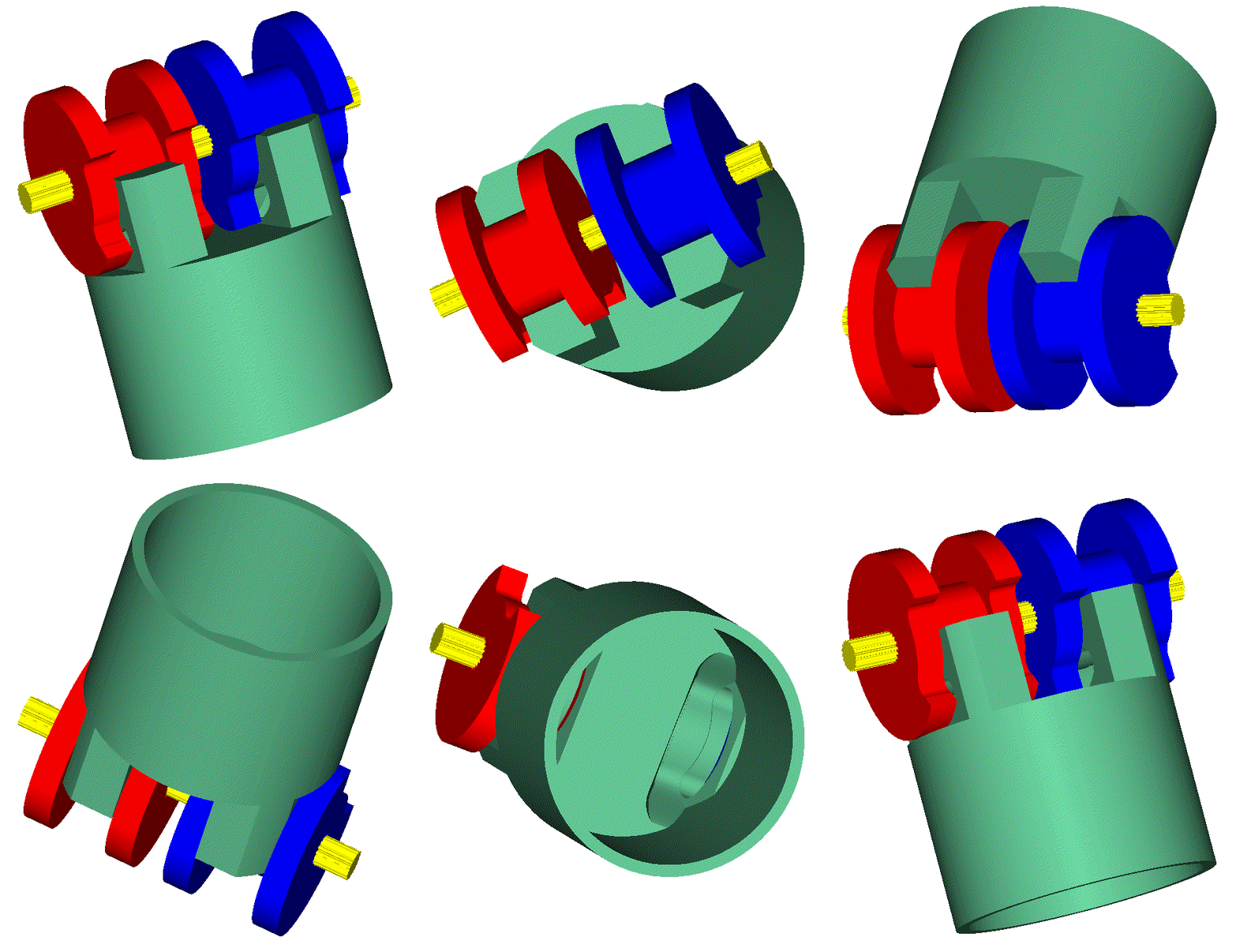
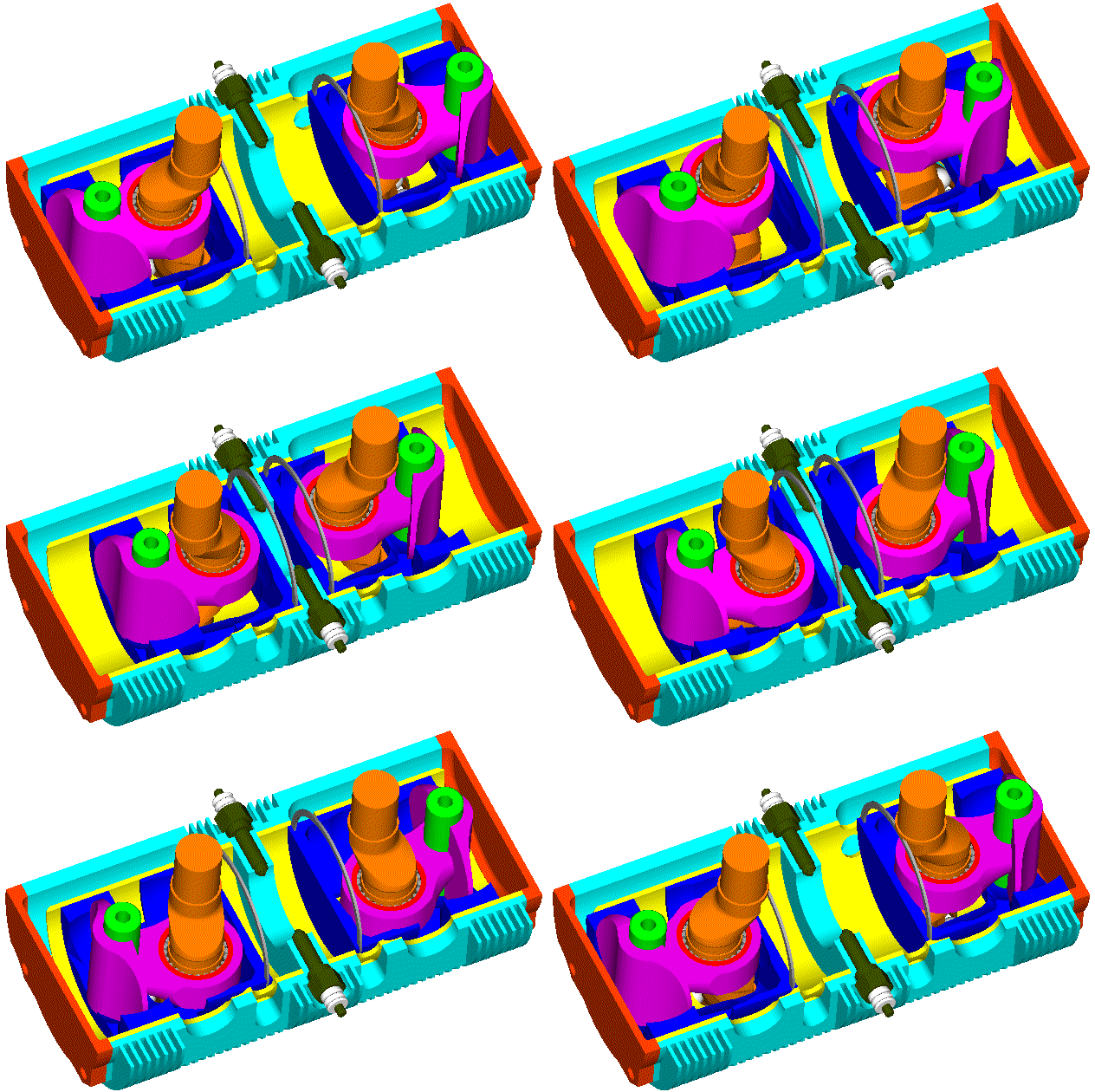
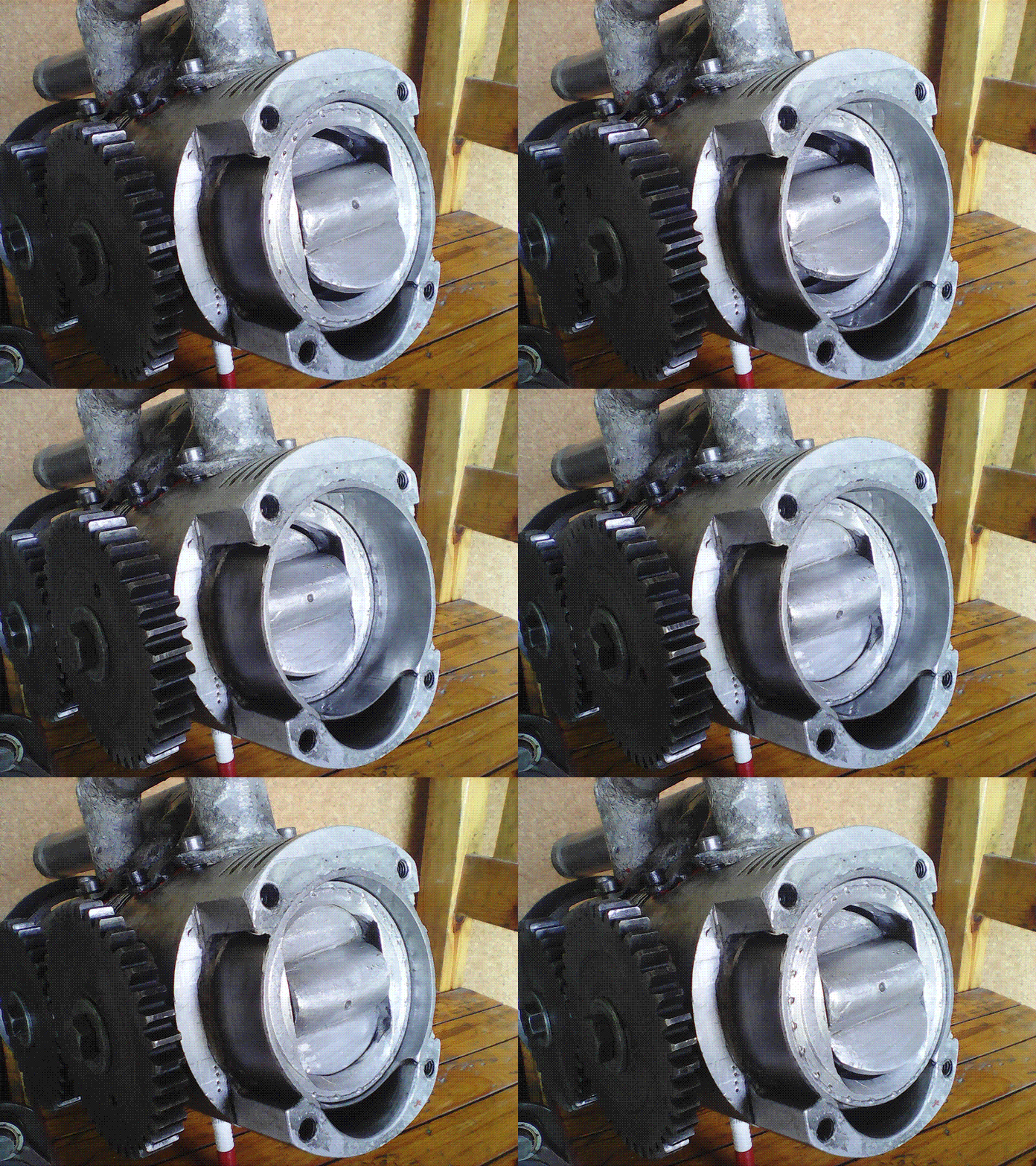
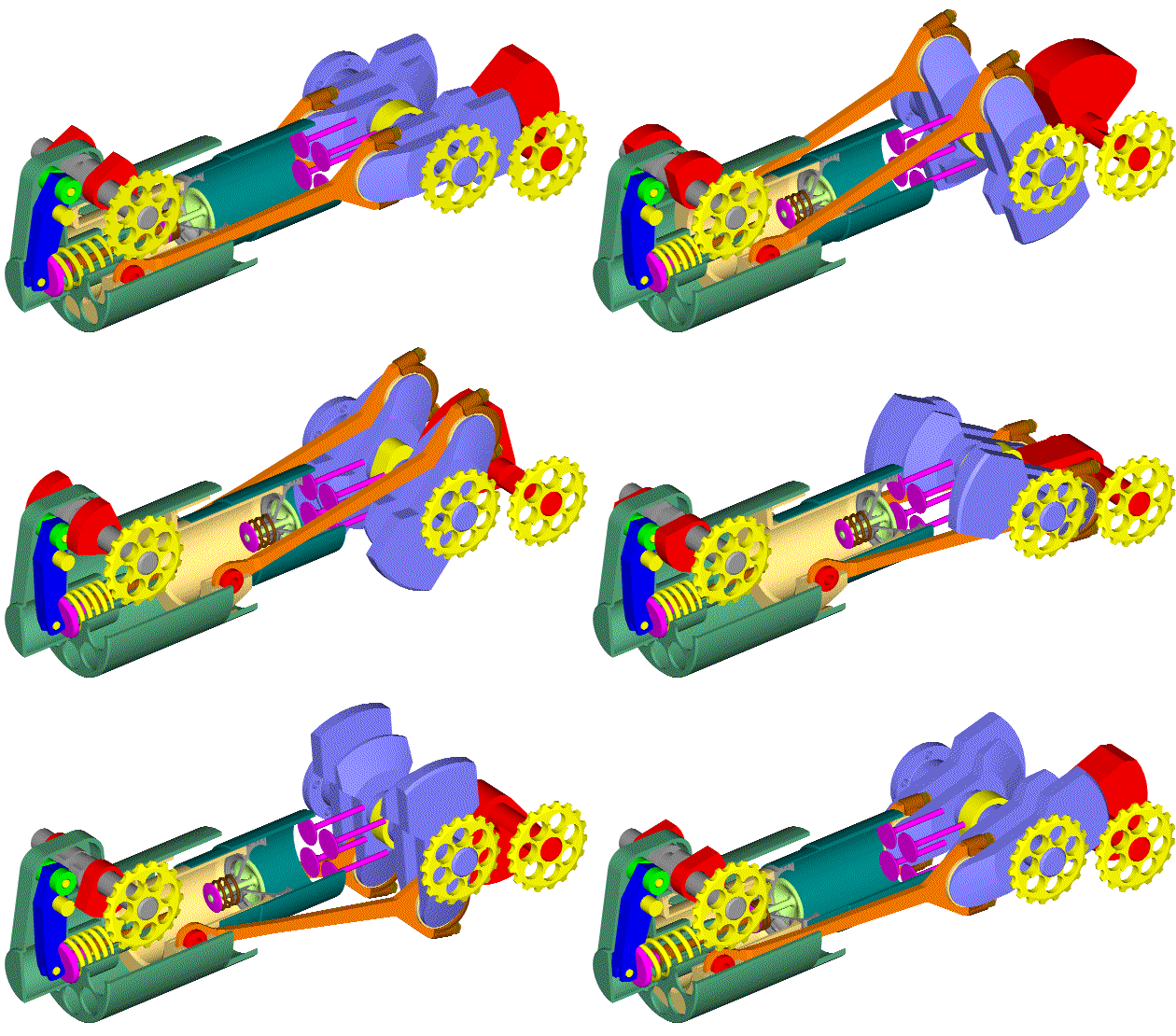
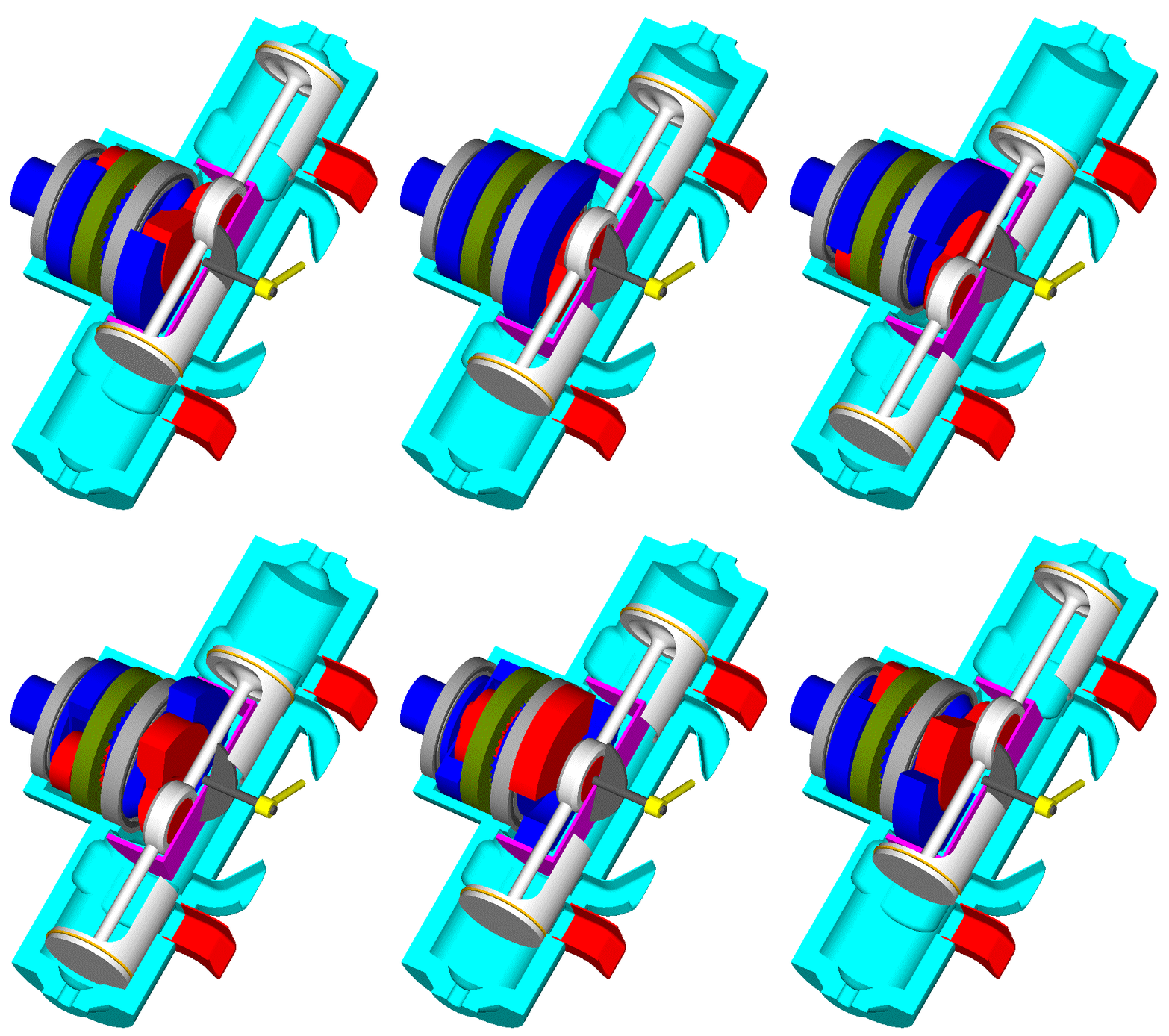
Here is an intriguing 2-stroke, the PatTwo:
(more at http://www.pattakon.com/pattakonPatTwo.htm )
It combines several unconventional characteristics.
For instance, it minimizes the pumping loss at light loads (as in an Atkinson / Miller 4-stroke).
For instance, it eliminates the thrust load between the piston skirt and the cylinder liner.
For instance, it has a 4-stroke lubrication inside the crankcase.
For instance, the double acting piston performs a pure sinusoidal (harmonic) reciprocation: the position X of the piston can be described as : X = (S/2)*sin(f), wherein S is the piston stroke and f is the rotation angle of the crankshaft.
For instance it is perfectly balanced (as perfectly as the Wankel rotary engine, as perfectly as the best V12 engines).
Unconventional is also the control over the load:
When the throttle valve at the middle of the cylinder (the dark, with the yellow lever) is fully open, the engine idles.
When it is fully closed, the engine runs at full load.
In case of tuned-exhaust things get even more interesting: the peak power can be obtained with the throttle valve fully open. Idle with fully open throttle, peak power with fully open throttle. . .
Isn’t it interesting?
Think how.
Thanks
Manolis Pattakos
You write:
“I'd also note that this thread has strayed off the 2T topic basis lately.”
Here is an intriguing 2-stroke, the PatTwo:
(more at http://www.pattakon.com/pattakonPatTwo.htm )
It combines several unconventional characteristics.
For instance, it minimizes the pumping loss at light loads (as in an Atkinson / Miller 4-stroke).
For instance, it eliminates the thrust load between the piston skirt and the cylinder liner.
For instance, it has a 4-stroke lubrication inside the crankcase.
For instance, the double acting piston performs a pure sinusoidal (harmonic) reciprocation: the position X of the piston can be described as : X = (S/2)*sin(f), wherein S is the piston stroke and f is the rotation angle of the crankshaft.
For instance it is perfectly balanced (as perfectly as the Wankel rotary engine, as perfectly as the best V12 engines).
Unconventional is also the control over the load:
When the throttle valve at the middle of the cylinder (the dark, with the yellow lever) is fully open, the engine idles.
When it is fully closed, the engine runs at full load.
In case of tuned-exhaust things get even more interesting: the peak power can be obtained with the throttle valve fully open. Idle with fully open throttle, peak power with fully open throttle. . .
Isn’t it interesting?
Think how.
Thanks
Manolis Pattakos