Page 92 of 114
Re: 2017-2020 Aerodynamic Technical Regulations
Posted: 04 Jul 2018, 19:31
by PhillipM
That was the original point behind the narrower wings to start with, we're going to go back to front wing carnage and loads of punctures again.
Re: 2017-2020 Aerodynamic Technical Regulations
Posted: 04 Jul 2018, 19:44
by godlameroso
PhillipM wrote: ↑04 Jul 2018, 19:31
That was the original point behind the narrower wings to start with, we're going to go back to front wing carnage and loads of punctures again.
More unpredictability I guess.
Re: 2017-2020 Aerodynamic Technical Regulations
Posted: 04 Jul 2018, 20:05
by Zynerji
I would like to see the effects of combining the front wing, and the front lower wishbones. I think someone spoke about that on the forums a long time ago (reading old threads), and I thought that would be a great way to avoid the wings being clipped in close quarters...
Re: 2017-2020 Aerodynamic Technical Regulations
Posted: 05 Jul 2018, 05:16
by roon
Zynerji wrote: ↑04 Jul 2018, 20:05
I would like to see the effects of combining the front wing, and the front lower wishbones. I think someone spoke about that on the forums a long time ago (reading old threads), and I thought that would be a great way to avoid the wings being clipped in close quarters...
I toyed around with a similar idea a few years back. I was trying to think of a way to eliminate the front and rear wings, to get the cars looking more like pre-aero era F1 cars. Cigar chassis and all that.
It presents the interesting phenomenon of splitting downforce between the sprung and unsprung masses. The loads on the heave spring would be reduced. If both wishbones were employed, there would a biplane arrangement per corner.
Re: 2017-2020 Aerodynamic Technical Regulations
Posted: 05 Jul 2018, 10:21
by Just_a_fan
Talking of suspension, how about allowing the use of standard active suspension? Use FIA sensors to ensure minimum ride heights are maintained during the race and then, when a car is close to one ahead e.g. "within DRS range", allow the following car to lower on its suspension. This would give more downforce to compensate for that lost in the wake of the preceding car. Each car could have this lowering tuned to its particular aero deficit when following, perhaps.
No idea if such a scheme would work but on initial thought it might do. We would also have the possibility of the cars have a qualifying mode that ran them at the aggressive high downforce setting for a whole lap. Silly-fast lap times! Yay!

Anyway, it's just a thought.
Re: 2017-2020 Aerodynamic Technical Regulations
Posted: 05 Jul 2018, 10:35
by djos
I like it, I'd love to see active suspension back - imo it'd save teams a lot of money in suspension damper and spring development!
Btw iirc Williams used to raise the nose of the car to lower the entire cars wing angle of attack and lower drag. Wouldn't it be fun to see that return?

Re: 2017-2020 Aerodynamic Technical Regulations
Posted: 27 Jul 2018, 18:38
by TheFluffy
Hi everyone, I am a noob in terms of aerodynamics (only starting my degree next year) so please don't criticise my lack of knowledge.
My question is I am starting to hear lots of talk (especially from Mclaren and Sauber) about how big the front wing (and slight bargeboard) changes next year are huge. I get that every part of the air that flows through from the car starts from the front wing however isn't the "Y250" vortices that are generated from the tip of the front wing that creates the flow structure further downstream whereas other features on the front wing such as the tunnelling design and front wing endplates to create an outwash effect to push the air outwards to minimise drag? Because if this is so, surely teams can quickly copy rival's teams best intepretation of the "outwash" effect as those structures don't play a huge role on the flow structure further down the car. Please whoever is an engineering guru explain how and where I am wrong with my understanding. Thanks!
Re: 2017-2020 Aerodynamic Technical Regulations
Posted: 28 Jul 2018, 04:55
by FPV GTHO
The Y250 vortex isnt formed at the wing tips, its where the standard central section of the front wing meets the section open to the teams to design. It gets its name from the 500mm wide central section, which has to be 250mm from the Y axis as written in the rules.
The vortices that are coming from the current endplates, to which im not aware of any nickname given to them, will likely have a much different relationship with the bargeboards than current. Even if new solutions here are easily copued, its still somewhere that teams will get a headstart on others. I think also looking at how much the Red Bulls changed there over the course of 2017, its unlikely to only have a small effect on the overall aerodynamic platform.
Re: 2017-2020 Aerodynamic Technical Regulations
Posted: 30 Jul 2018, 12:37
by MtthsMlw
Re: McLaren MCL33
Posted: 30 Jul 2018, 12:56
by mclaren111
ALO_Power wrote: ↑29 Jul 2018, 21:27
charliesmithhd wrote: ↑29 Jul 2018, 21:04
M840TR wrote: ↑29 Jul 2018, 20:29
Is it just me who's excited about the new front wing? It has no outwash tunnels. That's a big deal! No one has come up with such an innovative idea for a FW since maybe 2009. Good job by Mclaren aero dept. The car as a whole might be slow but it's littered with clever ideas.
What is the benefit of this type of wing?
Maybe 2019-ready concept?
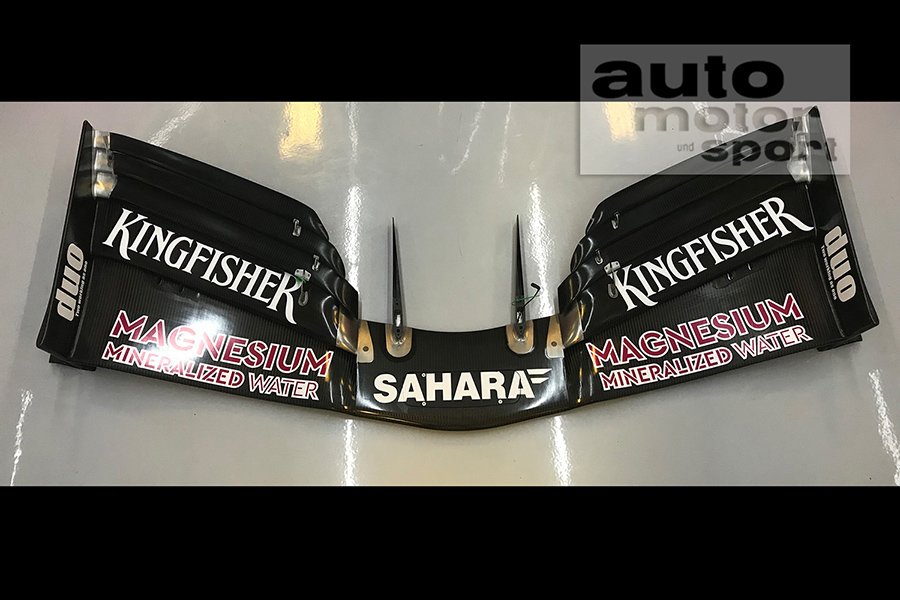
FI 2019 FW.
Very "plain / simple looking"
Re: McLaren MCL33
Posted: 30 Jul 2018, 13:00
by PhillipM
I'll eat my hat if the FW's actually end up looking like that. Outer tunnels will still work for lofting airflow over the tyre.
Re: 2017-2020 Aerodynamic Technical Regulations
Posted: 30 Jul 2018, 13:06
by jjn9128
MtthsMlw wrote: ↑30 Jul 2018, 12:37
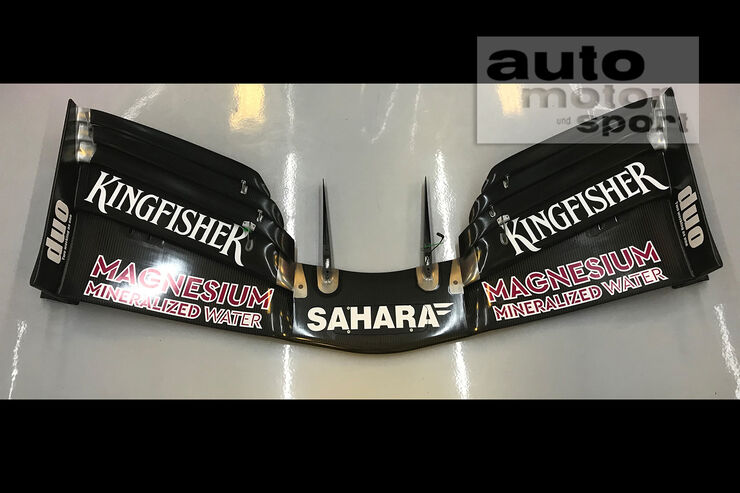
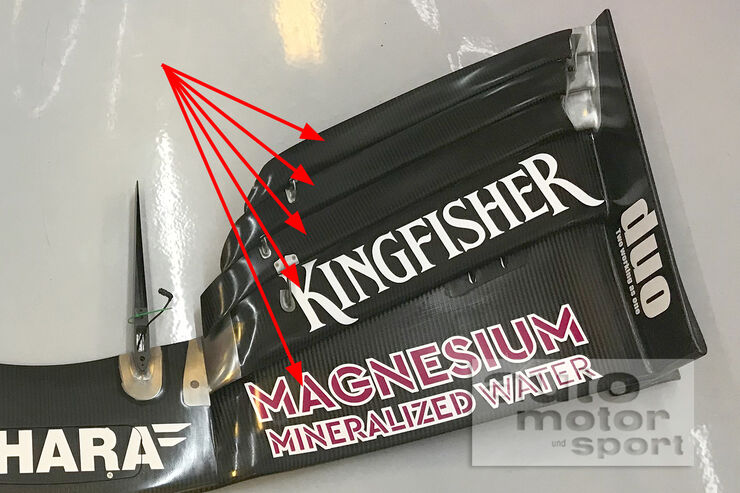
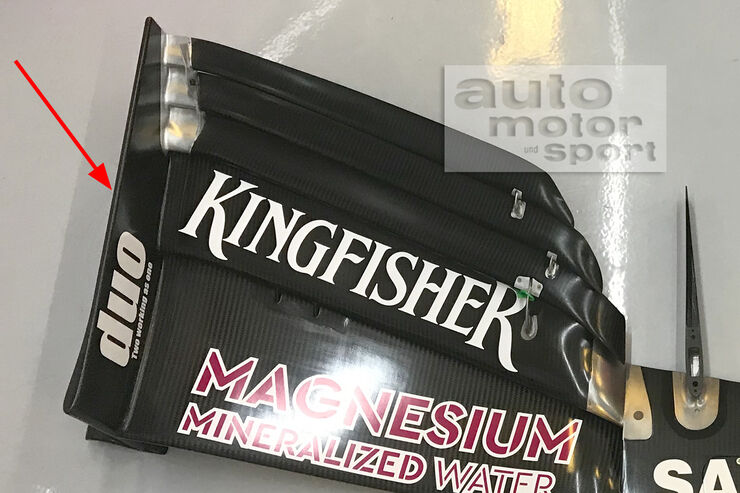
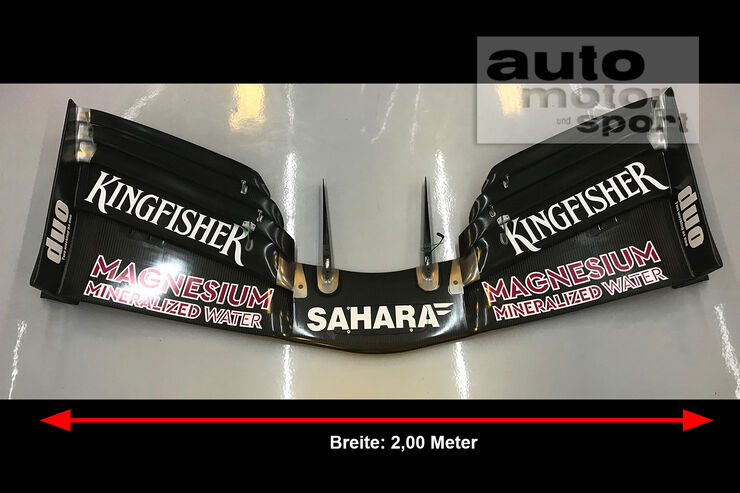
Force India 2019 prototype FW.
It's worth pointing out even Force India won't be playing their full hand here. Interesting though - wonder how much is FIA spec and how much is their interpretation.
Re: 2017-2020 Aerodynamic Technical Regulations
Posted: 30 Jul 2018, 13:15
by MtthsMlw
jjn9128 wrote: ↑30 Jul 2018, 13:06
It's worth pointing out even Force India won't be playing their full hand here. Interesting though - wonder how much is FIA spec and how much is their interpretation.
They plan to run this FW in the post Hungary GP test. I guess this says a lot.
I'm not sure how specific the rules are regarding the ''tunnel'' we see on todays FW.
Re: McLaren MCL33
Posted: 30 Jul 2018, 14:05
by Zynerji
The teams will still get them to do what they want.
Have we seen the actual rule book on these yet? Holes in the endplates where the upper elements can poke through would still create outwash, and unless the upper elements are given a flatness specification, they will still loft as PhillipM states.
Re: 2017-2020 Aerodynamic Technical Regulations
Posted: 30 Jul 2018, 15:24
by jjn9128
MtthsMlw wrote: ↑30 Jul 2018, 13:15
jjn9128 wrote: ↑30 Jul 2018, 13:06
It's worth pointing out even Force India won't be playing their full hand here. Interesting though - wonder how much is FIA spec and how much is their interpretation.
They plan to run this FW in the post Hungary GP test. I guess this says a lot.
I'm not sure how specific the rules are regarding the ''tunnel'' we see on todays FW.
We'll see - FIA haven't published online yet - I'm not even sure teams have the definitive wording. From what I understand the wing's have to join the endplate on the horizontal, i.e. perpendicular to the vertical endfence, but whether than allows them to make a cone/tunnel inside the endfence... I dunno...