Page 2 of 3
Re: Super circulation: possibility to gain downforce
Posted: 05 Oct 2011, 09:45
by Sonic59
PNSD wrote:Has your analysis primarily looked at the flow injection at the trailing edge?
I suppose you already know a great deal of work has been conducted on using flow injection, adding momentum to the boundary layer? Of course these studies have primarily focused on an injection point around 30% aerofoil chords, or around the transition point.
Such things used to be common with A/C however it was weight penalties that killed blown devices such as this.
Well, my analysis is only to visualize effect. Its not for calculating exact value. In USSR in the late 80s has been done a huge work about supercirculation. Before USSR disappeared supercirculation was one of the basic principles of 5th generation jet fighter. MiG 1.44 is a prototype of new gen jet fighter that supposed to be designed:
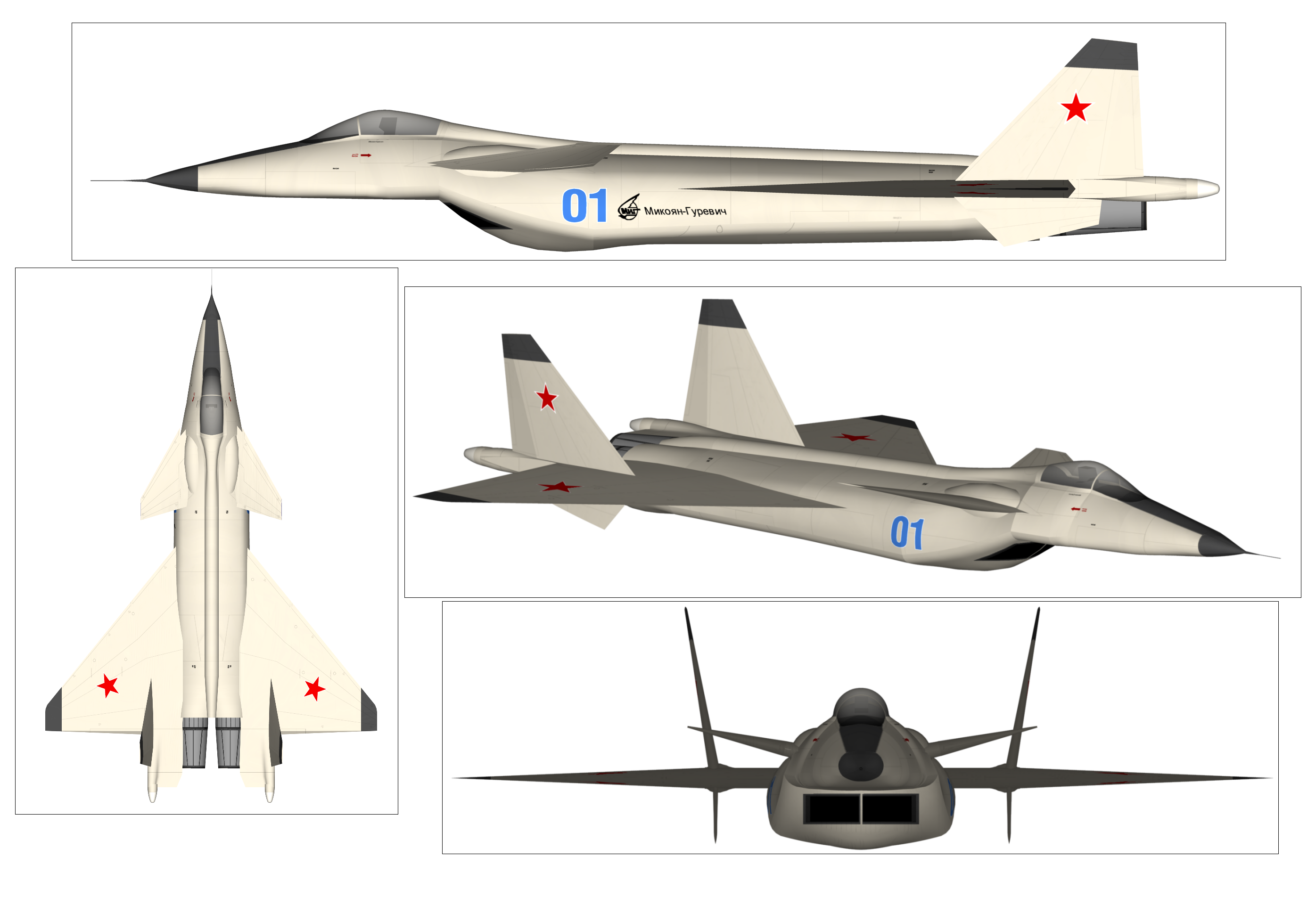
It supposed to have a flat nozzle which will create supercurculation effect over the fuselage. However due to USSR collapse the work was not finished.
There was also experimental aircraft named
"Photon":
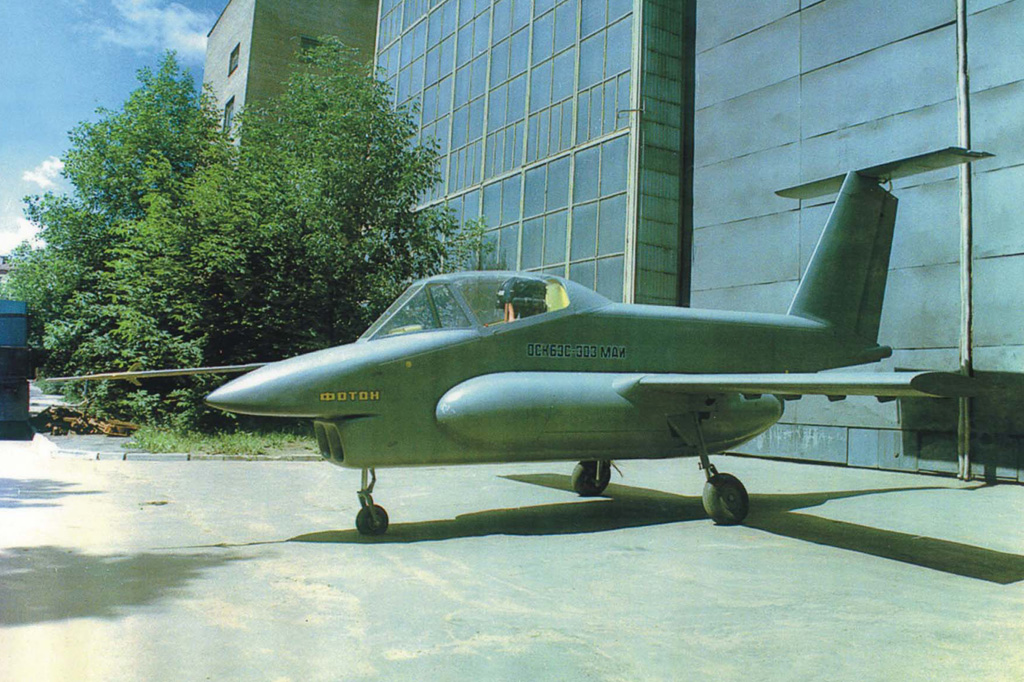
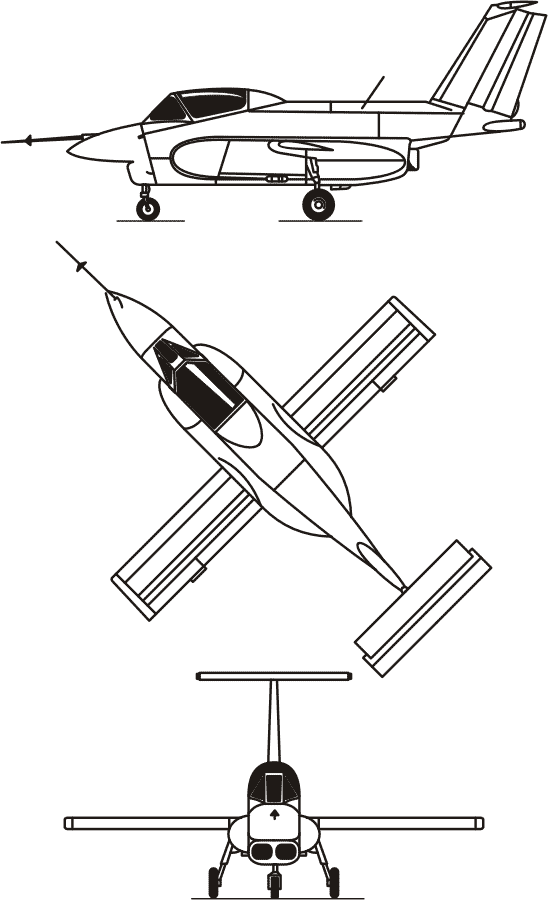
"Photon" used supercirculation effect exactly the same way as I described above. Thousands of hours were spend in TsAGI wind tunnel studying "Photon" aerodynamics. In was proved that "Photon" max Cl was 3.6 without using flaps/slats. If we dont use flaps/slats we can save a lot of weight. From the other side using supercirculation will significantly decrease wing area wich will lead to saving weight too. As u can see "Photon" has a very small wing, although it has short take off distance.
Re: Super circulation: possibility to gain downforce
Posted: 05 Oct 2011, 10:13
by shelly
With clever engine mapping the genie of aero exhuast use is ut of the bottle, it will be very difficult to put it back in. I think next year, in spite of the tighter regulations, we will see new methods and attempts. I think supercirculation is one; but I also think that insted of simplyblowing the beam wing, the exhaust will be pointed to interct with the beamwing tip vortices the same way they are interacting with the floor tip vortices now.
Re: Super circulation: possibility to gain downforce
Posted: 05 Oct 2011, 14:09
by munudeges
A side-effect that exhaust mappings have had that isn't obvious is the effect they have had on the air box in a corner when the driver is normally off the throttle. It's now much easier to get predictable flow through the airbox and to make the rear wing work better in corners.
Shelly is right though. Wherever you put the exhausts they have always had a massive effect on the aerodynamics and those that have a thorough understanding of what is happening around them will always have an advantage. The only difference is that with them being further away from the rear of the car it's going to take some careful thinking about how to use them. Renault found that out this year.
Re: Super circulation: possibility to gain downforce
Posted: 05 Oct 2011, 19:51
by Sonic59
A little update. V = 30m/s, AoA = 20deg, Cl = 4.1, Stream speed = 300m/s, Stream angle = 83deg.

Re: Super circulation: possibility to gain downforce
Posted: 05 Oct 2011, 21:17
by volarchico
Could you show a velocity vector plot (curiosity)?
That is a pretty extreme angle!

Would the flow really stay "attached" around such an extreme turn angle?
Re: Super circulation: possibility to gain downforce
Posted: 05 Oct 2011, 21:23
by Sonic59
volarchico wrote:Could you show a velocity vector plot (curiosity)?
That is a pretty extreme angle!
Would the flow really stay "attached" around such an extreme turn angle?
Yes, tho flow still attached.
Re: Super circulation: possibility to gain downforce
Posted: 05 Oct 2011, 21:55
by volarchico
I guess then that begs the engineering question "how high can it go?" That's a very interesting result. I'd still be interested in a velocity field image if possible. And L/D vs AoA plot? I might be pushing my luck on that one...
Re: Super circulation: possibility to gain downforce
Posted: 05 Oct 2011, 22:29
by Sonic59
volarchico wrote:I guess then that begs the engineering question "how high can it go?" That's a very interesting result. I'd still be interested in a velocity field image if possible. And L/D vs AoA plot? I might be pushing my luck on that one...
Well, one calculation takes 20minutes, to make L/D plot I need at least 10 points, so it will take about 4 hours. If we want different stream positions it will take 10 times more - about 40 hours. Sorry, but I dont have so much free time right now. If u wish u can calculate drag polar(based on parabolic equation, at 20deg L/D = 3, Cl(20) = 4.1, Cd(0) = 0.01).
Here is velocity field:

Re: Super circulation: possibility to gain downforce
Posted: 05 Oct 2011, 22:40
by volarchico
Thanks for that! I knew I was pushing my luck on the L/D plot, but I figured it wouldn't hurt to ask...the worst that would happen is you would say "no".

Re: Super circulation: possibility to gain downforce
Posted: 05 Oct 2011, 23:06
by Jeffsvilleusa
I recall during the Silverstone off-throttle exhaust debacle, Ross Brawn or one of the other engineers said that this type of exhaust blowing had been utilized for years and years, so the sudden ban was a little perplexing. Anyway, if I remember correctly, the engineer said the reason exhausts were periscopes in the first place was to blow the rear wing, possibly for the effect the OP is talking about.
Re: Super circulation: possibility to gain downforce
Posted: 06 Oct 2011, 01:48
by marekk
Sonic59:
Quite interesting results, i'm curious how will this circulation work in proximity to the ground. Do you happen to have some simulations runs (or make one) with solid surface 4-5 chord lenghts under the wing ?
Re: Super circulation: possibility to gain downforce
Posted: 06 Oct 2011, 18:27
by volarchico
marekk wrote:Sonic59:
Quite interesting results, i'm curious how will this circulation work in proximity to the ground. Do you happen to have some simulations runs (or make one) with solid surface 4-5 chord lenghts under the wing ?
If you were to make this more specific to car-racing, wouldn't there need to be quite a few changes? The airfoil is obviously not ideal for a rear wing and of course the "ground plane" would be a moving boundary at the speed of the airflow. Not sure what Sonic is using to solve these but I wouldn't guess your requests would be any easier to implement than my request for L/D plots.
Re: Super circulation: possibility to gain downforce
Posted: 06 Oct 2011, 20:56
by dren
This is pretty cool but I don't see how you could use it with exhaust gasses based on the regulations. You will not be able to blow the exhaust out of the back of any wing.
Re: Super circulation: possibility to gain downforce
Posted: 06 Oct 2011, 22:47
by Sonic59
marekk wrote:Sonic59:
Quite interesting results, i'm curious how will this circulation work in proximity to the ground. Do you happen to have some simulations runs (or make one) with solid surface 4-5 chord lenghts under the wing ?
I'll try to finish such simulation this weekend.
dren wrote:This is pretty cool but I don't see how you could use it with exhaust gasses based on the regulations. You will not be able to blow the exhaust out of the back of any wing.
Diffuser trailing edge.
Re: Super circulation: possibility to gain downforce
Posted: 07 Oct 2011, 08:01
by MIKEY_!
Thought that went out with double diffusers, but i could be wrong.
Anyway the pipes would be too long to the diffuser. Certainly can't blow out of the rear wing (except the centre possibly)