Page 2 of 4
Re: The Chrysler Turbine History
Posted: 24 Feb 2014, 21:23
by zonk
Re: The Chrysler Turbine History
Posted: 24 Feb 2014, 21:37
by rjsa
The only moment a jetliner's turbine gets close to it's optimum operating range is on take off. Any gas turbine operating at partial loads will have it's efficiency greatly damaged.
It's been 25 years from that thermodynaics course (which I aced on my second attempt) but that I very much remeber. Even the shame of once trying to prove in class to the professor that keeping efficiency at partial load was possible.
Re: The Chrysler Turbine History
Posted: 25 Feb 2014, 02:45
by piast9
Nice thread. I didn't realize that the turboshaft engines in the cars were actually running apart from few prototypes of trucks and racing cars. The sound of the Howmet TX at the Spa is amazing and the turbine changes rpms faster than I was expected.
Re: The Chrysler Turbine History
Posted: 25 Feb 2014, 06:37
by DaveKillens
I'm surprised no one has mentioned the Rover/BRM gas turbine racer. It raced at LeMans, and although the results were inconclusive, showed promise.
But I was wondering, with the advances in energy recovery systems, that a gas turbine coupled to a properly tuned energy recover system may be viable. I am of the strong opinion that a gas turbine designed to run at a specific RPM can deliver high efficiency. What if that gas turbine was used solely to generate electricity, and the energy recovery system provided mechanical propulsion?
Re: The Chrysler Turbine History
Posted: 25 Feb 2014, 11:17
by zonk
DaveKillens wrote:I'm surprised no one has mentioned the Rover/BRM gas turbine racer.
Check previous page once more

Re: The Chrysler Turbine History
Posted: 25 Feb 2014, 12:46
by autogyro
DaveKillens wrote:I'm surprised no one has mentioned the Rover/BRM gas turbine racer. It raced at LeMans, and although the results were inconclusive, showed promise.
But I was wondering, with the advances in energy recovery systems, that a gas turbine coupled to a properly tuned energy recover system may be viable. I am of the strong opinion that a gas turbine designed to run at a specific RPM can deliver high efficiency. What if that gas turbine was used solely to generate electricity, and the energy recovery system provided mechanical propulsion?
It is already done, the Jaguar prototype electric car uses two small jet turbines to drive a generating pack to augment range.
There are more efficient generators however.
Re: The Chrysler Turbine History
Posted: 25 Feb 2014, 21:18
by flynfrog
WhiteBlue wrote:richard_leeds wrote:How much of this is down to the decades of R&D for turbo-piston engines compared to the much more immature turbine?
I don't think you can make that claim with good justification. The aero industry has sunk billions into making turbines more efficient.
an aero trubine has very little in common with a very small turbine like Richard is talking about. It would be like comparing a ship diesel to motor bike engine.
One of the issues with developing very small turbines is machining tolerances. What was a .003" tolerance on a larger engine is now a few tenths. Trying to machine a a turbine blade the size of your finger nail on your little finger is pretty challenging.
Re: The Chrysler Turbine History
Posted: 25 Feb 2014, 21:21
by flynfrog
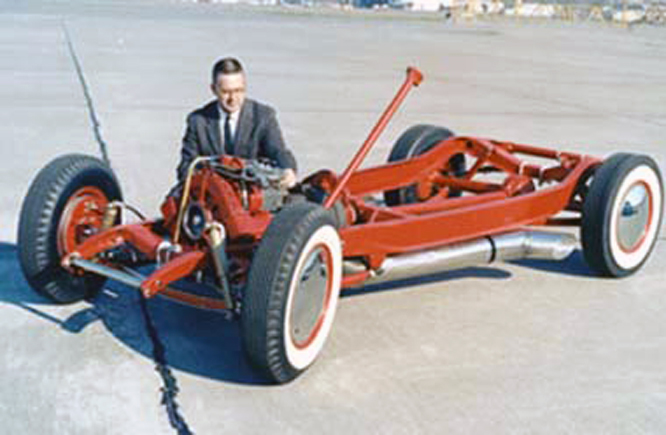
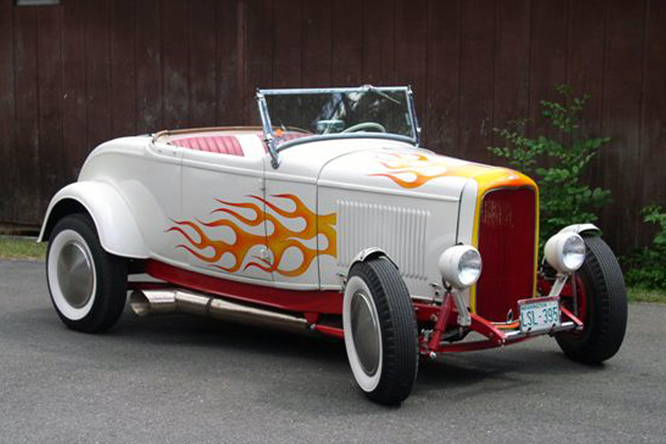
A few more historic cars. How about a ford coupe running a Boeing 502-8
http://www.psychoontyres.co.uk/gas-turb ... -roadster/
Re: The Chrysler Turbine History
Posted: 25 Feb 2014, 21:22
by flynfrog
Re: The Chrysler Turbine History
Posted: 01 Mar 2014, 13:53
by Tommy Cookers
rjsa wrote:The only moment a jetliner's turbine gets close to it's optimum operating range is on take off. Any gas turbine operating at partial loads will have it's efficiency greatly damaged.
Agreed ! ..... though it's a well-kept secret
it explains why although eg 50/60s jet engines were inefficient except in their then-mysterious high altitude cruising mode
the same basic engines eg RR Avon & Spey have for decades been big sellers for 'peaking' power generation
a load of power generated with surprisingly good efficiency, and cheaper than diesels for that power level
btw a 747 etc can fly more efficiently at 1000' altitude on one engine than at the usual 36000' altitude on four engines ?
the actual turbofan benefit is to propulsive 'Froude' efficiency, so unavailable in power generation etc
now electronics technologies have finally gone beyond benchtop novelties of milliWatt power, to the kW and even the MW region
we now can have a modern free-piston engine
its output is electrical energy, by using the pistons for linear generation
the FP engine is cheaper than a turbine, and can be 50% efficient over a wide power range, eg including HCCI mode
Re: The Chrysler Turbine History
Posted: 01 Mar 2014, 21:34
by autogyro
Opposed piston through scavenged two stroke?
Sounds good for my low altitude short to medium range electro/hybrid VTOL Autogyro airliner.
Re: The Chrysler Turbine History
Posted: 01 Mar 2014, 22:02
by Billzilla
Tommy Cookers wrote:btw a 747 etc can fly more efficiently at 1000' altitude on one engine than at the usual 36000' altitude on four engines ?
Very much
no.
Depending upon the weight on the 747 it may not even be able to keep in the air; it'd have to be fairly light. They'll fly on two engine but it's not pleasant and climbing is very slow.
The engines are also pretty good up at the optimum cruising level as they can reconfigure internally, unlike any piston engine. The compressor stator vanes can turn to change the airflow to increase efficiency for any rpm & airflow.
The airframe is also optimised for cruising at around M 0.86 so stooging around at 1,000' is not going to be very efficient for it.
FWIW on the 747 Classic the fuel flow on take-off is around 33 tonnes per hour, cruise burn is around 13 tonnes per hour at the first level when heavy, and when very light it'll drop back to 8 tonnes per hour. The -400's are a bit better than that in the cruise as they have more thrust and so can go a bit higher for the first cruise level and hence a lower fuel flow.
Something like a turboprop twin would work better as with the same power setting you'll go about 2/3's as fast on one engine as you will on two, so disregarding a few variables you'll go further on one engine than two. It has crossed my mind when being a long way from land!
Re: The Chrysler Turbine History
Posted: 02 Mar 2014, 02:05
by autogyro
Billzilla wrote:Tommy Cookers wrote:btw a 747 etc can fly more efficiently at 1000' altitude on one engine than at the usual 36000' altitude on four engines ?
Very much
no.
Depending upon the weight on the 747 it may not even be able to keep in the air; it'd have to be fairly light. They'll fly on two engine but it's not pleasant and climbing is very slow.
The engines are also pretty good up at the optimum cruising level as they can reconfigure internally, unlike any piston engine. The compressor stator vanes can turn to change the airflow to increase efficiency for any rpm & airflow.
The airframe is also optimised for cruising at around M 0.86 so stooging around at 1,000' is not going to be very efficient for it.
FWIW on the 747 Classic the fuel flow on take-off is around 33 tonnes per hour, cruise burn is around 13 tonnes per hour at the first level when heavy, and when very light it'll drop back to 8 tonnes per hour. The -400's are a bit better than that in the cruise as they have more thrust and so can go a bit higher for the first cruise level and hence a lower fuel flow.
Something like a turboprop twin would work better as with the same power setting you'll go about 2/3's as fast on one engine as you will on two, so disregarding a few variables you'll go further on one engine than two. It has crossed my mind when being a long way from land!
The 747 was brought into service with very inefficient and dangerous engines at the risk to passengers solely to save Boeing from bankruptcy. It is said that simply opening the throttles slightly too fast on the early 747 P and W jet engines caused them to blow out the casings.
It was not until the 747 used Rolls Royce engines and the other two American engine suppliers copied Rolls Royce technology (mainly blades) that the aircraft became properly safe.
I served with RAF Nimrods which were a conversion of the Comet 4B airliner faster and far better than the 707 design and with safe far more powerful engines.
A Nimrod could easily loiter on two engines and gain altitude on one. It also had three times the range of any current maritime ASAR ASW aircraft in service today.
Marketing BS is the only thing that allowed inferior designs like Boeing carry on in service.
I think Tommy means fuel efficiency on one engine not airspeed or flight safety.
Variable compressor blade angle will only help a bit.
Re: The Chrysler Turbine History
Posted: 02 Mar 2014, 05:21
by Billzilla
autogyro wrote:The 747 was brought into service with very inefficient and dangerous engines at the risk to passengers solely to save Boeing from bankruptcy. It is said that simply opening the throttles slightly too fast on the early 747 P and W jet engines caused them to blow out the casings.
It was not until the 747 used Rolls Royce engines and the other two American engine suppliers copied Rolls Royce technology (mainly blades) that the aircraft became properly safe.
I served with RAF Nimrods which were a conversion of the Comet 4B airliner faster and far better than the 707 design and with safe far more powerful engines.
A Nimrod could easily loiter on two engines and gain altitude on one. It also had three times the range of any current maritime ASAR ASW aircraft in service today.
Marketing BS is the only thing that allowed inferior designs like Boeing carry on in service.
I think Tommy means fuel efficiency on one engine not airspeed or flight safety.
Variable compressor blade angle will only help a bit.
Yes I know all that, I flew them for ten years and have about 5,000 hours on them.
You comment on the quality of Boeings is complete bullsht, they are very reliable and robust machines.
And yes a jet engine will have good specific fuel efficiency down low at full power but they spend the vast majority of their time at cruise levels and hence are optimised for that. They are quite efficient in that operating regime.
Re: The Chrysler Turbine History
Posted: 02 Mar 2014, 15:39
by autogyro
As to fuel efficiency, Turbofans are only effective for long haul.
There is something most people do not realise and that is the two thirds of total fuel used climbing to altitude.