Page 20 of 178
Re: Will Electric Vehicles Be Viable? When?
Posted: 05 Dec 2018, 01:26
by Big Tea
Just_a_fan wrote: ↑05 Dec 2018, 01:05
Big Tea wrote: ↑05 Dec 2018, 00:46
Just_a_fan wrote: ↑05 Dec 2018, 00:42
There is talk here in the UK of "road pricing" i.e. paying tolls. Which is, amusingly, a step back about 150 years...
Hmmm, I wonder who paid for the roads to be constructed and maintained anyway?
Before the abolition of toll roads, the people paying the tolls to use the roads.
Since the abolition of toll roads, everyone. Roads have been paid for out of general taxation since Churchill removed "road tax" as the source of funding in 1937.
The problem now, of course, is maintaining the roads and that still requires expenditure and that must, ultimately, come from the tax payer one way or another.
Up until quite recently I always paid a considerable sum to have a round paper on my windscreen.
It was claimed it was for the upkeep and expansion of the road network, but probably covered the civil service pension.
They Then decided that if you did not make all that nasty gas, you did not have to pay it, so most manufacturers (inc VW) developed non smoking cars. It seems that income tax and local rates now cover roads, which I pay if I drive or not.
Re: Will Electric Vehicles Be Viable? When?
Posted: 05 Dec 2018, 01:27
by Brake Horse Power
AJI wrote: ↑05 Dec 2018, 00:59
Brake Horse Power wrote: ↑05 Dec 2018, 00:33
Energy will, obviously, be from renewable energy. I suppose a solar panel works great in Australia
I didn't mean any offence, but one of my friends has a large 40kW solar array and 200kWh of storage. It'll run the whole farm for days, but it won't charge a tractor...
No problem, here in Northern Europe a solar panel produces 270 kWh a year. I can imagine this is a lot higher Australia ?400kWh?. So just some very basic math, suppose you actually need 100kWh an hour, and double this because of efficiency loss you would require 200kWh. Tractors here work 1200 hours a year is 240000kWh equals 600 solar panels. That will cost about $100k. (600 panels seems much but it really isn't) your friend has 100 of em. We are now investigating ways to store MWhours of energy in a very cheap way. We are not there yet, but making progress.
Re: Will Electric Vehicles Be Viable? When?
Posted: 05 Dec 2018, 02:01
by Greg Locock
In Australia 1kW of solar panels would produce about 1400 kWh in a year.
That's pretty much irrelevant, as it varies so much during the year, here's the data by month for a 5 kW system
jan 896
feb 758
mar 683
apr 491
may 377
jun 317
jul 374
aug 426
sep 565
oct 674
nov 807
dec 885
So you need 3 times as many panels in June as January. So it all depends on when you need to use the tractor.
Re: Will Electric Vehicles Be Viable? When?
Posted: 05 Dec 2018, 02:04
by Greg Locock
800 kWh of batteries (ie a full day) would cost just under half a million dollars. Then you've got to charge them overnight for the next day's ploughing.
Re: Will Electric Vehicles Be Viable? When?
Posted: 05 Dec 2018, 11:26
by Brake Horse Power
Hi Greg, we need to turn the electricity into a liquid fuel. If we can store this cheap, only the annual energy production counts (kWh). You will have a seasonal production.
You guys are right that storing in batteries is not the solution to crack this business case.
Re: Will Electric Vehicles Be Viable? When?
Posted: 05 Dec 2018, 12:45
by henry
Big Tea wrote: ↑05 Dec 2018, 01:26
Just_a_fan wrote: ↑05 Dec 2018, 01:05
Big Tea wrote: ↑05 Dec 2018, 00:46
Hmmm, I wonder who paid for the roads to be constructed and maintained anyway?
Before the abolition of toll roads, the people paying the tolls to use the roads.
Since the abolition of toll roads, everyone. Roads have been paid for out of general taxation since Churchill removed "road tax" as the source of funding in 1937.
The problem now, of course, is maintaining the roads and that still requires expenditure and that must, ultimately, come from the tax payer one way or another.
Up until quite recently I always paid a considerable sum to have a round paper on my windscreen.
It was claimed it was for the upkeep and expansion of the road network, but probably covered the civil service pension.
They Then decided that if you did not make all that nasty gas, you did not have to pay it, so most manufacturers (inc VW) developed non smoking cars. It seems that income tax and local rates now cover roads, which I pay if I drive or not.
I don’t think you fully understand the UK taxation system,or maybe you do and just wanted to make a point.
In general none of the taxes we pay are targeted to a particular expenditure stream. This is colloquially called ring-fenced and in government circles hypothecation. It is you who chooses to link a particular tax to a particular activity, just because it’s called road fund licence doesn’t mean it’s for roads. Just as tobacco excise duty isn’t for smoking related functions of government, or alcohol excise duty to dealing with beer consumption.
In theory taxation serves just two purposes. It raises revenues for the purpose of spending on activities you, via your democratic vote, choose as important to you and the society you live in. It also serves to manipulate behaviour, again to better serve the society.
Right now the fuel excise duty and vehicle tax are set to raise an amount of revenue for government expenditure and try to manage the choice of vehicles people drive in order to encourage the use of vehicles that emit less CO2. Electric vehicles pay neither. As electric vehicles become more common the absolute revenue raised by those two taxes will go down and another way of raising taxes will be needed. When choosing new taxes they will have to take into account the ability of people/organisations to pay, how likely it is that they can avoid paying (market theory to the fore) and whether a behaviour that is beneficial to society is encouraged or discouraged. The choice of what to tax will be made by politicians you elect who will be advised by civil servants who will then write the legislation that enacts the tax.
Charging for road use would be such a method of taxation. It would require serious research into the technologies needed (some have already been done). Research into usage patterns and the pricing strategy that would replace the previous revenue streams. Research and decisions on what behaviours to encourage or discourage. Perhaps charging at a higher rate for short journeys to encourage use of walking, cycling, skateboarding. Etc.
There are many interlinked and extremely complex issues. For example my previous company built a new office. To discourage car use the local lawmakers insisted it had less car parking spaces than needed. I took the hint and replaced my 30 mile drive with cycle-train-cycle. And that was fine until enough did so and the train doorways became clogged with cycles. As a consequence cycles were banned on the trains I used, and back to driving.
One of the most difficult issues to face as we switch will be the increasing use of emotive language by politicians and lobbyists, learned from the advertising industry and increasingly effective due to the endeavours of behavioural psychologists and big data manipulators. And it’s catching. We all do it.
My own, not deeply researched, view would be that we might move to road pricing along the lines of mx-c. Where c is an allowance to keep the taxation away from those who cant afford to pay. M would vary on say, journey type (short/long), vehicle type, locality and say, time of day. That would encompass autonomous ride hailing, different m?, which is a likely spanner in the works of any taxation scheme.
Re: Will Electric Vehicles Be Viable? When?
Posted: 05 Dec 2018, 13:21
by Big Tea
henry wrote: ↑05 Dec 2018, 12:45
Big Tea wrote: ↑05 Dec 2018, 01:26
Just_a_fan wrote: ↑05 Dec 2018, 01:05
Before the abolition of toll roads, the people paying the tolls to use the roads.
Since the abolition of toll roads, everyone. Roads have been paid for out of general taxation since Churchill removed "road tax" as the source of funding in 1937.
The problem now, of course, is maintaining the roads and that still requires expenditure and that must, ultimately, come from the tax payer one way or another.
Up until quite recently I always paid a considerable sum to have a round paper on my windscreen.
It was claimed it was for the upkeep and expansion of the road network, but probably covered the civil service pension.
They Then decided that if you did not make all that nasty gas, you did not have to pay it, so most manufacturers (inc VW) developed non smoking cars. It seems that income tax and local rates now cover roads, which I pay if I drive or not.
I don’t think you fully understand the UK taxation system,or maybe you do and just wanted to make a point.
In general none of the taxes we pay are targeted to a particular expenditure stream. This is colloquially called ring-fenced and in government circles hypothecation. It is you who chooses to link a particular tax to a particular activity, just because it’s called road fund licence doesn’t mean it’s for roads. Just as tobacco excise duty isn’t for smoking related functions of government, or alcohol excise duty to dealing with beer consumption.
In theory taxation serves just two purposes. It raises revenues for the purpose of spending on activities you, via your democratic vote, choose as important to you and the society you live in. It also serves to manipulate behaviour, again to better serve the society.
Right now the fuel excise duty and vehicle tax are set to raise an amount of revenue for government expenditure and try to manage the choice of vehicles people drive in order to encourage the use of vehicles that emit less CO2. Electric vehicles pay neither. As electric vehicles become more common the absolute revenue raised by those two taxes will go down and another way of raising taxes will be needed. When choosing new taxes they will have to take into account the ability of people/organisations to pay, how likely it is that they can avoid paying (market theory to the fore) and whether a behaviour that is beneficial to society is encouraged or discouraged. The choice of what to tax will be made by politicians you elect who will be advised by civil servants who will then write the legislation that enacts the tax.
Charging for road use would be such a method of taxation. It would require serious research into the technologies needed (some have already been done). Research into usage patterns and the pricing strategy that would replace the previous revenue streams. Research and decisions on what behaviours to encourage or discourage. Perhaps charging at a higher rate for short journeys to encourage use of walking, cycling, skateboarding. Etc.
There are many interlinked and extremely complex issues. For example my previous company built a new office. To discourage car use the local lawmakers insisted it had less car parking spaces than needed. I took the hint and replaced my 30 mile drive with cycle-train-cycle. And that was fine until enough did so and the train doorways became clogged with cycles. As a consequence cycles were banned on the trains I used, and back to driving.
One of the most difficult issues to face as we switch will be the increasing use of emotive language by politicians and lobbyists, learned from the advertising industry and increasingly effective due to the endeavours of behavioural psychologists and big data manipulators. And it’s catching. We all do it.
My own, not deeply researched, view would be that we might move to road pricing along the lines of mx-c. Where c is an allowance to keep the taxation away from those who cant afford to pay. M would vary on say, journey type (short/long), vehicle type, locality and say, time of day. That would encompass autonomous ride hailing, different m?, which is a likely spanner in the works of any taxation scheme.
Yeh, sorry, I was just being an arse. Not to posters I hasten to add, just to 'the government' in general.
But the point is still there about who paid how much. I Know roads are used to get produce to shops etc so everyone benefits, but, but, but, Yeh you are right, I'll get my coat.

Re: Will Electric Vehicles Be Viable? When?
Posted: 05 Dec 2018, 18:44
by Andres125sx
Re: Will Electric Vehicles Be Viable? When?
Posted: 05 Dec 2018, 23:02
by Greg Locock
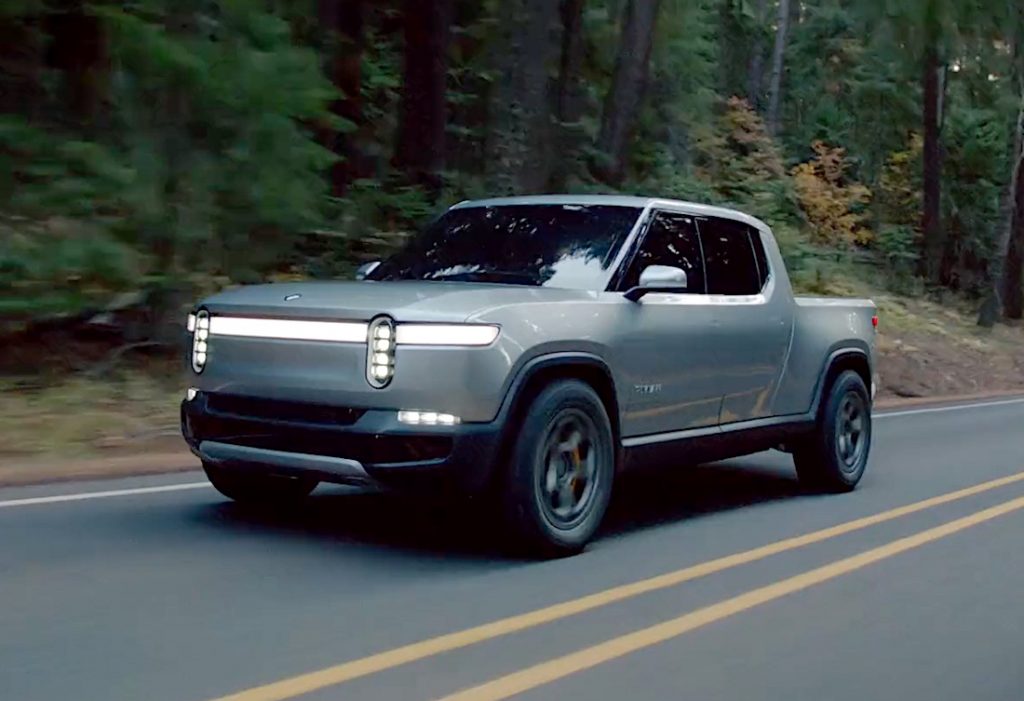
Your numbers don't add up. That's a $50000 truck with a $80000 battery and its going to sell for $70000? (All prices retail)
The other one's got bells on.
Re: Will Electric Vehicles Be Viable? When?
Posted: 05 Dec 2018, 23:30
by henry
Greg Locock wrote: ↑05 Dec 2018, 23:02
Your numbers don't add up. That's a $50000 truck with a $80000 battery and its going to sell for $70000? (All prices retail)
The other one's got bells on.
Where do you get the $80000 from? I’m pretty sure I’ve seen claims of $200/kWh as state of the art battery manufacture cost. Still hard to see how they’re going to be able to sell profitably at $70000.
I’ve also seen claims from Tesla that their ambition is to get to $100/kWh. But that may be like their “full autonomy” claim.
Re: Will Electric Vehicles Be Viable? When?
Posted: 06 Dec 2018, 05:43
by Greg Locock
All prices retail
Re: Will Electric Vehicles Be Viable? When?
Posted: 06 Dec 2018, 11:04
by henry
Retail where for what?
When BMW increased the size of the battery on the i3 they offered customers the opportunity to buy a 30kWh battery for USD8000.Renault used to offer the option of buying, rather than leasing, the Zoe battery 22kWh for USD7000 (GBP5000 in the U.K.) The U.K. price includes 20% VAT, don’t know about the BMW.
They put retail prices in the region of 250 to 300USD per kWh. I realise at this point I should be more precise about which currency I’m using.
Re: Will Electric Vehicles Be Viable? When?
Posted: 06 Dec 2018, 12:08
by Andres125sx
Greg Locock wrote: ↑05 Dec 2018, 23:02
Your numbers don't add up. That's a $50000 truck with a $80000 battery and its going to sell for $70000? (All prices retail)
The other one's got bells on.
Those are not my numbers. Ironically, your numbers look completely arbitrary
$80k battery? No way
$50k truck without ICE or battery? No way either, I´d say it must be below a half of that
Re: Will Electric Vehicles Be Viable? When?
Posted: 06 Dec 2018, 20:40
by Greg Locock
You know what they say about opinions.
Re: Will Electric Vehicles Be Viable? When?
Posted: 06 Dec 2018, 20:51
by Greg Locock
henry. So 7000$ for a 22 kWh battery? That truck has a 180 kWh battery. How's your maths?