Page 21 of 28
Re: Most pec...bizarre aerodynamics thread.
Posted: 04 Apr 2017, 23:29
by bdr529
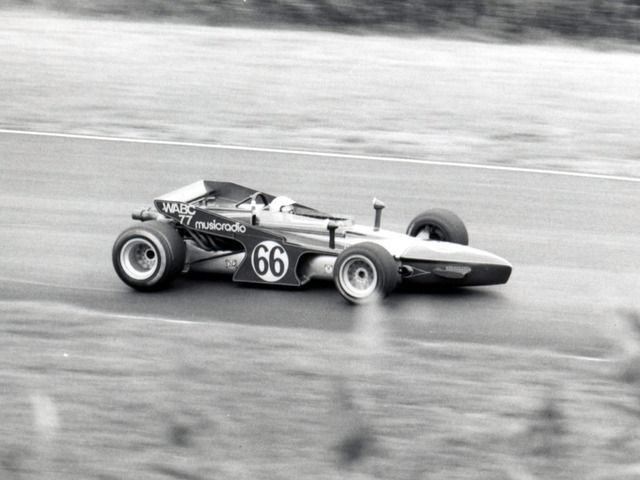
the 1971 Chaparral F5000, it's one and only race at Lime Rock
Re: Most pec...bizarre aerodynamics thread.
Posted: 31 May 2017, 03:55
by flynfrog
Lovefab Enviate PPIHC car.

Re: Most pec...bizarre aerodynamics thread.
Posted: 31 May 2017, 04:34
by thisisatest
Wow. Before Googling it, I was sure that was a 1/10 scale radio controlled car. The wings on that are unreal.
Re: Most pec...bizarre aerodynamics thread.
Posted: 01 Jun 2017, 08:42
by bill shoe
Another picture from the genre: "cars that usually have wings but sometimes don't"
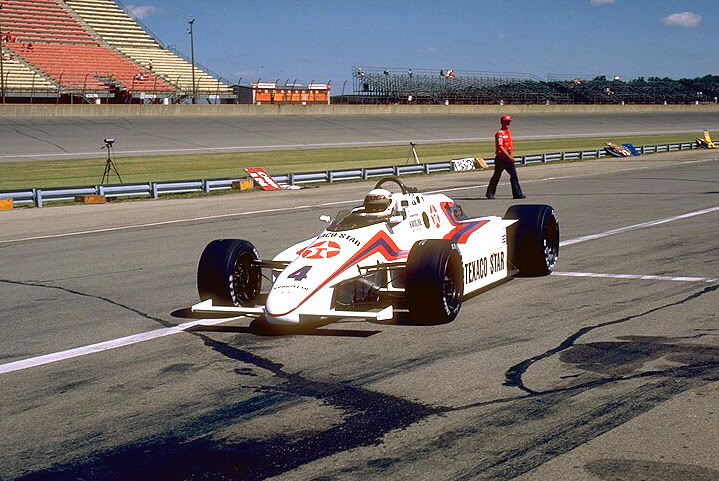
A few Indycars tried no rear wings during practice on the 2-mile Michigan oval in 1984, this was ~ 10-15 years after rear wings had become standard on Indycars, so quite unusual. This pic is Tom Sneva, I think Al Unser Jr also tried it and maybe some others.
Lack of wings were possible because this was toward the end of the era of unregulated underbody aero and the ground effect downforce was quite strong.
Re: Most pec...bizarre aerodynamics thread.
Posted: 15 Jun 2017, 17:42
by gixxer_drew
The wing has such a huge control over how the tunnel behaves. With what we know now days about that interaction I cant really imagine wanting to design without both unless you had to for some reason.
Re: Most pec...bizarre aerodynamics thread.
Posted: 10 Jul 2017, 23:33
by roon
Re: Most pec...bizarre aerodynamics thread.
Posted: 17 Nov 2017, 01:48
by roon
Andy described the AMB ‘Infinity Wing’ second elements on either side of the splitter as presenting an infinite lift to drag ratio. In layman’s terms, the drag created by these elements is pulling sideways; the wing on the left pulls right and vice versa. The net result being an effective zero drag creation, while generating front downforce.
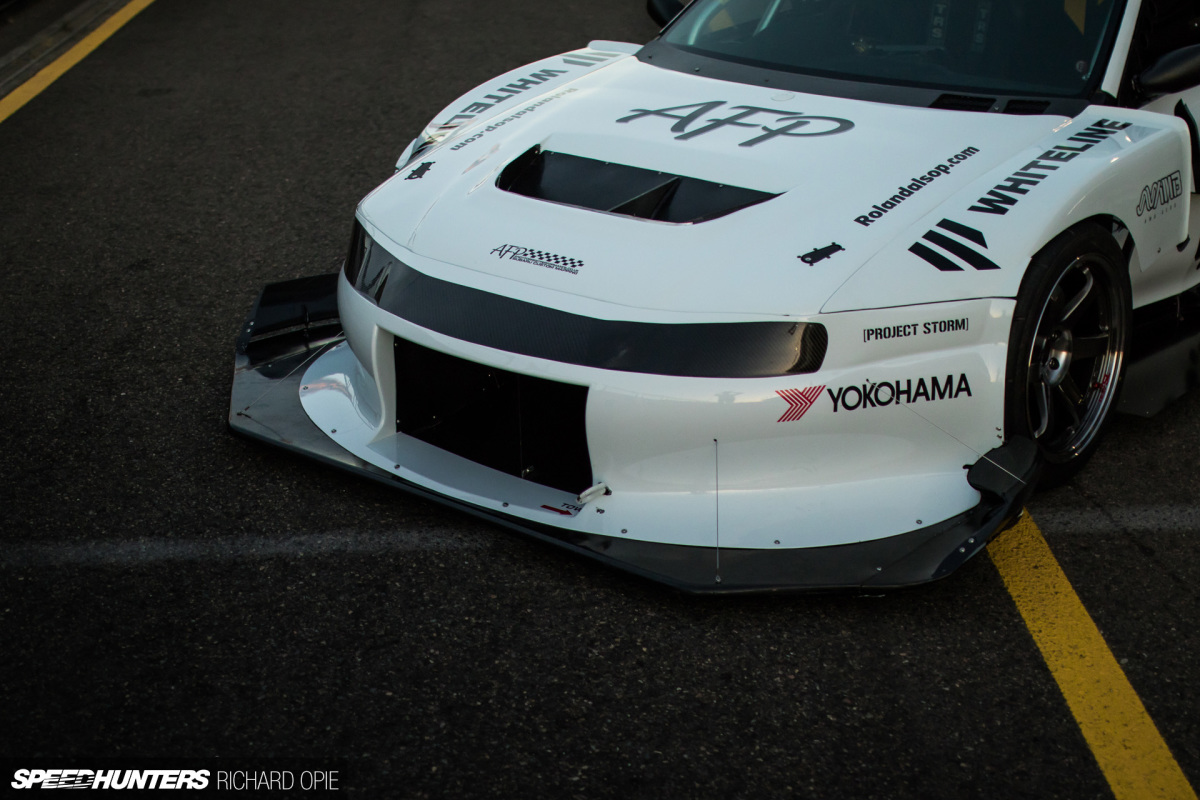 http://www.speedhunters.com/2017/11/sto ... ldest-wrx/
Re: Most pec...bizarre aerodynamics thread.
Posted: 23 Nov 2017, 10:26
by zac510
Zero drag? hmm I'm no aerodynamicist but...
Re: Most pec...bizarre aerodynamics thread.
Posted: 23 Nov 2017, 23:02
by marmer
zac510 wrote:Zero drag? hmm I'm no aerodynamicist but...
It must work all the other cars in same series are moving to that layout instead of the massive splitters they had before.
It must make some drag as it has to force the air to go sideways but I can see logic if a bit basic in that going in a straight line both sides of the car are creating downforce equally and pushing back on each other.
The air must get worked hard but a downside to pushing air to the side is that it's gone doesn't affect a road car shape so much but for F1 where air is worked all over the car your basically taking all the hit at the front wing and then loosing it
Re: Most pec...bizarre aerodynamics thread.
Posted: 24 Nov 2017, 00:30
by djos
I'd have thought the air directed down the side of the car, in this case, would help seal the floor and thus not be wasted?
Re: Most pec...bizarre aerodynamics thread.
Posted: 25 Nov 2017, 21:12
by roon
zac510 wrote: ↑23 Nov 2017, 10:26
Zero drag? hmm I'm no aerodynamicist but...
Seems to be marketing. The teams in this series purchase his products and consultation. Drag vectors are normal to, or co-linear with, local airflow; their orientation relative to abstract reference points such as vehicle centerline does not diminish the effect of air flowing over them. It could be that the design works very well, but not for the reasons stated.
Re: Most pec...bizarre aerodynamics thread.
Posted: 21 Dec 2017, 06:40
by gixxer_drew
roon wrote: ↑25 Nov 2017, 21:12
zac510 wrote: ↑23 Nov 2017, 10:26
Zero drag? hmm I'm no aerodynamicist but...
Seems to be marketing. The teams in this series purchase his products and consultation. Drag vectors are normal to, or co-linear with, local airflow; their orientation relative to abstract reference points such as vehicle centerline does not diminish the effect of air flowing over them. It could be that the design works very well, but not for the reasons stated.
That is taken out of context, it was a significant reduction in drag relative to the previous best designs in that genre which were fore to aft wings, which are quite draggy. A bit of this has to do with unusual regulations.
The cars are not like formula cars with a narrow nose and mostly fore to aft oriented flow. They were already sending the air away from center line at fairly severe angles to free stream flow, so the drag was there but produced by an unavoidable surface under regulations. Instead of trying to then reorient the flow fore-to-aft to help an also fore-to-aft wing as earlier designs, the wing was oriented to the flow field and resulted in a far lower drag total front end, with less frontal area and more effective wing span as well. I do not think anyone from AMB ever implied a wing was made without a drag force. If you define it as opposing thrust produced by the engine, I wouldn't call that arbitrary, as it seems quite relevant.
Here is a link to a video explanation
https://www.youtube.com/watch?v=X8BufOqfZlE
Re: Most pec...bizarre aerodynamics thread.
Posted: 23 Dec 2017, 23:37
by roon
gixxer_drew wrote: ↑21 Dec 2017, 06:40
...it was a significant reduction in drag relative to the previous best designs in that genre...
We're in agreement then:
roon wrote: ↑25 Nov 2017, 21:12
It could be that the design works very well, but not for the reasons stated.
gixxer_drew wrote: ↑21 Dec 2017, 06:40
If you define it as opposing thrust produced by the engine, I wouldn't call that arbitrary, as it seems quite relevant.
I didn't define it as such. Vehicle centerline is an spatial/geometric reference. 'Engine thrust' is a different parameter. Rotating an object in space relative to an abstract reference does not diminish the effect of a fluid flowing over them. A solid body is being moved through a fluid, regardless.
At 2:46 in your video link, the speaker calls the drag force normal these wings a "side force" which "cancel each other out." They don't cancel each other out. And it's not a "side force", it's still drag normal to local flow.
I would offer that the distinction between these two approaches in front corner wings is akin to wing sweep angle in an aircraft, and, as you eluded to, lower drag benefits of a higher aspect-ratio wing.
Re: Most pec...bizarre aerodynamics thread.
Posted: 24 Dec 2017, 01:26
by Manoah2u
Re: Most pec...bizarre aerodynamics thread.
Posted: 31 Dec 2017, 04:18
by gixxer_drew
I think it's comes down to definitions but it seems like everyone agrees on what it does and how it works at least now.
roon wrote: ↑23 Dec 2017, 23:37
gixxer_drew wrote: ↑21 Dec 2017, 06:40
...it was a significant reduction in drag relative to the previous best designs in that genre...
We're in agreement then:
roon wrote: ↑25 Nov 2017, 21:12
It could be that the design works very well, but not for the reasons stated.
gixxer_drew wrote: ↑21 Dec 2017, 06:40
If you define it as opposing thrust produced by the engine, I wouldn't call that arbitrary, as it seems quite relevant.
I didn't define it as such. Vehicle centerline is an spatial/geometric reference. 'Engine thrust' is a different parameter. Rotating an object in space relative to an abstract reference does not diminish the effect of a fluid flowing over them. A solid body is being moved through a fluid, regardless.
At 2:46 in your video link, the speaker calls the drag force normal these wings a "side force" which "cancel each other out." They don't cancel each other out. And it's not a "side force", it's still drag normal to local flow.
I would offer that the distinction between these two approaches in front corner wings is akin to wing sweep angle in an aircraft, and, as you eluded to, lower drag benefits of a higher aspect-ratio wing.