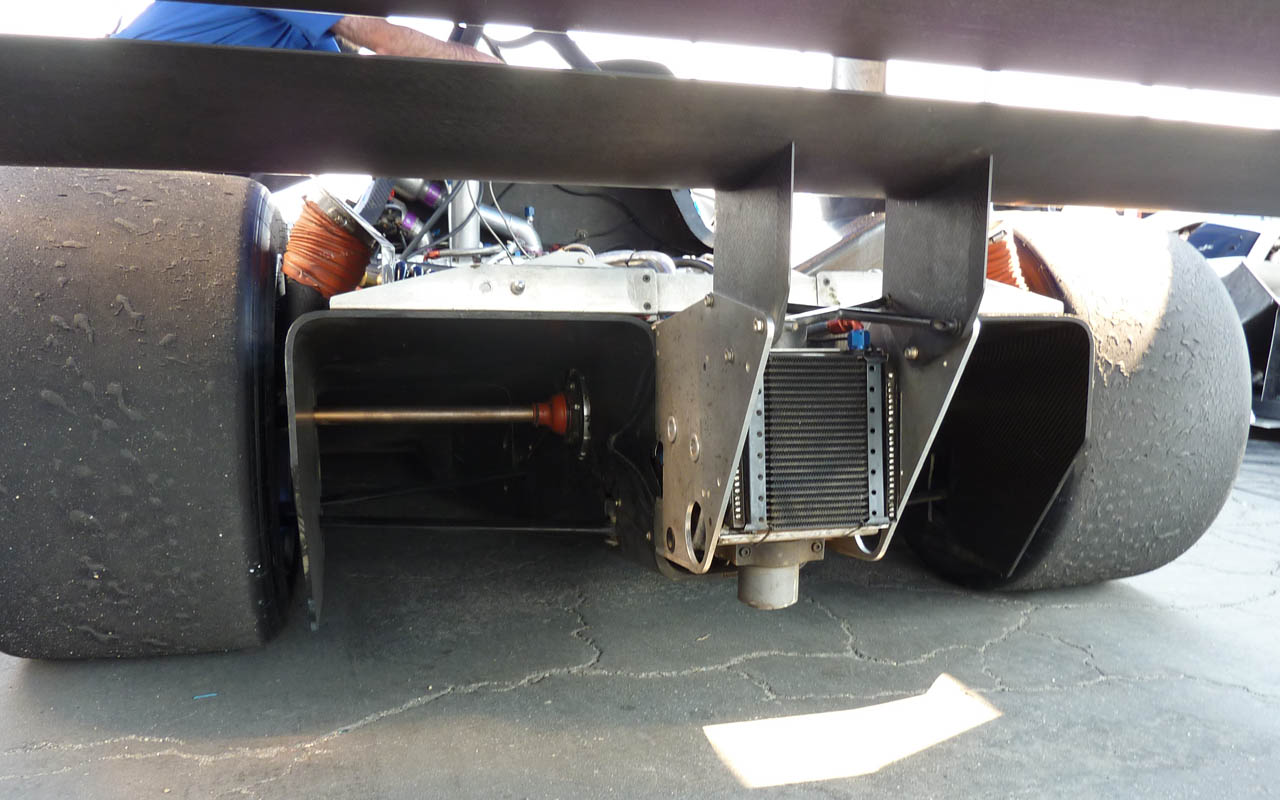
Re: The Impact of Wake Turbulence on Downforce.
Posted: 23 Dec 2015, 12:41
F1 still uses ground effect! 
Not as the main downforce element. If you look at the Ferrari 126 c2 it doesn't even have a front wing http://yorozuya-f1and-etc.cocolog-nifty ... 4/vg55.jpgJust_a_fan wrote:F1 still uses ground effect!

The lotus 125 with its massive underfloor tunnels creates 60% more downforce through its tunnels than the current flat floor in f1.toraabe wrote:Not as the main downforce element. If you look at the Ferrari 126 c2 it doesn't even have a front wing http://yorozuya-f1and-etc.cocolog-nifty ... 4/vg55.jpgJust_a_fan wrote:F1 still uses ground effect!
All because of where the downforce is beinig created
Because Imsa and group c were true ground effect cars. The venturi on these were massive and created massive downforce.riff_raff wrote:Isn't one consideration with the design of the rear wing its effect on performance of the underbody?
I remember the very low and aft position of the rear wings used on IMSA GTP cars, which greatly improved the aero performance of the car's underwing.
http://vpstestbringatrailercom.c.pressc ... Rear_1.jpg
Have a source for this information? Not that I don't believe you I just like to see backed up numbers.toraabe wrote:The lotus 125 with its massive underfloor tunnels creates 60% more downforce through its tunnels than the current flat floor in f1.toraabe wrote:Not as the main downforce element. If you look at the Ferrari 126 c2 it doesn't even have a front wing http://yorozuya-f1and-etc.cocolog-nifty ... 4/vg55.jpgJust_a_fan wrote:F1 still uses ground effect!
All because of where the downforce is beinig created
You got numbers?toraabe wrote:The lotus 125 with its massive underfloor tunnels creates 60% more downforce through its tunnels than the current flat floor in f1.toraabe wrote:Not as the main downforce element. If you look at the Ferrari 126 c2 it doesn't even have a front wing http://yorozuya-f1and-etc.cocolog-nifty ... 4/vg55.jpgJust_a_fan wrote:F1 still uses ground effect!
All because of where the downforce is beinig created
toraabe wrote:Because Imsa and group c were true ground effect cars. The venturi on these were massive and created massive downforce.