Floor running closer to road will be more efficient and less prone to turbulence in close running rather than one that is 50 mm off the ground (assumption)
Less turbulence ingested depends a lot on how high the leading edge is and how the flow ahead of and around the leading edge behaves, with all the bodywork and front wheels ahead etc. Non-stepped floor, being very low, is also prone to scraping the ground in roll and thus accidentally getting sealed off, meaning unpredictable downforce levels in corners
In the years I watched F1 I never saw a car loosing control because the floor hit the ground
How do you know what caused all of the various spins over the years?
In the years I watched F1 I never saw a car loosing control because the floor hit the ground
A lot of times W13 had a snap oversteer the rear floor corner was touching the ground, famous examples are both drivers crashing in Austria Q. SF-23, Leclerc Q3 lap in Miami as well, that was a well documented example. These are just recent examples obviously
***
A very decent overhead comparison on current and 2026 cars
Front wing tip will be 100mm shorter, but the massive overhang is due to the double-stage crash structure of the nose. I think they are going too far with safety at this point, the wing has almost a 0.5m gap between trailing edge and front tyre
In the years I watched F1 I never saw a car loosing control because the floor hit the ground
A lot of times W13 had a snap oversteer the rear floor corner was touching the ground, famous examples are both drivers crashing in Austria Q. SF-23, Leclerc Q3 lap in Miami as well, that was a well documented example. These are just recent examples obviously
They should go full floor downforce from front to back, with no wings. Guide and ingest all the air in the middle, and expel it all in the diffuser. Keep the sides rigid and with a good gap from the ground.
Dispose of the skidplate, and make the bottom slightly curved, so getting closer to the ground wouldn't bring extra downforce.
Prevent teams from creating extra vortices. Add elements to reduce wake turbulence, similar to airplane wingtip devices.
So a 10 mm plank will do the job of preventing that, Why do we need the 50mm
Why are we spinning in circles? I gave you examples of cars with boat section step and limited roll (due to stiff suspension) losing control when floor edge touches the ground not an hour ago
We had flat bottoms for years. And it results in the following car burning its tires off , creating gaps and terrible racing. That everyone seems to have forgotten about. And there was lots of different changes to try and mitigate it. None worked.
I don't recall there being talk of "burning the tyres off", except in the recent past with Pirelli.
Before that it was a matter of the following car losing downforce and teh balance of downforce front to rear.
It happened constantly in 2021 between Max and LH.
Here is a quote from Sainz .
Driver’s view – Carlos Sainz: “It’s surface overheating especially. It’s the thing that as soon as you are behind a car and you lose a bit of traction, a bit of braking grip, you start slipping the tyre and that extra slip means the next corner you have less grip, the next corner you have a bit less grip and you are only able to follow for one or two laps and then you have to back off.”
I'm thinking that the problem wasn't as bad, or didn't exist, before Pirelli.
Front wing tip will be 100mm shorter, but the massive overhang is due to the double-stage crash structure of the nose. I think they are going too far with safety at this point, the wing has almost a 0.5m gap between trailing edge and front tyre
Except the floor is gonna be 150mm narrower according to FiA.
- Designed to be smaller and lighter than the current generation of cars, the dimensions of the car have been altered to adhere to the ‘nimble car’ concept at the heart of the new rules. The wheelbase drops from a maximum of 3600mm to 3400mm, while the width has been reduced from 2000mm to 1900mm. The maximum floor width will be reduced by 150mm.
Except the floor is gonna be 150mm narrower according to FiA.
- Designed to be smaller and lighter than the current generation of cars, the dimensions of the car have been altered to adhere to the ‘nimble car’ concept at the heart of the new rules. The wheelbase drops from a maximum of 3600mm to 3400mm, while the width has been reduced from 2000mm to 1900mm. The maximum floor width will be reduced by 150mm.
George Russell called for active suspension in 2022. He was probably right. Then the tunnel floor cars wouldn't have to be so stiff and low.
Active suspension was taken out due to cost but if the components were made spec , it would be cheap and easy
Cost is an excuse. Doubly now that there is a cost cap, they would simply take away the cost from aero. The issues were solved decades ago, manufacturers have been using active suspension in road cars on occasion.
- Designed to be smaller and lighter than the current generation of cars, the dimensions of the car have been altered to adhere to the ‘nimble car’ concept at the heart of the new rules. The wheelbase drops from a maximum of 3600mm to 3400mm, while the width has been reduced from 2000mm to 1900mm. The maximum floor width will be reduced by 150mm.
George Russell called for active suspension in 2022. He was probably right. Then the tunnel floor cars wouldn't have to be so stiff and low.
Active suspension was taken out due to cost but if the components were made spec , it would be cheap and easy
Cost is an excuse. Doubly now that there is a cost cap, they would simply take away the cost from aero. The issues were solved decades ago, manufacturers have been using active suspension in road cars on occasion.
active suspension limited and policed how ?
(to stop it being a driver aid equivalent to 'active warping' etc - catching the car quicker than most F1 drivers)
aren't we still waiting for further rules on active aero ?
(and at least AA would be visible)
George Russell called for active suspension in 2022. He was probably right. Then the tunnel floor cars wouldn't have to be so stiff and low.
Active suspension was taken out due to cost but if the components were made spec , it would be cheap and easy
Cost is an excuse. Doubly now that there is a cost cap, they would simply take away the cost from aero. The issues were solved decades ago, manufacturers have been using active suspension in road cars on occasion.
active suspension limited and policed how ?
(to stop it being a driver aid equivalent to 'active warping' etc - catching the car quicker than most F1 drivers)
aren't we still waiting for further rules on active aero ?
(and at least AA would be visible)
What's the problem with that? It tries to keep the car as stable as possible. It won't catch the car is the rear goes.
They might as well take out the differential, because it's a driver aid...
I would only ban the pre-programming of track position, that's just asking for trouble, and keep it reactive only.
Re: 2026 Aerodynamic & Chassis Regulations
Posted: 21 Jun 2024, 14:40
by Hoffman900
Indy Car uses “active” aero / suspension with a driver controlled weight jacker.
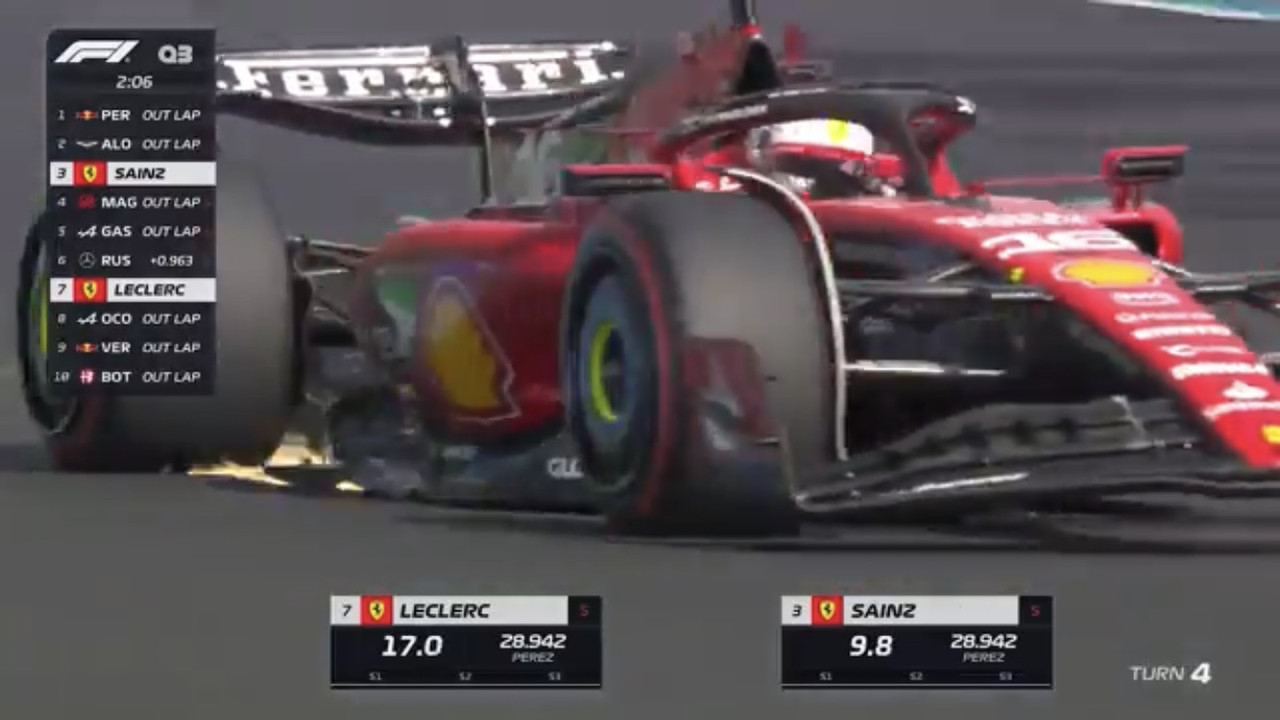


 I gave you examples of cars with boat section step and limited roll (due to stiff suspension) losing control when floor edge touches the ground not an hour ago