Abarth wrote:Yes 2 Stroke has problems in maintaining Lambda = 1 for proper three way catalyst function. OTOH, this issue can be overcome with lean operation and "storage catalysts" which store NOx, as they are already used.
But I see much more potential in a stationery operation at full load, constant rpm, in a rage extender use.
In a road car, charging constantly the batteries with say 40kW in an optimized operating point will yield a very good over all efficiency.
What is the mean power in todays F1 over a lap?
If all you want is constant rpm full load a mini turbine would be the way to go. You should get over 50% efficiency. The reason turbines are no good for cars is the need for good throttle response. Other than that, it would be the way to go.
From https://en.wikipedia.org/wiki/Gas_turbine GE H series power generation gas turbine: in combined cycle configuration, this 480-megawatt unit has a rated thermal efficiency of 60%.
Re: 2 strokes Formula 1 engine
Posted: 13 Apr 2014, 09:35
by Tommy Cookers
in combined cycle 'configuration' means when combined with a big steam plant
maybe you should search and check out 'combined cycle' ?
(eg a 39% efficient gas turbine when combined with steam plant will give about 52% efficiency overall)
other types of engine can be combined with a steam engine to give greater combined efficiency
eg BMW Turbosteamer
and you might look at the Chrysler Turbine thread in the Automotive News and Technology section
Re: 2 strokes Formula 1 engine
Posted: 17 May 2014, 15:20
by Foyle
gcdugas wrote:
If all you want is constant rpm full load a mini turbine would be the way to go. You should get over 50% efficiency. The reason turbines are no good for cars is the need for good throttle response. Other than that, it would be the way to go.
From https://en.wikipedia.org/wiki/Gas_turbine GE H series power generation gas turbine: in combined cycle configuration, this 480-megawatt unit has a rated thermal efficiency of 60%.
Small turboshafts in the 2-300kW range don't even get 25% efficiency. Eg recent 2008 RR300 (224kW) gets just 21%. A much larger 1000kW MTR390 is about 30%.
Even the largest gas turbines only get to about 40%. They only achieve 59% in big powerplants by utilising the exhaust to drive a 33% efficient steam turbine.
Gas Turbines just don't work in small sizes due to much higher flow losses in the compressors and turbines.
Simply highlight each photo url, then click the Img box above the text block. Voila! Your pictures are posted.
Re: 2 strokes Formula 1 engine
Posted: 28 Jul 2014, 02:05
by uniflow
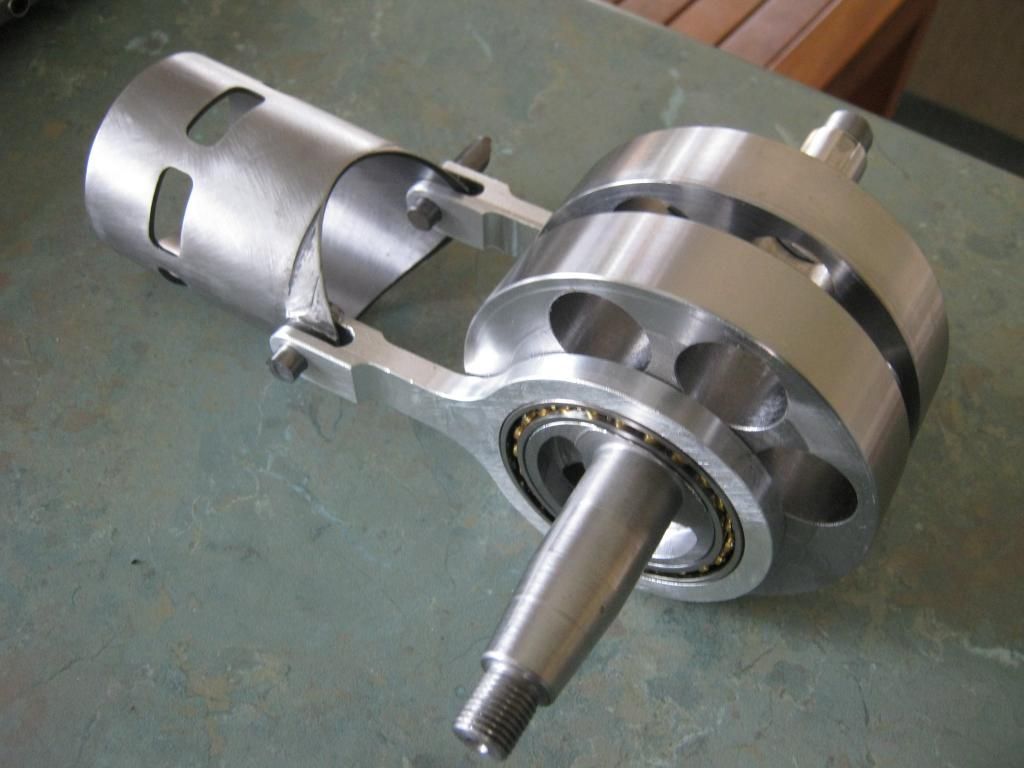
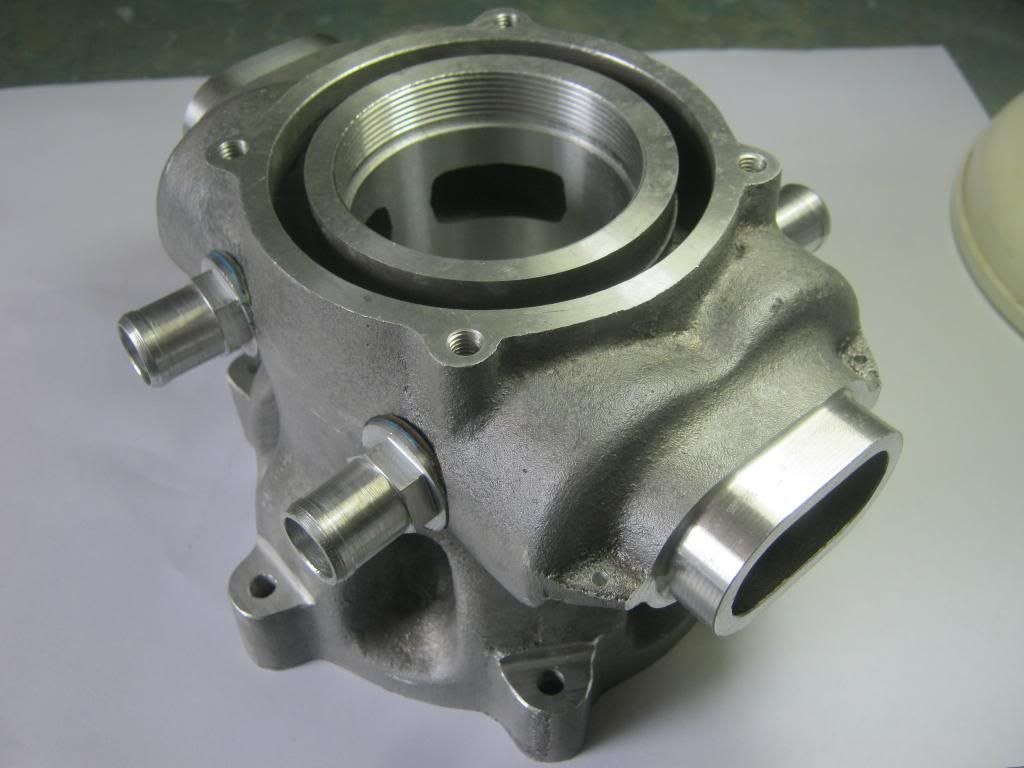
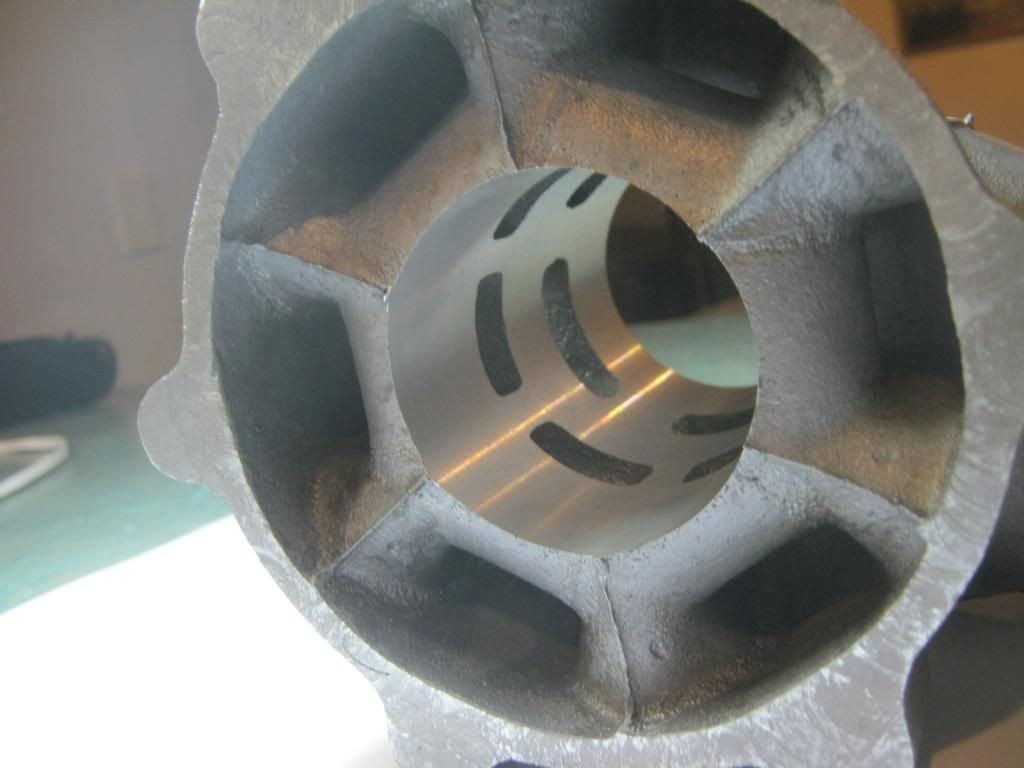
Well sort of, Riccardo inspired, but yes my design and build. I'd like to see how a "simple" crank case inducted twostroke might benefit from a uniflow scavenge and large port time areas. It will still use tuned pipes. The sleeve is driven from eccentrics off the side of the crank via small 7075 alloy connecting rods. If all works a newer version will be built with a separate drive to the sleeve, so it may be timing adjusted on the fly. First I want to see if the open ended sleeve does in fact work. Sleeve is 4140 steel with a nitrided finish, the picture shows only a partly finished sleeve. Cylinder is CC601 T6 heat treated. Who knows but I'm sure I'll find out.
Re: 2 strokes Formula 1 engine
Posted: 28 Jul 2014, 08:13
by riff_raff
Looks like a fun project, but i don't think you'll be able to get the sleeve drive to last at race engine speeds with the weight of a steel sleeve.
Rolls-Royce showed with their Crecy engine that an open-ended uniflow 2 stroke steel sleeve valve can be made to work. But this engine was direct injected and used a mechanical blower for scavenging.
Re: 2 strokes Formula 1 engine
Posted: 28 Jul 2014, 09:07
by uniflow
How heavy do you think the steel sleeve is? Sleeve stroke is ( 24mm ) less than half the piston stroke ( 54mm ), it uses two rods ( light 7075 ) either side of the crank.
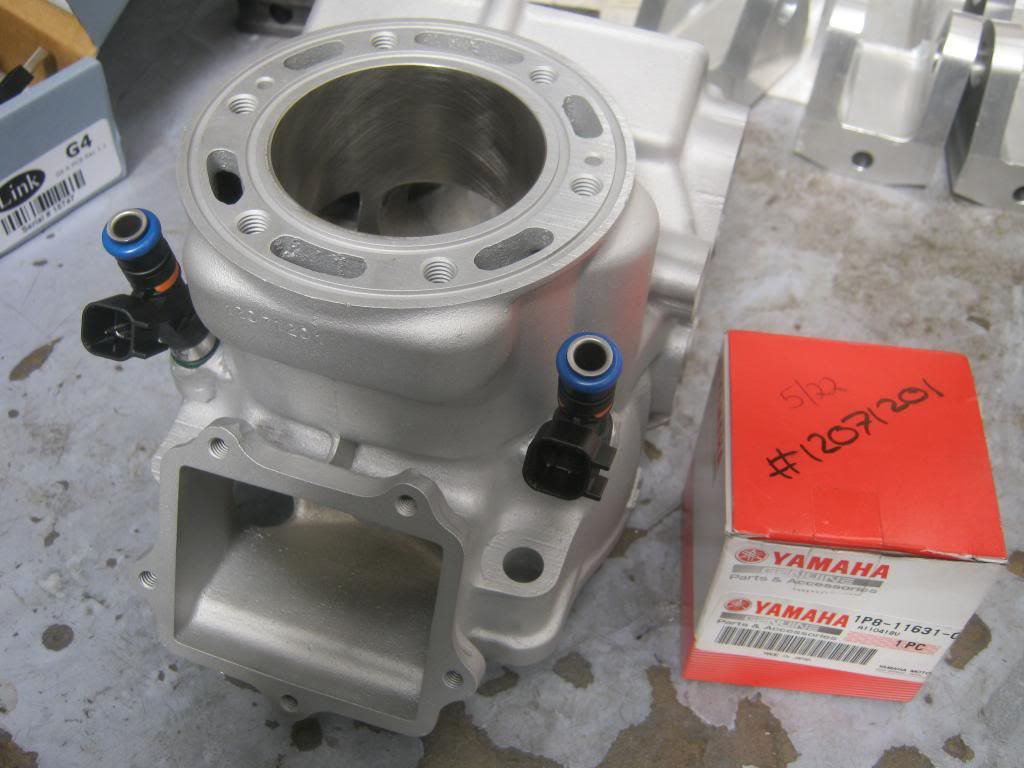
Direct injection is no problem ( semi direct, timed transfer port injection ) as I have two race twostrokes already running in this form. One is a YZ 250, interestingly it produces same HP as my standard ( carburettor ) unit but uses 14 to 21% less fuel under the same race conditions. Depends on how fast the track is, more open, less savings.
The other bike injects ethanol, it's an older air cooled engine ( bighorn Kawasaki, 1973 ) but it's full electronic crank case injected. Makes for good power and the ethanol helps keep engine temps down so it can hold good power lap after lap. If you are wondering it's used for classic MX, all electronics are hidden inside, rules say must "look" of the era but nothing about whats inside!
I don't think the twostrokes days are done just yet.
Sleeve is 171 grams, piston with gudgin pin, 155 grams.
Re: 2 strokes Formula 1 engine
Posted: 06 Aug 2014, 10:01
by uniflow
I see, thats how pictures are applied.
Re: 2 strokes Formula 1 engine
Posted: 06 Aug 2014, 22:30
by uniflow
The injected YZ250 cylinder, timed transfer injection.
Re: 2 strokes Formula 1 engine
Posted: 11 Aug 2014, 10:37
by uniflow
The twostroke would be good for 440HP per 1000cc @13500rpm ( with 8 x 125cc pistons ) NA, with todays technology. Cheap to run also.
Re: 2 strokes Formula 1 engine
Posted: 21 Aug 2014, 05:46
by uniflow
A Uniflow twostroke, two cylinder four piston. We did a lot of run time with this engine. 9500 RPM eventually, geared to the jet unit. Extremly efficent, one piston controlled inlet and one the exhaust at the opposite end of the cylinder.
Re: 2 strokes Formula 1 engine
Posted: 01 Sep 2014, 05:47
by J.A.W.
Here is an interesting high-efficiency 2-stroke turbo-diesel design (2.2Ltr/1000hp) done by Garrett for NASA
~20 years ago - as an alternative to gas-turbines for military helicopters..
I note that the NASA report linked stat above does acknowledge the potential advantages inherent in the sleeve valve..
& from the venerable LJK Setright in 'Some Unusual Engines' P. 62..
"The early difficulties experienced with sleeve valves are too well remembered, & engineers recalling them are too
ready to accept as dogma the notion that sleeves might be serviceable in slowly & steadily-turning aero engines but
could not be adapted to anything sprightlier. All that can be said in argument is that Bristol ran one of their 6.5inch
sleeves up to 8,000 rev/min in a single-cylinder test engine without anything going awry, & that the Napier Sabre
could blip up & down the rev-counter like a car engine."