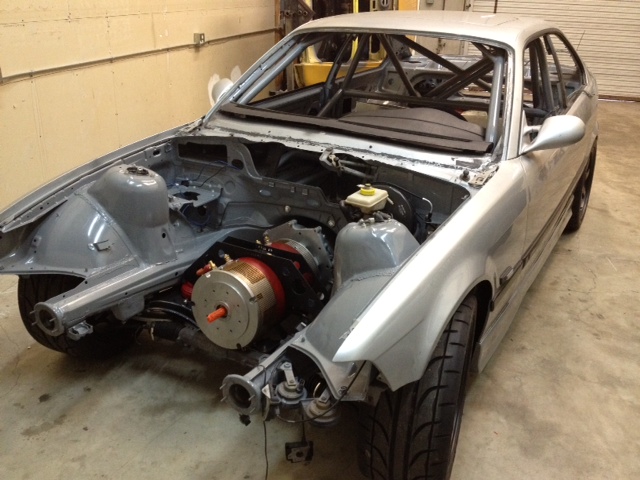
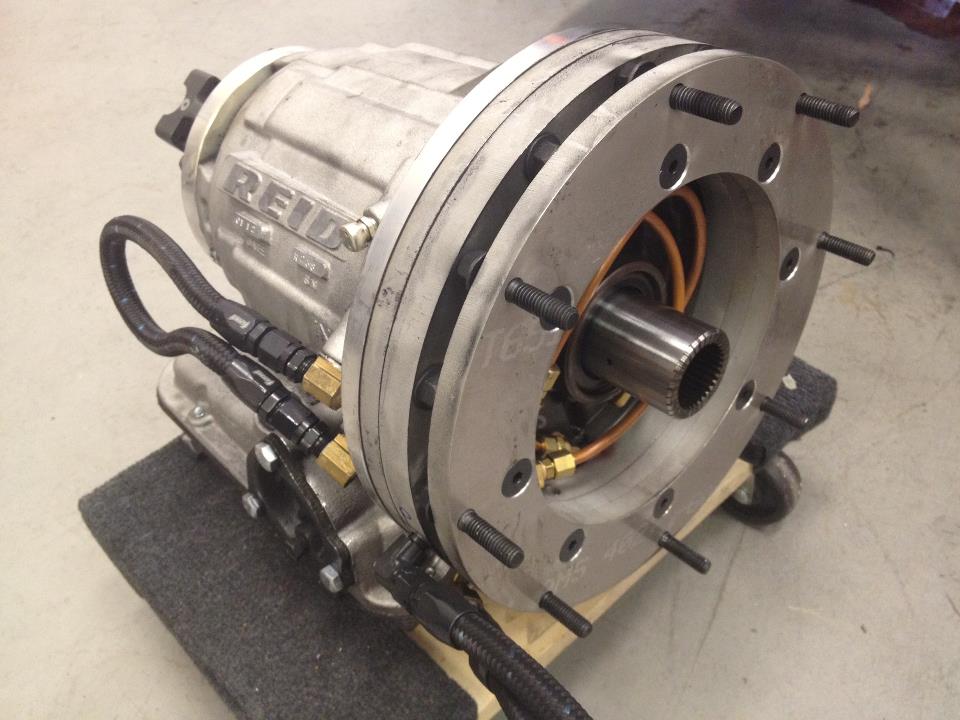
EV West have built a beast e36 BMW amongst other interesting projects.
Gotta love the U.S. Doing that sort of stuff in Australia is strictly verbotten!
EV West have built a beast e36 BMW amongst other interesting projects.
Gotta love the U.S. Doing that sort of stuff in Australia is strictly verbotten!
Cool. Makes a wankel look big. Look like they took it to Pikes Peak:
The motor's hooked up to a Powerglide automatic sans torque converter.
In the US maybe, but not here.
Nissan Leaf is 40 kEur
Opel Ampera is 46 kEur,
Tesla S75D 87 kEur
Sorry, I meant in the UK.
Interesting. I looked up the prices in the UK and indeed it is a whole lot cheaper.
That makes quite some difference. 100k miles is indeed enough for me, that is not really a differentiator. But at the moment the price differential is such that you can buy a much higher quality petrol car and several years of gas for the price of an EV. Especially if you buy second hand. That kind of kills the business case for now.
Re: Will Electric Vehicles Be Viable? When?
Posted: 12 Jul 2018, 08:29
by strad
We are talking simple A to B transport here,
.
YOU are talking simple A to B transport.
I want creature comforts and room to store gear.
Re: Will Electric Vehicles Be Viable? When?
Posted: 12 Jul 2018, 08:53
by tveleckovik
I have a 120 km home-work-home round trip every working day. With fuel prices at 15,8 SEK (don't even get me started...) and the 8,4 l/100km that my hot hatch gets that means I pay 3200 SEK for fuel every month! So I've been thinking of leasing something more economical and lately I've been comparing two Renaults, the Clio and the ZOE.
A Clio with 75 hp would cost me 80200 SEK (53600 for the car and 26600 for fuel) over 3 years and 30000 km. A Clio with a 90 hp would cost me 103300 SEK (81000 for the car, 22300 for fuel). This assumes the fuel prices will stay where they are. A ZOE with a 40 kWh battery would cost me 109100 SEK total (107600 for the car and 1500 for electricity). The ZOE cost includes the 60000 SEK bonus the government gives people that choose eco-friendly cars.
So even with insane taxes on fuel, high road taxes for ICE-powered vehicles and a 60000 SEK bonus for the EV, the EV is still more expensive than a comparable ICE car!
So are they viable? I'd say no, not without the government "helping out". They will be, in time, but atm no.
Re: Will Electric Vehicles Be Viable? When?
Posted: 12 Jul 2018, 13:14
by Just_a_fan
It seems that in the UK at least, younger drivers (I would guess mostly urban young) do want EVs but are put off by the sort of "myths" still peddled by some e.g. poor range.
I wonder how far we are from the tipping point where EV use starts to really ramp up. The UK has just achieved 5% of total car sales as EVs.
Re: Will Electric Vehicles Be Viable? When?
Posted: 12 Jul 2018, 13:57
by Tommy Cookers
Harrabin is again lying in peddling the myth that EVs will save us from climate change
we need to decarbonise our existing electricity and the new electricity for EVs before EVs will be contributing to saving us
Harrabin spent about 20 years telling us with his BBC mouth how we should all buy diesel cars
he is a correspondent/analyst - meaning he can lie 100% (a BBC editor can only lie 95% according to the legal regulator)
UK hydrocarbon cars contribute 60 billion pounds annually to the pot that EV subsidies raid
I look forward to EVs contribution of most of that 60 billion
this will be done by road pricing
with apologies (can't get a link) - regarding the universality of EVs being restricted to 35% of their true battery range see
Lithium ion Battery Aging
Evelina Wikner
Re: Will Electric Vehicles Be Viable? When?
Posted: 12 Jul 2018, 14:14
by Big Mangalhit
There are two things I think are quite overlooked in this question usually. Scaling of electricity needs and lithium needs.
1) Once I made the estimate that if my country (has 5million vehicles +/-) would change all its vehicles to EV and they would use around 5 batteries per week the energy demand would increase around 4 to 5 times. How would we produce all this energy without a huge increase in CO2 production. Also how would the grid cope with a new age that so much energy demand would come probably all at once (during the night).
2) How would we extract the millions of tons of lithium, right now we use reserves with easy accessibility that are sufficient to the demand, what will happen with scaling and how will we mine so much of it? Perhaps more importantly after the life cycle of these millions of tons of lithium are done how can we dispose/recycle them? Will we have a kind of plastic 2.0 problem in our hands then?
with apologies (can't get a link) - regarding the universality of EVs being restricted to 35% of their true battery range see
Lithium ion Battery Aging
Evelina Wikner
Renault, on their web site, say that if you buy, rather than lease, the battery for the Zoe they will guarantee 66% capacity after 100,000 miles/8 year’s.
I have a 120 km home-work-home round trip every working day. With fuel prices at 15,8 SEK (don't even get me started...) and the 8,4 l/100km that my hot hatch gets that means I pay 3200 SEK for fuel every month! So I've been thinking of leasing something more economical and lately I've been comparing two Renaults, the Clio and the ZOE.
A Clio with 75 hp would cost me 80200 SEK (53600 for the car and 26600 for fuel) over 3 years and 30000 km. A Clio with a 90 hp would cost me 103300 SEK (81000 for the car, 22300 for fuel). This assumes the fuel prices will stay where they are. A ZOE with a 40 kWh battery would cost me 109100 SEK total (107600 for the car and 1500 for electricity). The ZOE cost includes the 60000 SEK bonus the government gives people that choose eco-friendly cars.
So even with insane taxes on fuel, high road taxes for ICE-powered vehicles and a 60000 SEK bonus for the EV, the EV is still more expensive than a comparable ICE car!
So are they viable? I'd say no, not without the government "helping out". They will be, in time, but atm no.
Doing some more numbers base on yours:
Clio 75hp: 26,600 for 3 year of fuel is 8,867 SEK/year
ZOE: 1,500/3 = 500 SEK/year
8,867-500 =8,367 SEK/year saving for the ZOE compared to the Clio 75hp
After third year (your numbers), there´s a difference of 28,900SEK, so that divided by 8,367 equals 3.45, wich is the years remaining to amortize the ZOE
So if the ZOE will be amortized between 6th and 7th year. From that point you´ll be saving 8367 SEK/year, or around 30,000 SEK if you own it for 10 years wich is what batteries last more or less
Not extremely tempting, but I´m glad you did the numbers because it´s better than I was assuming. Your daily trips are much longer than mine tough
So yes, basically I agree price is still the problem to solve, specially when you think about how much easier to manufacture are EVs. But I don´t think it´s a matter of governments helping out, I think manufacturers prices must go down drastically. I´m sure their net benefit for each EV is huge compared to any car with an ICE, but that´s normal since the sales are also a small fraction compared to the same ICE, so basically it´s a matter of time.
Then, at some point, there will be much cheaper batteries
I have a 120 km home-work-home round trip every working day. With fuel prices at 15,8 SEK (don't even get me started...) and the 8,4 l/100km that my hot hatch gets that means I pay 3200 SEK for fuel every month! So I've been thinking of leasing something more economical and lately I've been comparing two Renaults, the Clio and the ZOE.
A Clio with 75 hp would cost me 80200 SEK (53600 for the car and 26600 for fuel) over 3 years and 30000 km. A Clio with a 90 hp would cost me 103300 SEK (81000 for the car, 22300 for fuel). This assumes the fuel prices will stay where they are. A ZOE with a 40 kWh battery would cost me 109100 SEK total (107600 for the car and 1500 for electricity). The ZOE cost includes the 60000 SEK bonus the government gives people that choose eco-friendly cars.
So even with insane taxes on fuel, high road taxes for ICE-powered vehicles and a 60000 SEK bonus for the EV, the EV is still more expensive than a comparable ICE car!
So are they viable? I'd say no, not without the government "helping out". They will be, in time, but atm no.
Given the uncertainty of fuel, depreciation etc is SEK 2000 a year really a deal breaker? (For other’s reference that’s £166, $220)
I’m not trying to sway you, just interested. As I said in an earlier post having a warm car ready on the drive every morning in the winter would be something I would be willing to pay for.
with apologies (can't get a link) - regarding the universality of EVs being restricted to 35% of their true battery range see
35% looks excessive to me, but voltage restrictions to limit deep discharges and improve lifespan is pretty normal on most batteries. PB batteries used for solar/wind systems for homes are also restricted at around 50%
But lithium batteries are supposed to perform better than Pb batteries so that 35% doesn´t look very reliable to me. It is recommended to not dicharge lithium batteries below 30%, that´s true, so maybe for cars where the battery is very expensive and should last many years it´s never discharged below 35%, so they´re only using 65% of the real charge, that´s perfectly plausible, but I sincerely can´t buy they´re limited to only 35% of their charge