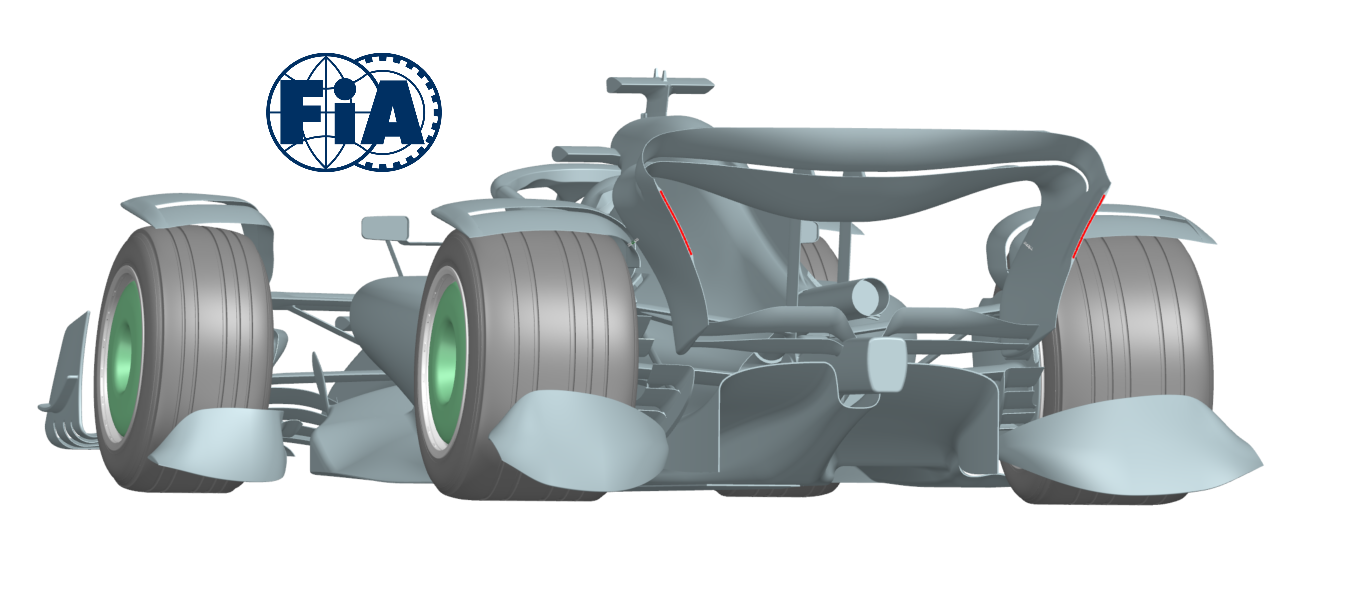
Imagery from that test has been kept under wraps, but the FIA has made available CAD drawings that show what it describes as “a representation” of what was tested.
FIRST LOOK AT PROTOTYPE F1 CAR SPRAY GUARDS AFTER INITIAL TEST
Interesting bits from the article;
The spray covers were two-part designs that did not fully enclose the wheel, mounted on the suspension uprights.
Spray covers even when they work, are expected to reduce the spray by half - they're not too sure whats the split between spray generated by the wheels and the floor.
"the next test could even conducted using 2021-specification cars if necessary should the current cars not be available owing to the last eight races of the season being held outside Europe."
-----------------------
The current idea looks very fiddly to put on, especially if its supposed to be hooked to the suspension somehow.
Imagery from that test has been kept under wraps, but the FIA has made available CAD drawings that show what it describes as “a representation” of what was tested.
FIRST LOOK AT PROTOTYPE F1 CAR SPRAY GUARDS AFTER INITIAL TEST
Interesting bits from the article;
The spray covers were two-part designs that did not fully enclose the wheel, mounted on the suspension uprights.
Spray covers even when they work, are expected to reduce the spray by half - they're not too sure whats the split between spray generated by the wheels and the floor.
"the next test could even conducted using 2021-specification cars if necessary should the current cars not be available owing to the last eight races of the season being held outside Europe."
-----------------------
The current idea looks very fiddly to put on, especially if its supposed to be hooked to the suspension somehow.
Those blockers near the bottom would have a significant impact on the vehicle aerodynamics. Most cars could have their downforce characteristics completely thrown on its head.
Those blockers near the bottom would have a significant impact on the vehicle aerodynamics. Most cars could have their downforce characteristics completely thrown on its head.
The direction they want to take with this spray culling - impacting aero seems inevitable. Another intriguing element is the front spray cover. Cant see that going well with the venturi floor. Do the front wheels contribute to that much rearward spray in the first place?
Watch them float "floor spray reducers" and try to put gubbins on the diffuser to reduce spray.
The race management would decide under which conditions they would be used. An example: In the event of heavy rain with poor visibility, everyone would be obliged to deploy the "Spray Guards". Even if things improved, they stayed with the car until the end of the race.
Would the race have to be red flagged to fit them? Or would it become part of the pitstop challenge?
Imagery from that test has been kept under wraps, but the FIA has made available CAD drawings that show what it describes as “a representation” of what was tested.
Thanks for sharing. These parts look awful. I stand by with saying all 4 wheels need short rear outwashing arches, from the bottom to the top of the tyre, placed all the time - both in wet and dry. In that case, there's less of an aero change between running in dry and wet. With these parts, all the tyre squirts are affected and not all the teams will lose the same amount of performance.
Imagery from that test has been kept under wraps, but the FIA has made available CAD drawings that show what it describes as “a representation” of what was tested.
Thanks for sharing. These parts look awful. I stand by with saying all 4 wheels need short rear outwashing arches, from the bottom to the top of the tyre, placed all the time - both in wet and dry. In that case, there's less of an aero change between running in dry and wet. With these parts, all the tyre squirts are affected and not all the teams will lose the same amount of performance.
Do you have an illustration, of how you imagine it?
Re: F1 Evaluating ‘Wheel Arches’
Posted: 24 Jul 2023, 11:10
by CMSMJ1
They could run slimmer wheels and tyres in the wet as well. Why not? That would generate less spray...
They could run slimmer wheels and tyres in the wet as well. Why not? That would generate less spray...
Yes it would… but isn’t the real problem aero-related? With the cars sucking up huge amounts of water and the upwash from the downforce spraying it out the back like a fire hose?
Not sure how skinner tyres (or these wheel guards come to think of it) would create any sort of meaningful reduction
They could run slimmer wheels and tyres in the wet as well. Why not? That would generate less spray...
Yes it would… but isn’t the real problem aero-related? With the cars sucking up huge amounts of water and the upwash from the downforce spraying it out the back like a fire hose?
Not sure how skinner tyres (or these wheel guards come to think of it) would create any sort of meaningful reduction
The majority of the spray is water lifted by the tyres - that is then incorporated in to the wake. The cars don't really suck water off the track like a vacuum cleaner (although doubtless some moisture will be lifted that way it will be insignificant compared to the amount of water moved by the tyres. It's why a dry line starts as two tyre tracks, not a full car's width of dry track.
And it's worth remembering that if they reduce the spray then they will increase the time it takes for the track to dry. The guards will just cause most of the water to fall back on to the track behind the tyre.
The best solution to the problem is the development of porous tarmac that can handle the stresses of F1 cars. That benefits all users of the track, of course, which is useful gain for the circuit's owners - many fewer weather related safety issues.
Wouldn't the use of outwash devices, whilst good for reducing the amount of water entrained in the wake, have an adverse effect on the ability of the cars to follow? Reducing outwash was a key part of the new rules, after all.
They could run slimmer wheels and tyres in the wet as well. Why not? That would generate less spray...
Yes it would… but isn’t the real problem aero-related? With the cars sucking up huge amounts of water and the upwash from the downforce spraying it out the back like a fire hose?
Not sure how skinner tyres (or these wheel guards come to think of it) would create any sort of meaningful reduction
The majority of the spray is water lifted by the tyres - that is then incorporated in to the wake. The cars don't really suck water off the track like a vacuum cleaner (although doubtless some moisture will be lifted that way it will be insignificant compared to the amount of water moved by the tyres. It's why a dry line starts as two tyre tracks, not a full car's width of dry track.
And it's worth remembering that if they reduce the spray then they will increase the time it takes for the track to dry. The guards will just cause most of the water to fall back on to the track behind the tyre.
The best solution to the problem is the development of porous tarmac that can handle the stresses of F1 cars. That benefits all users of the track, of course, which is useful gain for the circuit's owners - many fewer weather related safety issues.
Okay, but weren’t f1 tyres just as wide in the 80/90s? When the show ‘never’ stopped?
Yes it would… but isn’t the real problem aero-related? With the cars sucking up huge amounts of water and the upwash from the downforce spraying it out the back like a fire hose?
Not sure how skinner tyres (or these wheel guards come to think of it) would create any sort of meaningful reduction
The majority of the spray is water lifted by the tyres - that is then incorporated in to the wake. The cars don't really suck water off the track like a vacuum cleaner (although doubtless some moisture will be lifted that way it will be insignificant compared to the amount of water moved by the tyres. It's why a dry line starts as two tyre tracks, not a full car's width of dry track.
And it's worth remembering that if they reduce the spray then they will increase the time it takes for the track to dry. The guards will just cause most of the water to fall back on to the track behind the tyre.
The best solution to the problem is the development of porous tarmac that can handle the stresses of F1 cars. That benefits all users of the track, of course, which is useful gain for the circuit's owners - many fewer weather related safety issues.
Okay, but weren’t f1 tyres just as wide in the 80/90s? When the show ‘never’ stopped?
They didn't have as much downforce. The spray is not only caused by water displacement. It's also caused by the aero lifting the spray further.
Yes it would… but isn’t the real problem aero-related? With the cars sucking up huge amounts of water and the upwash from the downforce spraying it out the back like a fire hose?
Not sure how skinner tyres (or these wheel guards come to think of it) would create any sort of meaningful reduction
The majority of the spray is water lifted by the tyres - that is then incorporated in to the wake. The cars don't really suck water off the track like a vacuum cleaner (although doubtless some moisture will be lifted that way it will be insignificant compared to the amount of water moved by the tyres. It's why a dry line starts as two tyre tracks, not a full car's width of dry track.
And it's worth remembering that if they reduce the spray then they will increase the time it takes for the track to dry. The guards will just cause most of the water to fall back on to the track behind the tyre.
The best solution to the problem is the development of porous tarmac that can handle the stresses of F1 cars. That benefits all users of the track, of course, which is useful gain for the circuit's owners - many fewer weather related safety issues.
Okay, but weren’t f1 tyres just as wide in the 80/90s? When the show ‘never’ stopped?
There was spray. A lot of spray.
For example:
And, who can forget this one:
There has been a change in the level of risk that is acceptable, too, which has framed the issue in a different light.