Page 42 of 84
Re: Khamsin Virtual Racecar Challenge 2015
Posted: 10 Apr 2015, 09:38
by CAEdevice
Hi everybody! I have just opened the results in the HTML page and I confirm your impression: I'm completely disoriented by the comparision between my "private" simulation and the "official one". The problem is that my private test have been run with the official OCCFD!
The "official" one has completely different numbers ("private" >>> "official" ):
DRAG: 2400 >>> 2000 N
DOWNFORCE: 8200 >>> 7000 N
COP: 1.65 >>> 1.40 m (not corrected yet)
Looking at the images, I am convinced that the problem
is the absence of the wheels in the "private" simulation (not "absence of rotating wheels", but the whole wheels are not present). This disoriented me because I dedicated so much time to run the official OCCFD than to develop the car (CPU 20h to run "calibration models" and only 5h to the submitted car), so I would have expected the same results. Maybe I did something wrong, but I correctly remeber we were not asked to include wheels in the model used to run the simulation with OCCFD.
Also consider that *with the same stl* OCCFD fails 4 times over 5 beacuse of the "mesh mapping" issue...
I think I will take a vacation from KVRC for at least two weeks to let off some disappointment (hoping that in the meantime the " framework" will become more reliable).
In particolar, I have that questions:
- 1 - Should I include the wheels in the model I use for OCCFD "local"? In the submitted files they are not required
- 2 - What about sospension elements?
- 3 - I tried everything to aboid the mesh mapping error with OCCFD: I'm sure that the STL I'm using is clean and refined (I'm using SpaceClaim that has dedicated tools, but also ProE/Creo can export very good stl. What about trying a different approach for the meshing? May with a less complicated, even if accurate, refining, considering that the meshing/refining is "single core" and the "brute force" solution is multi core?
Finally: a bit of "philosophy".
In the real races, the development is done with CFD or wind tunnel or imagination and it has to be related/compared to the "reality" (the air that impacts on the car).
That "air" is an absolute environement: our "absolute environement" is OCCFD (the "framework"): we need to have it reliable and stable to develop the car without guessing

Well: it is clear that it is a game, but it would be more and more fun
Re: Khamsin Virtual Racecar Challenge 2015
Posted: 10 Apr 2015, 18:29
by machin
Well, I don't know about how all that side of things work (i.e. Whether the settings or process is slightly different between OCCFD and the official results)... But I'd say don't get disheartened yet... From the sounds of things most people aren't generating as much rear downforce as expected... So everyone is in the same boat...
You could say it's a bit like the real teams having to calibrate their own CFD results with their actual performance on the track... But I'm sure Julien will be along in a moment to explain....
Re: Khamsin Virtual Racecar Challenge 2015
Posted: 10 Apr 2015, 18:57
by CAEdevice
machin wrote:Well, I don't know about how all that side of things work (i.e. Whether the settings or process is slightly different between OCCFD and the official results)... But I'd say don't get disheartened yet... From the sounds of things most people aren't generating as much rear downforce as expected... So everyone is in the same boat...
You could say it's a bit like the real teams having to calibrate their own CFD results with their actual performance on the track... But I'm sure Julien will be along in a moment to explain....
A good news: with that "official" results I was able to perfectly calibrate my solver.
Now the problem (from my point of view) is to fix the "wheels" issue and "map meshing" error in OCCFD (local)
Re: Khamsin Virtual Racecar Challenge 2015
Posted: 10 Apr 2015, 19:08
by variante
Here's a more detailed view of the issue i've faced:
This is the normal pressure distribution of a wing, that i'm taking as standard. (Brook Motorsport car with Chris Savage airfoils)

This is the pressure distribution from my own tests. (airfoils designed by me: they are supposed to work 10% better than Chris'). The reason why we're not seeing as much “blue” as on Brook's car is the front wing disturbance.
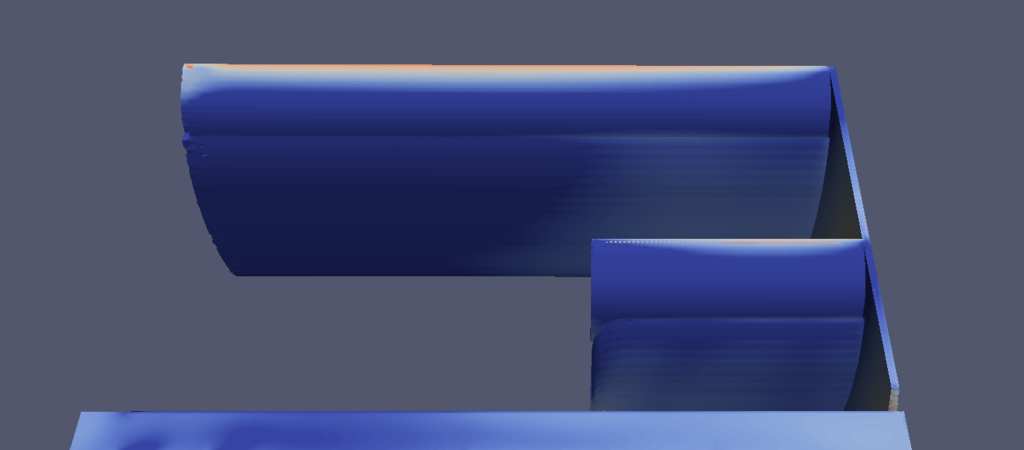
Finally, this is the pressure distribution from the official test. The front wing disturbance is the same as in the previous case, however the results are that different... (note that the pressure distribution on the rest of the car are in line with my predictions)
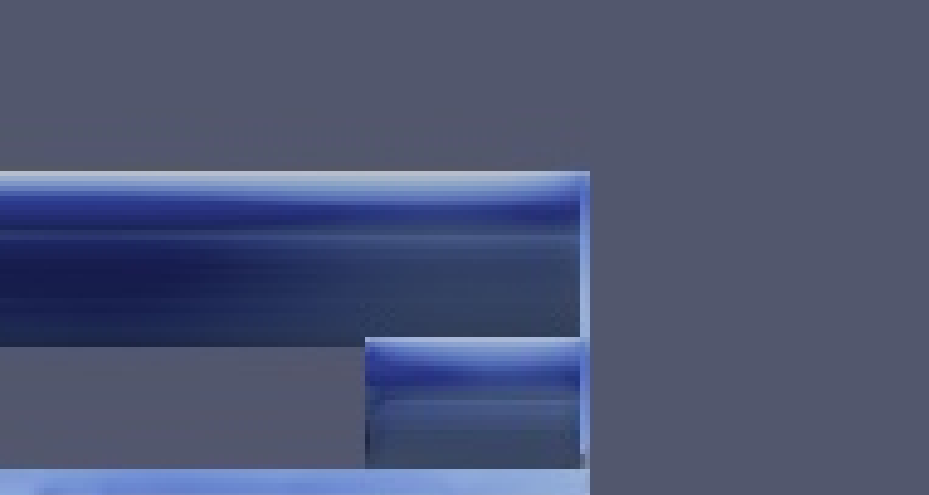
Obviously, the pressure scale is always the same.
This being said (and waiting for an answer), i'm still happy with what i have achieved. Race and championship more open than ever and looking exciting!
Re: Khamsin Virtual Racecar Challenge 2015
Posted: 10 Apr 2015, 19:15
by CAEdevice
Hi Variante: I had no such issues, from that point of view, working with OCCFD and other tools, (far form the areas influenced by the wheels) the pressures where as expected. My opinion is that everyone should use OCCFD.
Re: Khamsin Virtual Racecar Challenge 2015
Posted: 10 Apr 2015, 19:58
by julien.decharentenay
CAEdevice wrote:Well: it is clear that it is a game, but it would be more and more fun
I wish it was more fun and running smoothly... i had a very long week at work and I am currently dealing with for one of the participant geometry:
Code: Select all
Time = 551

DILUPBiCG:  Solving for Ux, Initial residual = 0.618012, Final residual = 3.7165e-08, No Iterations 5
DILUPBiCG:  Solving for Uy, Initial residual = 0.274091, Final residual = 1.83719e-08, No Iterations 5
DILUPBiCG:  Solving for Uz, Initial residual = 0.601145, Final residual = 6.9313e-07, No Iterations 4
GAMG:  Solving for p, Initial residual = 0.000467206, Final residual = 7.20152e-08, No Iterations 17
time step continuity errors : sum local = 6.09223e-06, global = 9.4013e-07, cumulative = 1.26962e-06
DILUPBiCG:  Solving for omega, Initial residual = 0.0240855, Final residual = 4.89689e-07, No Iterations 3
DILUPBiCG:  Solving for k, Initial residual = 0.0095391, Final residual = 1.01074e-07, No Iterations 4
ExecutionTime = 4535.59 s  ClockTime = 4546 s

forces output:
    forces(pressure,viscous,porous) = ((-9.64349e+06 -2.93938e+07 -4.24817e+08),(-5.18023 68.4616 -92.2876),(0 0 0))
    moment(pressure,viscous,porous) = ((-5.58525e+08 1.92011e+07 1.1582e+07),(-113.151 4.22512 5.12099),(0 0 0))

Time = 552
Divergence has been identified. Sorry we were not able to find a solution to your analysis
CFD-wise: I am trying to find my feet as you and other have spent some time focusing on CFD but finding some discrepancies and issues. You were not aware of the need to add the wheels and suspensions to the model prior to running OCCFD and another participants was confused with the height at which the car was to be positioned.
I mentioned previously that I ran into a meshing issue that I did not encountered before and had to change some of the meshing approach. Let's hope that (a) it does not cause too much difference in results and (b) it will make OCCFD a little more robust.
@caedevice in the CFD result archive, there is the geometry used in the "official" OCCFD. Would you mind re-running those on your local to make sure that running the same geometry in gives the same results out?
@variante I am not 100% sure what the images are referring to. Are you comparing "officlal" results to your own results with a different solver/settings?
Re: Khamsin Virtual Racecar Challenge 2015
Posted: 10 Apr 2015, 20:04
by CAEdevice
Julien: consider that we all appreciate your hard work, take our ideas as proposal to impreve the solver and KVRC in general!
Re: Khamsin Virtual Racecar Challenge 2015
Posted: 10 Apr 2015, 20:08
by variante
julien.decharentenay wrote:@variante I am not 100% sure what the images are referring to. Are you comparing "officlal" results to your own results with a different solver/settings?
Same solver, different settings. But the point is here: my CFD run and the official run are very similar everywhere but on the rear wing. It is like the rear wing has gone through a different analisys with different settings compared to the rest of the car.
Re: Khamsin Virtual Racecar Challenge 2015
Posted: 10 Apr 2015, 20:14
by cdsavage
Sorry to hear that some of you are having issues with local testing. Julien will have a much better idea of where to go with this, but I would first suggest that you don't take the force output from your tests without first opening the case in Paraview or your post-processor of choice, to verify that everything looks correct. As Julien mentioned, we've now had a couple of issues which could have probably been avoided by first checking that everything looks OK in the post-processor. Julien and myself are here to answer any questions you might have.
variante wrote:Here's a more detailed view of the issue i've faced:
This is the normal pressure distribution of a wing, that i'm taking as standard. (Brook Motorsport car with Chris Savage airfoils)
This is the pressure distribution from my own tests. (airfoils designed by me: they are supposed to work 10% better than Chris'). The reason why we're not seeing as much “blue” as on Brook's car is the front wing disturbance.
Finally, this is the pressure distribution from the official test. The front wing disturbance is the same as in the previous case, however the results are that different... (note that the pressure distribution on the rest of the car are in line with my predictions)
Obviously, the pressure scale is always the same.
This being said (and waiting for an answer), i'm still happy with what i have achieved. Race and championship more open than ever and looking exciting!
I've had a quick look at the Openfoam case from your simulation and I can't see any obvious issues with the mesh around the rear wing. I would guess the mesh settings you're using for your private tests don't match those being used for the KVRC simulations. I faced the same issue last year, I found very small differences in the mesh generation (even when the overall cell count was almost the same) could produce big differences in the final forces, often with large shifts in COP as you've experienced. I would first make sure that you're using OCCFD and not a 2014 setup, then as a quick check, you could look at the cell count statistics from your tests and compare that to the KVRC case.
Regarding the wing in the model that I publicly released - this was a basic wing profile I found elsewhere (Perrinn LMP1), certainly it shouldn't be taken as an optimized example
Re: Khamsin Virtual Racecar Challenge 2015
Posted: 10 Apr 2015, 20:17
by wesley123
If you use different setting syou can expect different results, more so at the back. See it as a calculation where you round it to 3 decimals instead of 4. As the calculation proceeds, due to the less precise rounding of the number the difference from the "truth" becomes bigger and bigger.
Re: Khamsin Virtual Racecar Challenge 2015
Posted: 10 Apr 2015, 21:02
by julien.decharentenay
variante wrote:Same solver, different settings. But the point is here: my CFD run and the official run are very similar everywhere but on the rear wing. It is like the rear wing has gone through a different analisys with different settings compared to the rest of the car.
It is very interesting. The car is analysed as one model, so it is very puzzling. I don't have access to your settings, but all the openFoam settings are available in the CFD archive. I would be very keen to hear of the possible source of the differences (mesh, numerical models, or physical models or even convergence). As mentioned it could be an issue of small differences accumulating over time. Do you see any difference in the flow field that could explain the difference in the pressure map?
Re: Khamsin Virtual Racecar Challenge 2015
Posted: 10 Apr 2015, 21:05
by julien.decharentenay
CAEdevice wrote:Julien: consider that we all appreciate your hard work, take our ideas as proposal to impreve the solver and KVRC in general!
@CAEdevice I take these as feedback and opportunities for learning. I was very proud of my meshing "trick" that was using the previous mesh to refine the area of interest only - but I am just realising that it may not be mature enough. I think that this has been an on-going issue. It will disappear in the next version. So I would welcome your feedback on whether it solves the meshing issues you have been experiencing...
Re: Khamsin Virtual Racecar Challenge 2015
Posted: 10 Apr 2015, 21:06
by variante
You're right guys, different settings, propagation of error and everything...but again, the only issue i spotted was localised on the rear wing template. Now THAT is weird.
Anyway, i talked even too much about it. I just wanted to bring to attention similar issues to further increase the reliability of future races. Let's move on.
cdsavage wrote:Regarding the wing in the model that I publicly released - this was a basic wing profile I found elsewhere (Perrinn LMP1), certainly it shouldn't be taken as an optimized example
I knew you could do a better job!

hahaha
Re: Khamsin Virtual Racecar Challenge 2015
Posted: 10 Apr 2015, 21:13
by julien.decharentenay
Right now. I just want to get this last simulation to converge. Then I can sleep without having to thing about it... The only issue is that I will only know if it has converged in 10 hours (ie tomorrow morning)...
@variante I am wondering how to "prevent"/catch these differences. From my perspective, they are a little inherent to the "black art" of CFD... But if your settings are better than mine, I would gladly hear of them...
Re: Khamsin Virtual Racecar Challenge 2015
Posted: 10 Apr 2015, 21:15
by cdsavage
variante wrote:You're right guys, different settings, propagation of error and everything...but again, the only issue i spotted was localised on the rear wing template. Now THAT is weird.
I'd say that I don't think this is totally unusual if the mesh settings don't match - the issues I had last year were basically the same as what you're describing. Using an almost identical setup, I found that the local forces for one part of the car matched pretty much perfectly, but another was dramatically different. I think the effect of mesh changes on the output can be quite unpredictable.