Page 48 of 99
Re: Sensible ideas for what will happen after the 2.4 V8?
Posted: 02 Aug 2010, 20:04
by ringo
Throttle less engines , opens up many loopholes as it relates to variable time and lift.
Teams would have a field day. But i guess that could be made legal to promote efficiency.
Re: Sensible ideas for what will happen after the 2.4 V8?
Posted: 02 Aug 2010, 21:07
by madtown77
ringo wrote:
Teams would have a field day. But i guess that could be made legal to promote efficiency.
One can only hope. Can't wait to see what they develop!
Re: Sensible ideas for what will happen after the 2.4 V8?
Posted: 05 Aug 2010, 00:08
by alelanza
WhiteBlue wrote: Unless they find a way to make the valves resistant against hot oxygen they will probably have to do the trick with the over stoechiometric combustion in the exhaust system that they do now.
Not even then, assume you have the right materials to withstand the heat, that's all well and good but where will the exhaust thrust be coming from? After all you are now reducing the load via less fuel, this will still reduce the flow going out through the exhaust the way it does now. The whole operation may be more efficient (or not), but your exhaust gasses are still tied to engine load, regardless of said load being controlled by a plate, valvetrain, A/F ratio or whichever other method you wish to throw at it.
Re: Sensible ideas for what will happen after the 2.4 V8?
Posted: 05 Aug 2010, 00:42
by autogyro
http://en.wikipedia.org/wiki/Rolls-Royce_Crecy
Sorry to paste this link again but all the answers to non throttle control over torque and exhaust gas flow have been dealt with years ago at far higher potential power outputs.
Re: Sensible ideas for what will happen after the 2.4 V8?
Posted: 05 Aug 2010, 07:54
by machin
autogyro wrote:Sorry to paste this link again but all the answers to non throttle control over torque and exhaust gas flow have been dealt with years ago
by....
autogyro's link wrote:Supercharger throttling was used as well to achieve idling
... so no complete escape from some form of throttle....
Re: Sensible ideas for what will happen after the 2.4 V8?
Posted: 05 Aug 2010, 08:46
by xpensive
What is interesting for a "blown diffuser" must be the amount of xhaustgas, where the volumeflow is directly dependent on the amount of fuel burnt. Without that, the exhaust speed would be less than the surroundings, nothing more than the inlet will come out, compare with the airbox.
Re: Sensible ideas for what will happen after the 2.4 V8?
Posted: 05 Aug 2010, 10:53
by WhiteBlue
xpensive wrote: the volumeflow is directly dependent on the amount of fuel burnt.
I don't think that you can say that. The fuel can always be burned lean or rich in any F1 system that we know. The dials on the steering wheels of current F1 cars have a massive impact on fuel consumption. And the variation of oxygen always drags five times the amount of inert gases through the engine. So the gas flow is never directly proportional to the fuel burnt.
Re: Sensible ideas for what will happen after the 2.4 V8?
Posted: 05 Aug 2010, 11:29
by xpensive
Either way WB, can you foresee a lay-down design for an I4 turbo like the 1986 Brabham-BMW?
Re: Sensible ideas for what will happen after the 2.4 V8?
Posted: 05 Aug 2010, 12:17
by WhiteBlue
I think I-4 is one very probable outcome as even I-3 is now entering in the 1.35L class of turbo charged road car engines. BMW have run longitudinal, fully stressed I-3 and I-4 in their K-series (flying brick) motorcycles. I would certainly not count that out. But it gets a question of designing that engine with the turbo exhaust and intake system and integrated KERS/HERS for best packaging. If the engine is lay-down I would expect the exhaust below and the intake above.
Re: Sensible ideas for what will happen after the 2.4 V8?
Posted: 05 Aug 2010, 12:52
by xpensive
What was the angle of the 1986 Brabham.BMW, 30 degrees, problems were with the oil circulatiuon as I understand.?
But why would you keep the exhaust on the downside?
Re: Sensible ideas for what will happen after the 2.4 V8?
Posted: 05 Aug 2010, 14:48
by WhiteBlue
My K75S never had an oil problem in 20 years. In an F1 car the air comes from the air box above and the exhaust wants to go to the diffusor low down. So that is a sensible port choice, although you have to do some re routing anyway for the turbo(s).
Re: Sensible ideas for what will happen after the 2.4 V8?
Posted: 05 Aug 2010, 15:02
by marcush.
why not have a lay downlike that:
http://indyroadsters.webs.com/CF.JPG
Offenhauser 4 banger engines have some laydown history ...one of my favorite engines....the sound is just awesome..
Re: Sensible ideas for what will happen after the 2.4 V8?
Posted: 05 Aug 2010, 19:56
by WhiteBlue
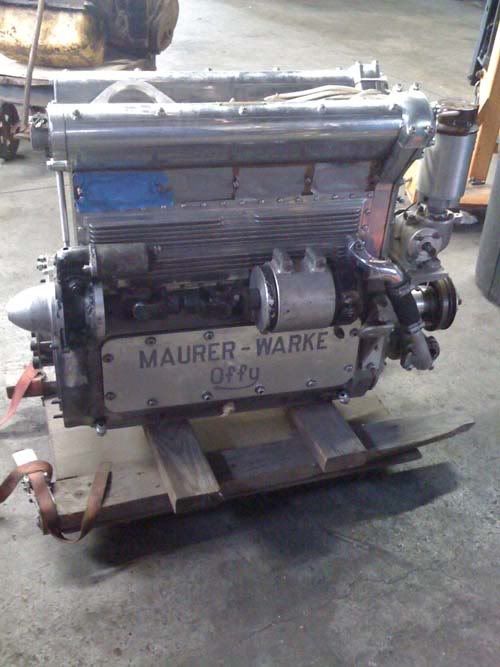
The Offys were originally designed by Miller and he was inspired by a Peugeot racing engine in 1917.

The 1913 Peugeot race cars and engines were the hottest thing to have in racing at that time. It beat much bigger engines.
The team persevered with a 3-litre voiturette as well as a 5.6 litre Grand Prix car winning numerous races and making 1913 their most successful year.. Many consider the 3-litre car Peugeot's masterpiece that was producing for that time an astonishing 30 bhp/litre.
Re: Sensible ideas for what will happen after the 2.4 V8?
Posted: 05 Aug 2010, 23:04
by Edis
xpensive wrote:What was the angle of the 1986 Brabham.BMW, 30 degrees, problems were with the oil circulatiuon as I understand.?
But why would you keep the exhaust on the downside?
The laydown BMW (72 degrees to the left) was offset to the right side of the car and I don't think we will see this happening in F1 again.
Having the engine in vertical position, or close to vertical position will give some handicap in terms of center of gravity but will allow plenty of airflow around the rear of the car to the rear wing and diffuser.
Re: Sensible ideas for what will happen after the 2.4 V8?
Posted: 05 Aug 2010, 23:25
by autogyro
http://www.sa.hillman.org.au/TS3.htm
Much better developed for petrol/ethanol, supercharged with a turbo generator.