Page 574 of 668
Re: Formula One 1.6l V6 turbo engine formula
Posted: 17 Aug 2016, 23:37
by Brian Coat
In general, FW17s idea of reducing heat 'leakage' to the walls is sensible though, isn't it?
Re: Formula One 1.6l V6 turbo engine formula
Posted: 18 Aug 2016, 00:53
by godlameroso
Yes it is, whether you'd use gold exclusively is debatable though. maybe strategically at the quench area of the cylinder head maybe it's a good idea?
Re: Formula One 1.6l V6 turbo engine formula
Posted: 18 Aug 2016, 06:08
by FW17
Re: Formula One 1.6l V6 turbo engine formula
Posted: 18 Aug 2016, 06:46
by djos
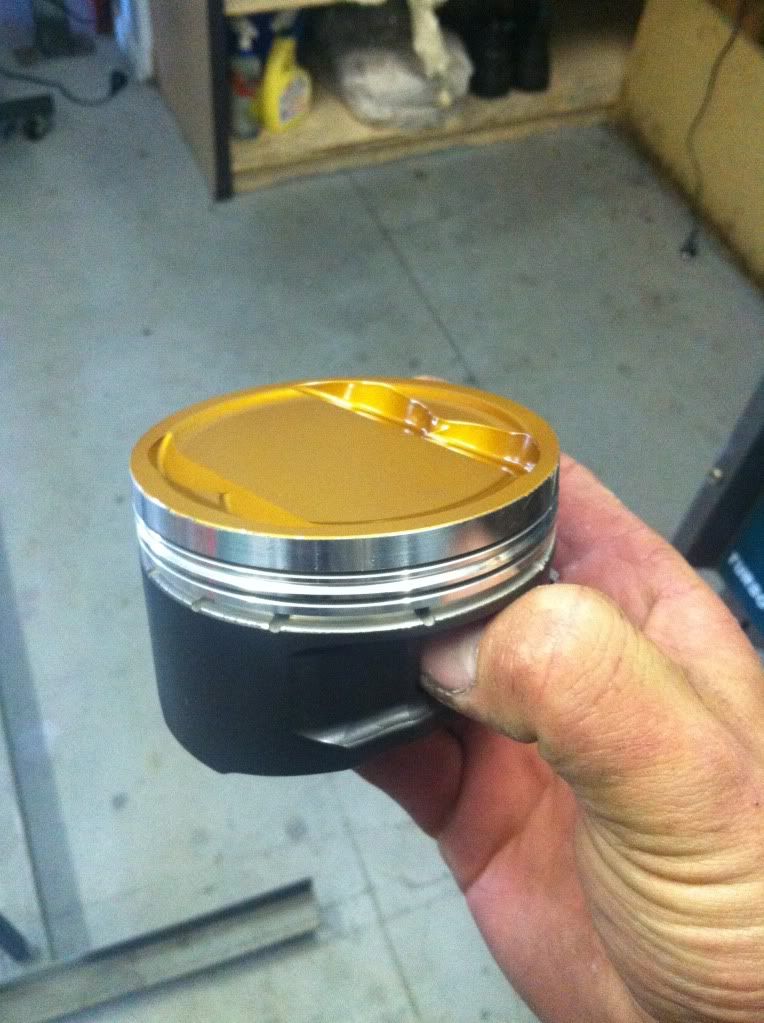
Is that actually gold tho?
I was under the impression that gold had a comparatively low melting point compared to other metals and would therefore be unsuitable for use in a combustion chamber.
Re: Formula One 1.6l V6 turbo engine formula
Posted: 18 Aug 2016, 07:23
by 3jawchuck
That's gold but not gold gold, probably titanium nitride or something like that.
Re: Formula One 1.6l V6 turbo engine formula
Posted: 18 Aug 2016, 08:57
by FW17
I don't want to say gold is to be used but the idea of reflecting the heat back away from the surfaces so that it is not lost in the block and block cooling. Like we have seen during blown diffuser days teams were using some exotic materials to make ducts on the bodywork, can such pyrosic material be be used?
Is it safe to insulate the walls?
Will this mean more turbine power?
Will engine structure remain stable?
Can combustion be controlled with higher combustion chamber temperatures?
Re: Formula One 1.6l V6 turbo engine formula
Posted: 18 Aug 2016, 10:16
by Just_a_fan
djos wrote:
Is that actually gold tho?
I was under the impression that gold had a comparatively low melting point compared to other metals and would therefore be unsuitable for use in a combustion chamber.
1063deg C which is better than most (all?) aluminium alloys.
Re: Formula One 1.6l V6 turbo engine formula
Posted: 18 Aug 2016, 10:36
by djos
Just_a_fan wrote:djos wrote:
Is that actually gold tho?
I was under the impression that gold had a comparatively low melting point compared to other metals and would therefore be unsuitable for use in a combustion chamber.
1063deg C which is better than most (all?) aluminium alloys.
Well steel is 1400+ plus Iirc.
Re: Formula One 1.6l V6 turbo engine formula
Posted: 18 Aug 2016, 14:07
by Jolle
Just a thought, I guess it would be possible to scrap all the whole flywheel (as small as its has been in a racing engine) and have the K unit support the ICE at low revs.
Re: Formula One 1.6l V6 turbo engine formula
Posted: 18 Aug 2016, 16:00
by Brian Coat
Perhaps the ideal coating would be highly reflective, non-conductive and strong (ie knock tolerant).
Is the nearest real world coating to this 'ideal' likely to be metallic or ceramic?
Re: Formula One 1.6l V6 turbo engine formula
Posted: 18 Aug 2016, 16:21
by Jolle
Remembering that Ferrari didn't wrap their exhausts in the beginning to retain heat, this way of thinking (retaining as much energy as possible) must be one of their biggest flaws and catch-ups during the past 1 ½ seasons.
Re: Formula One 1.6l V6 turbo engine formula
Posted: 18 Aug 2016, 16:21
by PhillipM
3jawchuck wrote:
That's gold but not gold gold, probably titanium nitride or something like that.
This, looks much more like TiN to me. That's not gold.
Re: Formula One 1.6l V6 turbo engine formula
Posted: 19 Aug 2016, 20:30
by Brian Coat
So folks, which piston crown coating would be best, overall?
Titanium Nitride?
Yttrium Stabilised Zirconia?
Other?
It's an interesting question.
Re: Formula One 1.6l V6 turbo engine formula
Posted: 19 Aug 2016, 22:44
by godlameroso
It gets even more interesting when you consider that maybe it's not which coating works best, but which combination of coatings works best. Maybe the coating you use for the cylinder walls doesn't work so well as a piston crown coating, or the quench area where the combustion chamber joins the head. Maybe the intake valves need a different coating than the exhaust valves. Or maybe you use a different coating on the piston skirts, or wrist pins, then there's the CC roof as well. Maybe different coatings can strategically retain heat while others improve lubrication, while others dissipate heat, while others give better acoustic properties.
That's another thing, no one really talks about it because it such a basic part that should be sorted but the harmonics of an engine can certainly affect friction, and by consequence efficiency.
Re: Formula One 1.6l V6 turbo engine formula
Posted: 20 Aug 2016, 00:00
by PhillipM
I think that's probably just a fairly thick layer of TiN because it has great IR reflectivity and good thermal insulation too, whether that's over a basecoat for better flexibility given the thermal expansion of the piston vs the coating is another matter. Skirts appear to have either titanium disulphide or a mix of that and molybdenum disulphide - looks a bit too light for just a usual moly-based coating, although could be the photo.