Page 634 of 668
Re: 2014-2020 Formula One 1.6l V6 turbo engine formula
Posted: 08 Nov 2019, 12:15
by Holm86
Mudflap wrote: ↑08 Nov 2019, 00:40
Holm86 wrote: ↑07 Nov 2019, 20:58
Mudflap wrote: ↑07 Nov 2019, 17:19
If you could remove the pumping and frictional losses associated with the extra 2 cylinders that don't do anything and provided that your working 4 cylinders could cope with the increased thermal and mechanical loads associated with operating at higher duty then yes, there could be a thermal efficiency gain.
Pumping losses would be relatively easy to minimize, they run individual throttle bodies so just keep the two deactivated throttles fully open.
But what would the advantage be??
Lower heat losses from smaller effective combustions surface.
Also throttles are not individually operated.
But at full throttle they would be open anyways. Is there any regulation that says that they cant be individually operated?? Having one servo per throttle??
Is there even any point in closing the throttle bodies when off throttle?? As it just create pumping losses. If I did the engine map, I would let the throttles stand wide open when off throttle, and then just manage the engine braking with the MGU-K
Re: 2014-2020 Formula One 1.6l V6 turbo engine formula
Posted: 08 Nov 2019, 13:06
by 63l8qrrfy6
Holm86 wrote: ↑08 Nov 2019, 12:15
But at full throttle they would be open anyways. Is there any regulation that says that they cant be individually operated?? Having one servo per throttle??
Is there even any point in closing the throttle bodies when off throttle?? As it just create pumping losses. If I did the engine map, I would let the throttles stand wide open when off throttle, and then just manage the engine braking with the MGU-K
Nothing stopping them from individually operating the throttles if they wanted to.
You are proposing that they keep the throttles of the deactivated cylinders fully open - however at full load this would mean that a significant portion of the total air massflow would go through them. All this air would be just wasted compressor and piston energy.
Re: 2014-2020 Formula One 1.6l V6 turbo engine formula
Posted: 15 Nov 2019, 18:36
by michl420
With leclerc having an engine for just 2 Races it will me interesting to see how it performs. Bringing the old idea of having an engine for only Maybe 3 races and accept the Penalty back on the table.
Re: 2014-2020 Formula One 1.6l V6 turbo engine formula
Posted: 21 Nov 2019, 15:28
by Xwang
It seems that FIA is going to request (starting from 2020) the installation of another flow meter directly in the fuel tank which will be managed directly by FIA (if I remember correctly WEC cars have 2 flow meter too, but I do not know if one is in the tank).
https://it.motorsport.com/f1/news/f1-ec ... o/4600936/
Re: 2014-2020 Formula One 1.6l V6 turbo engine formula
Posted: 21 Nov 2019, 16:45
by godlameroso
Xwang wrote: ↑21 Nov 2019, 15:28
It seems that FIA is going to request (starting from 2020) the installation of another flow meter directly in the fuel tank which will be managed directly by FIA (if I remember correctly WEC cars have 2 flow meter too, but I do not know if one is in the tank).
https://it.motorsport.com/f1/news/f1-ec ... o/4600936/
Makes sense, never understood why they put the flow meter after the collector and before the rail instead of at the tank pick up/riser pump itself.
Re: 2014-2020 Formula One 1.6l V6 turbo engine formula
Posted: 21 Nov 2019, 18:57
by saviour stivala
A formula one fuel tank have between 3 and 4 low pressure electrically driven fuel lift pumps pumping and pressuring the fuel collector pot from where fuel goes through the fuel flow sensor/meter.
Re: 2014-2020 Formula One 1.6l V6 turbo engine formula
Posted: 22 Nov 2019, 06:00
by godlameroso
So now there is a pre lift pump, in collector, and post collector flow sensors.
Next year there are still 5 formulations available per season, as well as allowing 2 different fuels per event.
Shell, Esso/Mobil, and BP/Castrol are all bigger than Petronas, I wonder if the other manufacturers are catching Mercedes because their fuel is developing at a faster rate?
Re: 2014-2020 Formula One 1.6l V6 turbo engine formula
Posted: 22 Nov 2019, 08:12
by saviour stivala
At any one time one or more of the lift pumps might well be pumping air instead of fuel into the pressurized collector pot and that is why the collector pot is pressurized and the fuel flow sensor/meter is positioned after the pressurized collector pot. being in that position only fuel all of which must be burned/end in combustion chamber will pass through it.
Re: 2014-2020 Formula One 1.6l V6 turbo engine formula
Posted: 22 Nov 2019, 14:26
by Big Tea
godlameroso wrote: ↑22 Nov 2019, 06:00
So now there is a pre lift pump, in collector, and post collector flow sensors.
Next year there are still 5 formulations available per season,
as well as allowing 2 different fuels per event.
Shell, Esso/Mobil, and BP/Castrol are all bigger than Petronas, I wonder if the other manufacturers are catching Mercedes because their fuel is developing at a faster rate?
Is this going to be a new race for qualli fuel?
Re: 2014-2020 Formula One 1.6l V6 turbo engine formula
Posted: 22 Nov 2019, 14:29
by godlameroso
Big Tea wrote: ↑22 Nov 2019, 14:26
godlameroso wrote: ↑22 Nov 2019, 06:00
So now there is a pre lift pump, in collector, and post collector flow sensors.
Next year there are still 5 formulations available per season,
as well as allowing 2 different fuels per event.
Shell, Esso/Mobil, and BP/Castrol are all bigger than Petronas, I wonder if the other manufacturers are catching Mercedes because their fuel is developing at a faster rate?
Is this going to be a new race for qualli fuel?
The 2 fuels per event rule has been in effect since 2014. They did allow up to 2 liters to be stored outside of the fuel tank, which is now .25 liters.
Re: 2014-2020 Formula One 1.6l V6 turbo engine formula
Posted: 25 Nov 2019, 02:14
by PlatinumZealot
godlameroso wrote: ↑22 Nov 2019, 06:00
So now there is a pre lift pump, in collector, and post collector flow sensors.
Next year there are still 5 formulations available per season, as well as allowing 2 different fuels per event.
Shell, Esso/Mobil, and BP/Castrol are all bigger than Petronas, I wonder if the other manufacturers are catching Mercedes because their fuel is developing at a faster rate?
Knock is still the big enemy. Still we havent heard of a new fuel upgrade from petronas in a while.
Re: 2014-2020 Formula One 1.6l V6 turbo engine formula
Posted: 12 Jan 2020, 21:01
by godlameroso
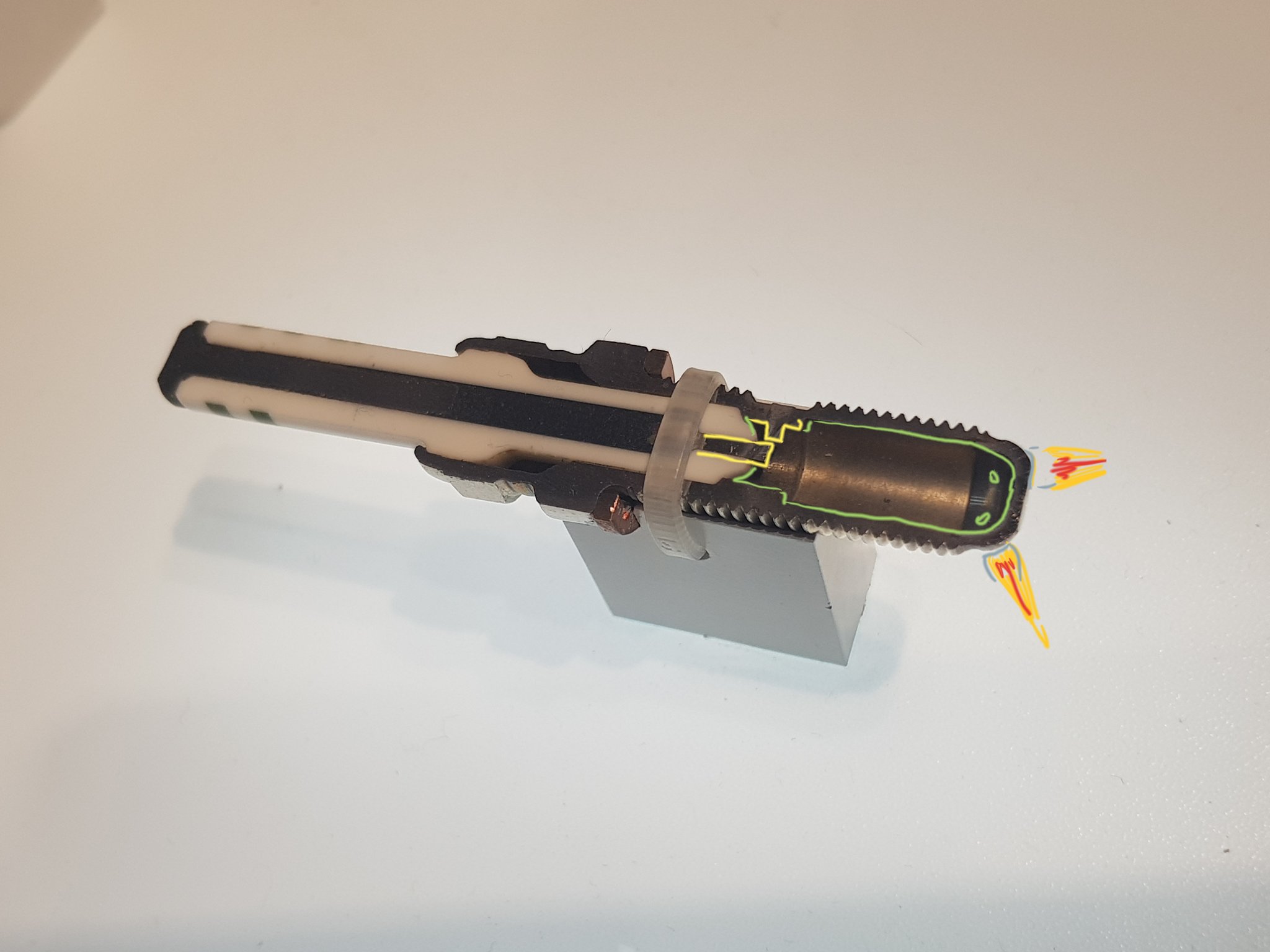
So the spark plug cap/non-fouler design actually works, good to know.
Re: 2014-2020 Formula One 1.6l V6 turbo engine formula
Posted: 30 Jan 2020, 06:19
by J.A.W.
Not sure if this has been posted here earlier, but if it hasn't, & for anyone who is interested,
here's an analysis of the "energy flows" of a currentish F1 lap around Monaco (2018),along with
discussion of proposed changes, by Boretti:
https://www.degruyter.com/downloadpdf/j ... 8-0171.pdf
Re: 2014-2020 Formula One 1.6l V6 turbo engine formula
Posted: 30 Jan 2020, 10:28
by henry
J.A.W. wrote: ↑30 Jan 2020, 06:19
Not sure if this has been posted here earlier, but if it hasn't, & for anyone who is interested,
here's an analysis of the "energy flows" of a currentish F1 lap around Monaco (2018),along with
discussion of proposed changes, by Boretti:
https://www.degruyter.com/downloadpdf/j ... 8-0171.pdf
It was raised in the TERS thread.
Here’s my, personal, response
https://www.f1technical.net/forum/view ... 36#p862036
Summing up, the author, Borretti, hasn’t a scoobie.
He also dabbles in climate change with, what appears to be, similar acumen. (Often under another name and university)
Re: 2014-2020 Formula One 1.6l V6 turbo engine formula
Posted: 30 Jan 2020, 23:06
by J.A.W.
henry wrote: ↑30 Jan 2020, 10:28
J.A.W. wrote: ↑30 Jan 2020, 06:19
Not sure if this has been posted here earlier, but if it hasn't, & for anyone who is interested,
here's an analysis of the "energy flows" of a currentish F1 lap around Monaco (2018),along with
discussion of proposed changes, by Boretti:
https://www.degruyter.com/downloadpdf/j ... 8-0171.pdf
It was raised in the TERS thread.
Here’s my, personal, response
https://www.f1technical.net/forum/view ... 36#p862036
Summing up, the author, Borretti, hasn’t a scoobie.
He also dabbles in climate change with, what appears to be, similar acumen. (Often under another name and university)
Care to provide a more technically meaningful response here, Henry?
Monaco is certainly a track which appears to offer rather limited regen' braking opportunities.