Page 1 of 3

Frame material in F1, Carbon Fibre or Titanium?

Posted: 14 Nov 2012, 19:40
by nordicf1
Dear F1 friends, can anyone explain what material the Formula 1 car use today? it looks like alu or titanium at the few pictures I find. Greatful for rules and info about this.

Image

/Anders

Re: Frame material in F1, Carbon Fibre or Titanium?

Posted: 14 Nov 2012, 19:50
by Lycoming
carbon fiber, epoxy, honeycomb (probably aluminum), zylon and kevlar

Re: Frame material in F1, Carbon Fibre or Titanium?

Posted: 14 Nov 2012, 20:19
by Tim.Wright
At a guess I'd say they are made of carbon fibre, fibreglass, kevlar, expoy resin, BMI resin, steel, titanium, rubber, copper, foam, racing tape, inconel, aluminium, magnesium, rich mahogony, perspex, body filler, paint, lead, silicon and ca. 1 driver.

Re: Frame material in F1, Carbon Fibre or Titanium?

Posted: 14 Nov 2012, 20:22
by nordicf1
Lycoming wrote:carbon fiber, epoxy, honeycomb (probably aluminum), zylon and kevlar
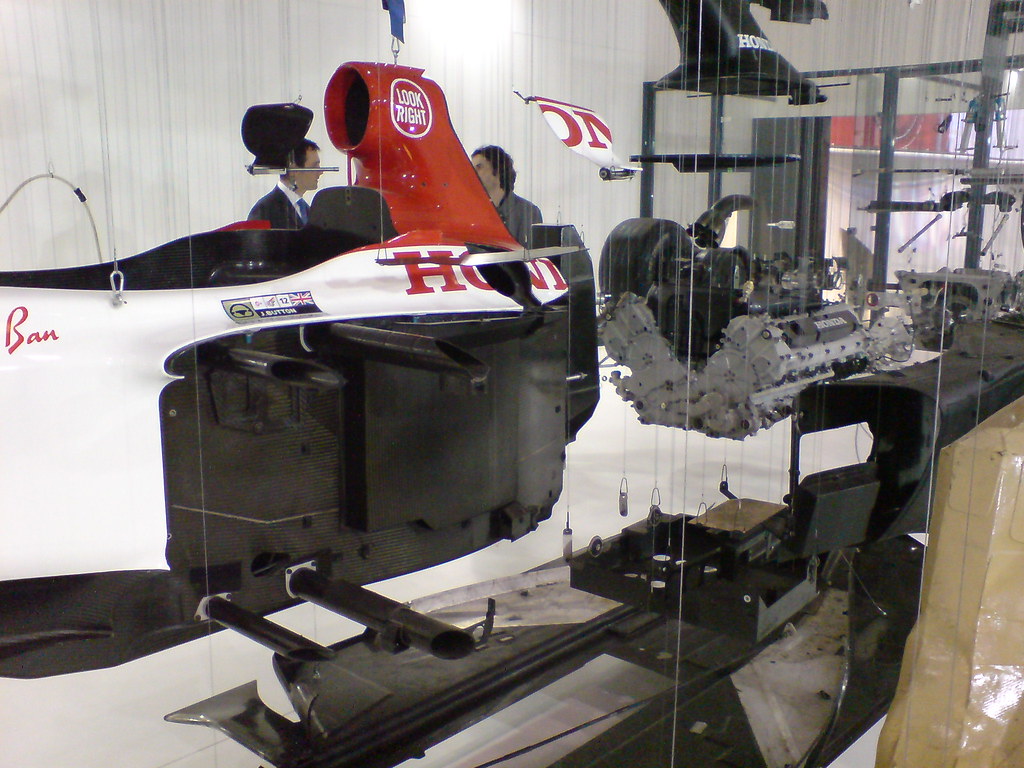
I look at this pic, it looks like Alu all of it bolted together?

Image

Re: Frame material in F1, Carbon Fibre or Titanium?

Posted: 14 Nov 2012, 20:56
by Lycoming
are you talking about just the chassis or the whole car? because if you mean whole car, I will expand to all the stuff Tim posted. the engine, for example, is obviously not made of kevlar.

Re: Frame material in F1, Carbon Fibre or Titanium?

Posted: 14 Nov 2012, 21:28
by nordicf1
Lycoming wrote:are you talking about just the chassis or the whole car? because if you mean whole car, I will expand to all the stuff Tim posted. the engine, for example, is obviously not made of kevlar.
I mean the main frame, looks like this part the rear part of frame is kind of aluminium and the rest from here and front inkl the drivers cockpit is all made of some kind of Carbon Fibre mix? (Bolted togheter?)

Re: Frame material in F1, Carbon Fibre or Titanium?

Posted: 14 Nov 2012, 21:34
by flynfrog
nordicf1 wrote:
Lycoming wrote:are you talking about just the chassis or the whole car? because if you mean whole car, I will expand to all the stuff Tim posted. the engine, for example, is obviously not made of kevlar.
I mean the main frame, looks like this part the rear part of frame is kind of aluminium and the rest from here and front inkl the drivers cockpit is all made of some kind of Carbon Fibre mix? (Bolted togheter?)
that is the gear box

Re: Frame material in F1, Carbon Fibre or Titanium?

Posted: 15 Nov 2012, 00:01
by nordicf1
flynfrog wrote:
nordicf1 wrote:
Lycoming wrote:are you talking about just the chassis or the whole car? because if you mean whole car, I will expand to all the stuff Tim posted. the engine, for example, is obviously not made of kevlar.
I mean the main frame, looks like this part the rear part of frame is kind of aluminium and the rest from here and front inkl the drivers cockpit is all made of some kind of Carbon Fibre mix? (Bolted togheter?)
that is the gear box
Ok yes, and the rest of engine bolted on to that, and then rest of bodywork then is made of carbon fibre?

Anyone have links och photo of modern F1 Frame the Carbon part ?

Tx!

Re: Frame material in F1, Carbon Fibre or Titanium?

Posted: 15 Nov 2012, 02:06
by flynfrog

Re: Frame material in F1, Carbon Fibre or Titanium?

Posted: 15 Nov 2012, 08:23
by aussiegman
nordicf1 wrote:Dear F1 friends, can anyone explain what material the Formula 1 car use today? it looks like alu or titanium at the few pictures I find. Greatful for rules and info about this.

Anders
Anders,

The chassis or "tub" itself is predominately made from Carbon fibre composite layup which may include aluminum or nomex honeycomb cores. Added to this can be layers of kevlar and zylon for wear resistance and layup protection as carbon will "shatter" whicle reinforcements containing aramid fibres have higher fracture toughness and will help prevent stress crack propagation and hold the tub together in an impact.

Attached to the tub are front and rear bulkheads for attaching various things. It is important to remember the engine and gearbox are stressed members of the chassis and so things like the suspension, rear crash structure and rear wings etc are directly mounted to or integrated into these structures.

As per FIA 2012 F1 reg 5.17.8(a) for Static components: Engine crankcases and cylinder heads must be manufactured from cast or wrought aluminum alloys. So a large part of the effective chassis structure is aluminum.

The gearbox casing can be aluminum alloy, carbon fibre, steel or other allowed materials within the FIA regs.

So the "chassis" is mainly carbon firbre, kevalr, zylon, aluminum and titanium. Possibly steel if the gearbox casing is so designed.

The exact list of permitted materials in listed in 15.1.1

15.1.1 The following is the list of permitted materials. These are the only materials permitted to be used in the construction of the Formula One Car provided only that in all cases the material is available on a non-exclusive basis and under normal commercial terms to all competitors.
Permitted materials :
1) Aluminium alloys.
2) Silicon carbide particulate reinforced aluminium alloy matrix composites.
3) Steel alloys.
4) Cobalt alloys.
5) Copper alloys containing ≤ 2.5% by weight of Beryllium.
6) Titanium alloys (but not for use in fasteners with <15mm diameter male thread).
7) Magnesium alloys.
8 ) Nickel based alloys containing 50% < Ni < 69%.
9) Tungsten alloy.
10) Thermoplastics : monolithic, particulate filled, short fibre reinforced.
11) Thermosets : monolithic, particulate filled, short fibre reinforced.
12) Carbon fibres manufactured from polyacrylonitrile (PAN) precursor.(*)
13) Carbon fibres manufactured from polyacrylonitrile (PAN) precursor which have :
- A tensile modulus ≤ 550GPa.
- A density ≤ 1.92 g/cm3.
- Unidirectional or planar reinforcement within their pre-impregnated form, not including three dimensional weaves or stitched fabrics (but three dimensional preforms and fibre reinforcement using Z-pinning technology are permitted).
- No carbon nanotubes incorporated within the fibre or its matrix.
- A permitted matrix, not including a carbon matrix.
14) Aramid fibres.
15) Poly(p-phenylene benzobisoxazole) fibres (e.g. “Zylon”).
16) Polyethylene fibres.
17) Polypropylene fibres.
18) E and S Glass fibres.
19) Sandwich panel cores: Aluminium, Nomex, polymer foams, syntactic foams, balsa wood, carbon foam.
20) The matrix system utilised in all pre-impregnated materials must be epoxy, cyanate ester, phenolic, bismaleimide, polyurethane, polyester or polyimide based. (*)
21) The matrix system utilised in all pre-impregnated materials must be epoxy, cyanate ester or bismaleimide based.
22) Monolithic ceramics.

Specifically banned are the following under 5.16.1 of the FIA 2012 regs:
Unless explicitly permitted for a specific engine component, the following materials may not be used anywhere on the engine:
a) Magnesium based alloys.
b) Metal Matrix Composites (MMC’s).
c) Intermetallic materials.
d) Alloys containing more than 5% by weight of Beryllium, Iridium or Rhenium.

And also under 15.1.2 of the FIA regs:

No parts of the car may be made from metallic materials which have a specific modulus of elasticity greater than 40GPa / (g/cm3). Tests to establish conformity will be carried out in accordance with FIA Test Procedure 03/02, a copy of which may be found in the Appendix to these regulations.

Re: Frame material in F1, Carbon Fibre or Titanium?

Posted: 15 Nov 2012, 11:19
by Tommy Cookers
Nomex and Kevlar are (different makers) trade names for Aramid fibre ?
Aramid is the generic term, related to the chemistry ?

Re: Frame material in F1, Carbon Fibre or Titanium?

Posted: 15 Nov 2012, 11:39
by aussiegman
Tommy Cookers wrote:Nomex and Kevlar are (different makers) trade names for Aramid fibre ?
Aramid is the generic term, related to the chemistry ?
They are totally different fibres.

The term aramid comes from aromatic polyamides and simply describes a group of fibres that due to highly organised molecular structure have high strength to weight ratios and exhibit high temperature tolerances.

Nomex is a trademark of DuPont and was one of the first aramids discovered in the 60's (I have no idea when) and is a meta-aramid.

Kevlar is also trademarked by DuPont and is a para-aramid was discovered in the 70's (IIRC 72 or 73) by a female chemist by accident when she was looking for a lightweight replacement for steel belts used in tyres during the 1970's fuel crisis.

Re: Frame material in F1, Carbon Fibre or Titanium?

Posted: 16 Nov 2012, 03:57
by PlatinumZealot
nordicf1 wrote:Dear F1 friends, can anyone explain what material the Formula 1 car use today? it looks like alu or titanium at the few pictures I find. Greatful for rules and info about this.

/Anders
The main body of the car is not a frame though. It is a "stressed skin" structure. A monocoque.

Re: Frame material in F1, Carbon Fibre or Titanium?

Posted: 16 Nov 2012, 12:47
by Richard
This is a useful introduction to an F1 car http://www.youtube.com/watch?v=J-2prm_oR7A

Also see if you can get hold of this http://www.haynes.co.uk/redbull/

Anyway, lets get onto the detail. The front part of the car is made from a carbon fibre tub (monocoque). That includes the drivers cockpit. The front suspension mounts onto this part.

Image

Image

Then the engine is bolted onto the back of the tub. There is a heated debate about in another thread viewtopic.php?f=4&t=9110

Image

Image

Then the gearbox is mounted onto the engine, and the rear suspension is mounted onto the gearbox.

Image

So the answer to your question is:


CF front suspension | CF tub | Aluminium engine | CF gearbox | CF rear suspension

Re: Frame material in F1, Carbon Fibre or Titanium?

Posted: 16 Nov 2012, 23:41
by nordicf1
Tank you friend for all information, I will keep you all updated on our car building.