Page 1 of 3
Inboard brakes- worth it?
Posted: 14 Aug 2018, 01:07
by roon
The far end of a driveshaft could be made lighter than a rotor, caliper, and upright flanges/bosses. But the driveshaft will absorb energy under braking. Would this make the brakes feel less responsive? The immediacy of a directly connected rotor is lost.
Would lock-up be reduced or exaggerated? The driveshaft would reduce the initial bite/torque from the brake. But the shock absorbing effect may create a confusing feedback as the driveshaft builds and releases energy.
Re: Inboard brakes- worth it?
Posted: 14 Aug 2018, 02:39
by e36jon
I read a good article on this a loooong time ago wondering why it's not done anymore. Mid eighties Jag was the last I can think of. I think Sprint cars may use a single disc on the front of the diff (spool I think.)...
1) Stress reversals: Not all materials like to deal with this.
2) Tolerances / slop leading to weirdness at the pedal. The current in-wheel rig is very optimized.
3) Packaging / cooling : There's not necessarily any room inboard, and it's not like you can put other stuff in the wheels...
But, depending on why you're asking, I'm sure it could be done again.
Re: Inboard brakes- worth it?
Posted: 14 Aug 2018, 03:26
by Zynerji
Ease of changing as well...
Re: Inboard brakes- worth it?
Posted: 14 Aug 2018, 16:55
by Big Tea
Would it also not make wheel placement in rapid pit stops more difficult as the 'cake tin' more or less guides the wheel into place?
Re: Inboard brakes- worth it?
Posted: 14 Aug 2018, 18:27
by spacer
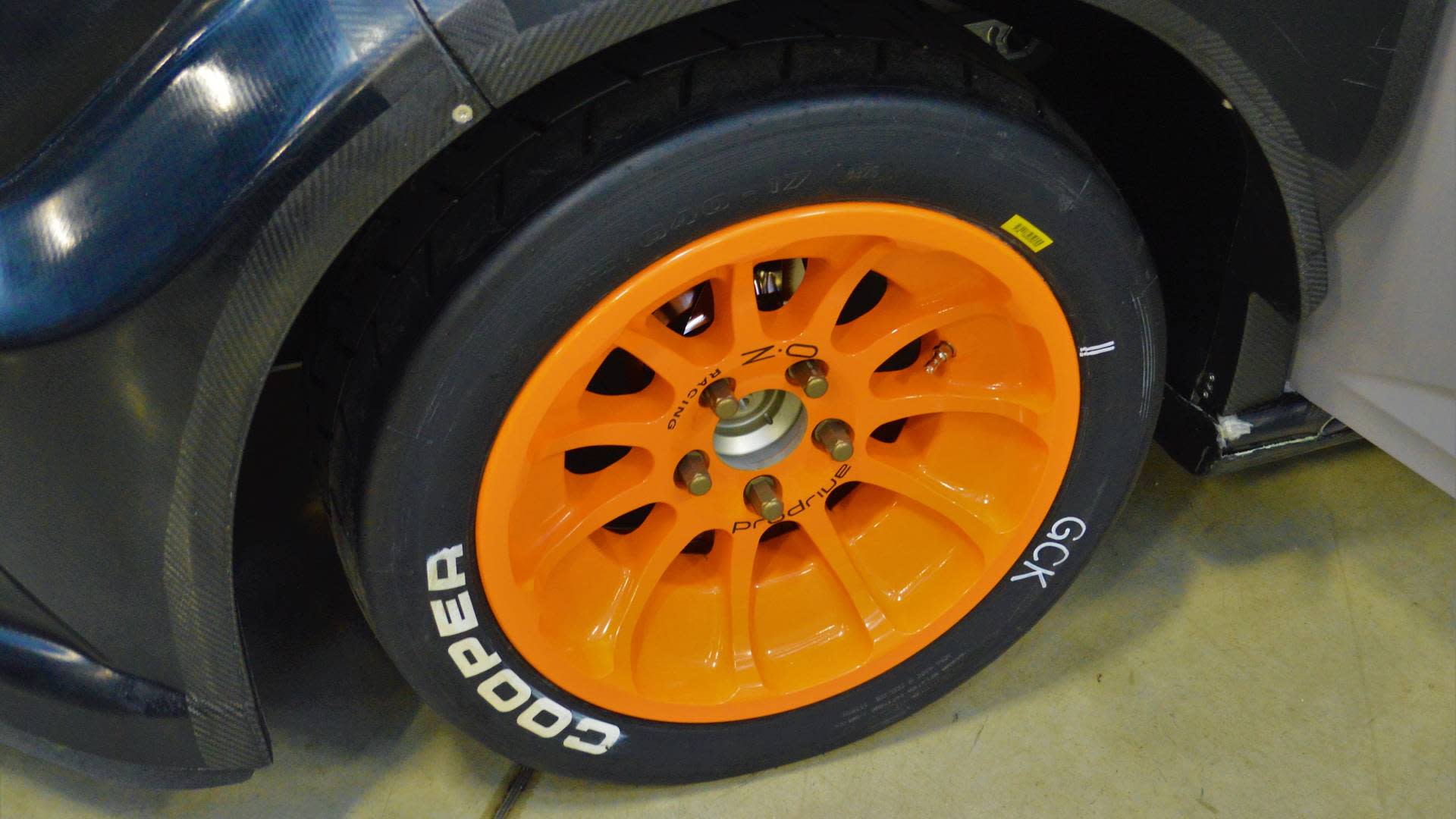
The 2018 RX supercar developed by prodrive actually switched to inboard discs/calipers.
Most rulesets don't allow inboard brakes as far as I'm aware.
Re: Inboard brakes- worth it?
Posted: 14 Aug 2018, 18:31
by Tim.Wright
Brake torques are generally much more than acceleration torques so the driveshafts will need to be much bigger. I think overall it will bring a pretty decent weight and aerodynamic penalty giving all the repacking you'd have to do to get the brakes cooled in an inboard position.
Re: Inboard brakes- worth it?
Posted: 14 Aug 2018, 18:55
by roon
spacer wrote: ↑14 Aug 2018, 18:27
The 2018 RX supercar developed by prodrive actually switched to inboard discs/calipers.
Most rulesets don't allow inboard brakes as far as I'm aware.
In this application, the steel/iron rotors probably make a big difference. Might also be about keeping the brakes cleaner. Looks like it also allowed them to increase the air mass in the wheel.


Re: Inboard brakes- worth it?
Posted: 15 Aug 2018, 01:18
by Edax
e36jon wrote: ↑14 Aug 2018, 02:39
I read a good article on this a loooong time ago wondering why it's not done anymore. Mid eighties Jag was the last I can think of. I think Sprint cars may use a single disc on the front of the diff (spool I think.)...
1) Stress reversals: Not all materials like to deal with this.
2) Tolerances / slop leading to weirdness at the pedal. The current in-wheel rig is very optimized.
3) Packaging / cooling : There's not necessarily any room inboard, and it's not like you can put other stuff in the wheels...
But, depending on why you're asking, I'm sure it could be done again.
In the traditional sense yes.
But I gues you can argue that the MGU-k in F1 acts like an inboard brake. The rear brakes on the F1 cars have become a lot smaller in the hybrid era. In case of an electrical failure like Merc had in Canada they start eating up the brakes pretty rapidly, testament how much the regen has taken over form the disk brakes..
So in case of the hybrid system I think they already have to adress 1&2. If you factor in the reduced requirements for the brakes themselves then 3 should become less of an issue as well. Which makes me wonder whether the case for inboard brakes does not become a lot stronger for hybrids than it was for traditional ICE’s.
Re: Inboard brakes- worth it?
Posted: 15 Aug 2018, 02:49
by e36jon
Nice feedback Edax.
Thanks for a current example Roon.
When the question was first asked I thought of the 'air powered' cars that were being developed. In at least one case they could develop equivalent forces to conventional disc brakes under decel, out at the hub, and at almost equivalent weight to an iron disc setup. That seems like where we have to end up eventually, getting rid of all the 'extra' bits (rotors, half-shafts, etc), at least for road cars.
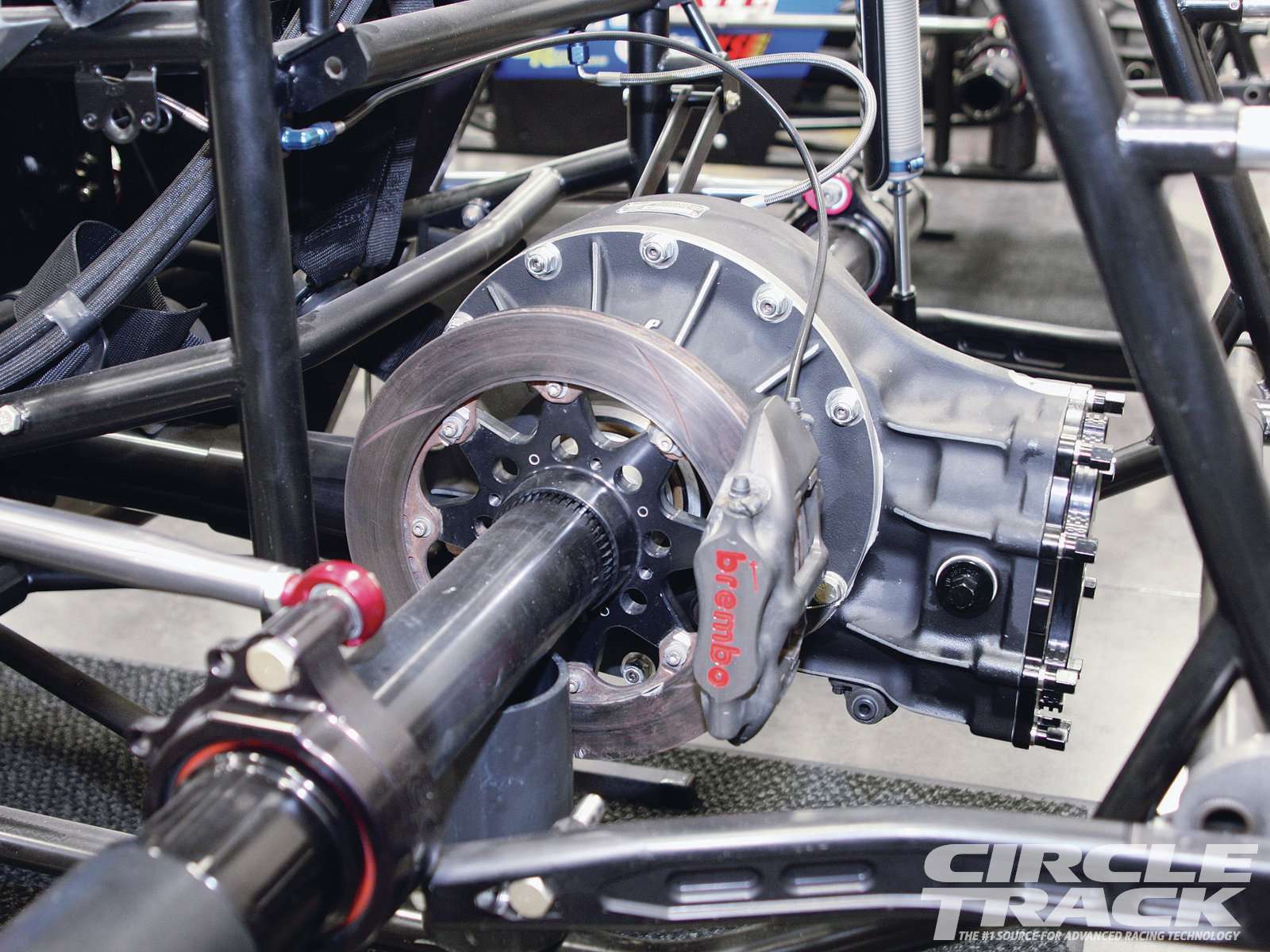
Here's a Sprint Car setup, inboard not diff mounted like I thought:
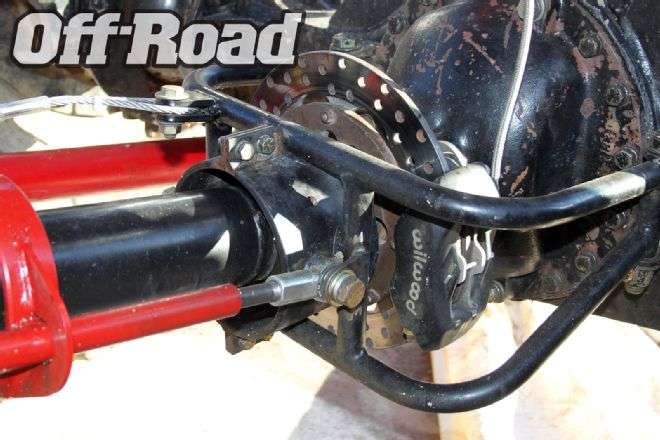
Here's a Monster Truck with a pinion mounted brake:
Re: Inboard brakes- worth it?
Posted: 15 Aug 2018, 10:25
by Tommy Cookers
Tim.Wright wrote: ↑14 Aug 2018, 18:31
Brake torques are generally much more than acceleration torques so the driveshafts will need to be much bigger. I think overall it will bring a pretty decent weight and aerodynamic penalty giving all the repacking you'd have to do to get the brakes cooled in an inboard position.
max acceleration torque will in a non-DF race car or performance road car be equal to max brake torque
the W196 (originally or throughout) etc had inboard brakes ? (not unrelated to its underlying 4wd-capable layout ?)
and the Vanwall and early Lotus
similarly the gas turbine Lotus ? (turbines needing 4 wd for motoring against the brakes to keep the engine 'on the cam')
the F1 BRM c 1959-60 used a single inboard brake (on the' prop' shaft) to the rear of the final drive casing
one of these cars became the Le Mans Rover gas turbine
in those days suspension rates were becoming relatively low and low unsprung mass was becoming attractive
now in F1 the tyre is doing much of the suspension's job (and the suspension is doing much of the aero's job)
so outboard brakes mass is as much sprung as unsprung in F1
not so the road car
presumably if the turbine cars had caught on they would now have a giant MGU-K thing
exactly the kind of vehicle the current F1 rules are trying to prevent
there was a thread 'Are inboard brakes allowed ?' started 9 Oct 2008
Re: Inboard brakes- worth it?
Posted: 15 Aug 2018, 23:16
by Rodak
Shades of my long ago Van Diemen FF! I wonder if mandating steel brake rotors might significantly increase braking distances hence increasing overtaking.
Re: Inboard brakes- worth it?
Posted: 15 Aug 2018, 23:22
by Just_a_fan
Downforce and sticky tyres gives short braking distances, not carbon discs.
Re: Inboard brakes- worth it?
Posted: 16 Aug 2018, 01:05
by bill shoe
Carbon disks mean the brakes don't weigh much. The caliper material is limited for modulus, but they are so highly engineered they still have really light calipers. So not much mechanical (unsprung weight) reason for inboard.
If you put the brakes in the wheel then they have zero space claim on the overall rear packaging, this is tremendously important for aero. If you tried to put them inboard you would quickly be knifed by the aero department of your team... Think about how utterly skinny the trans case is, and how the airflow goes under it...
The driveshaft would add compliance to the brake system, yes. My intuitive opinion as a driver is that the driveshaft twist is more tolerable during accel than braking, but I have no Engineering info to back that up. My general feeling is that moderately good drivers continually adjust torque more under braking than accel. Go figure.
Re: Inboard brakes- worth it?
Posted: 16 Aug 2018, 01:11
by DiogoBrand
On the aerodynamic side of things, it would mean bigger sidepods for the increased cooling requirement, as well as a bigger coke bottle area to fit the brakes. The only benefit would be that you could pretty much have a closed wheel where the brake duct used to be.
Since in F1 aerodynamics are far more important than weight distribution, I guess the downsides far outweight the benefits.
Re: Inboard brakes- worth it?
Posted: 16 Aug 2018, 01:30
by e36jon
Apologies if I missed these in the prior comments:
Inboard could let you run much larger diameter rotors than you could in the actual wheel. Seems to be an issue (maybe) for road cars as no matter how crazy big they make the wheels the rotors keep growing apace. Might be fashion as much as anything.
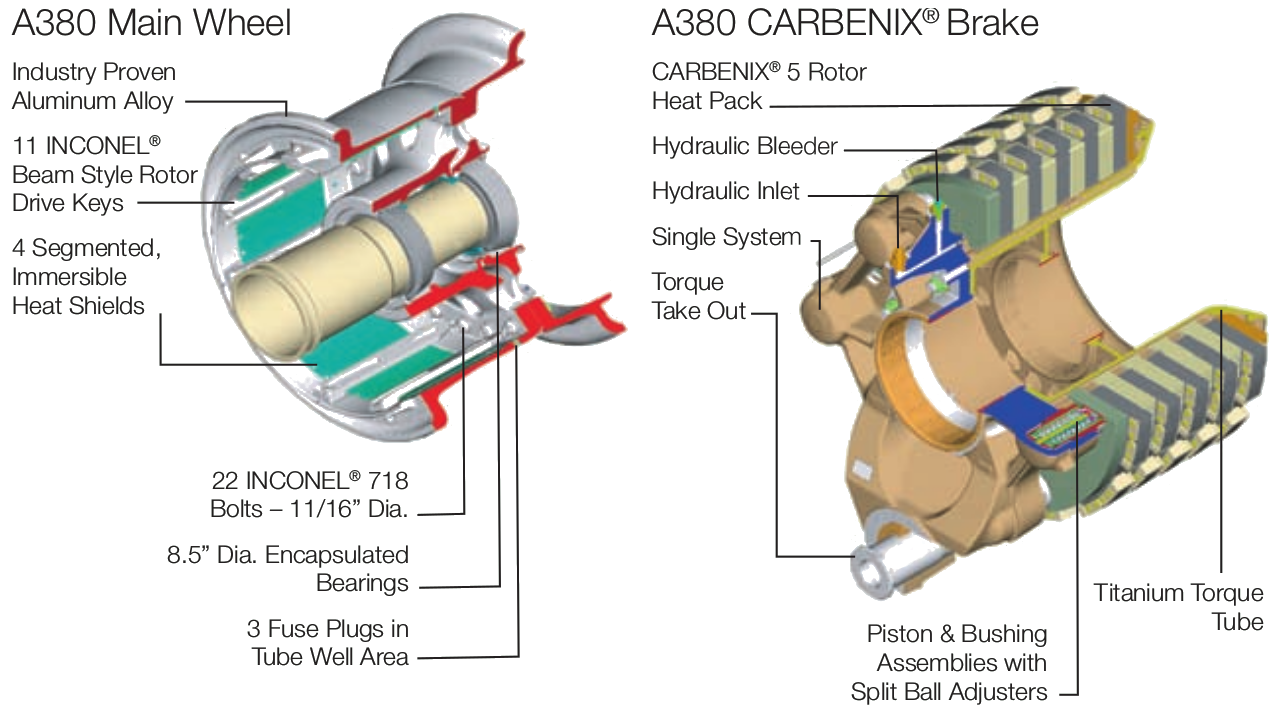
Maybe inboard allows a different brake architecture? Multi-plate like aircraft use? Liquid cooling (Of the rotors, not just the calipers like the rally crowd does now.)? Alien technology? Etc...
Yes, I am working both sides of the fence...
Here's an Airbus A380 brake assembly. It has 16 of these. They can haul a million pound aircraft to a halt from 120 mph in the last quarter of a runway. (Look for test videos online, they are gnar.)