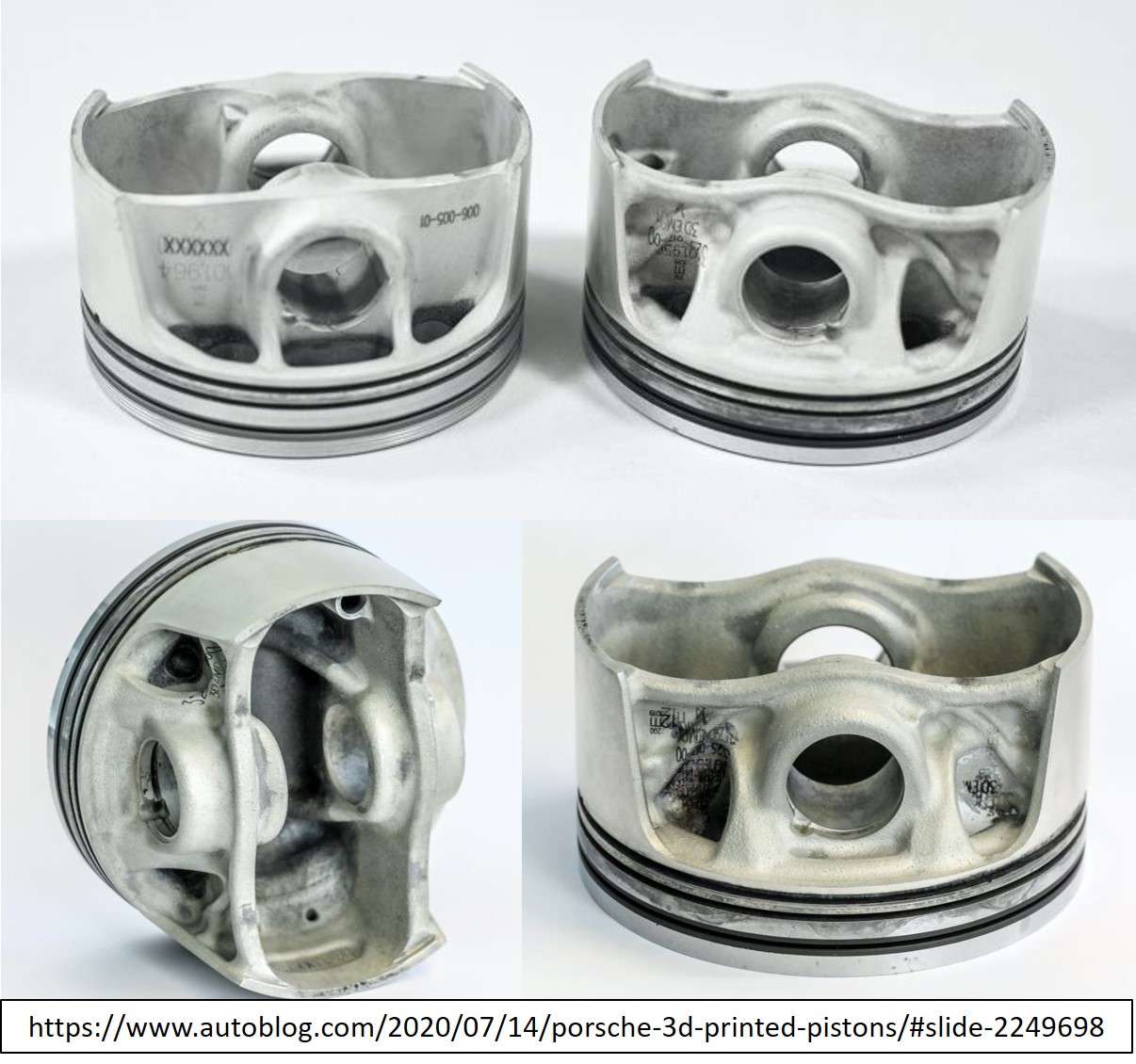
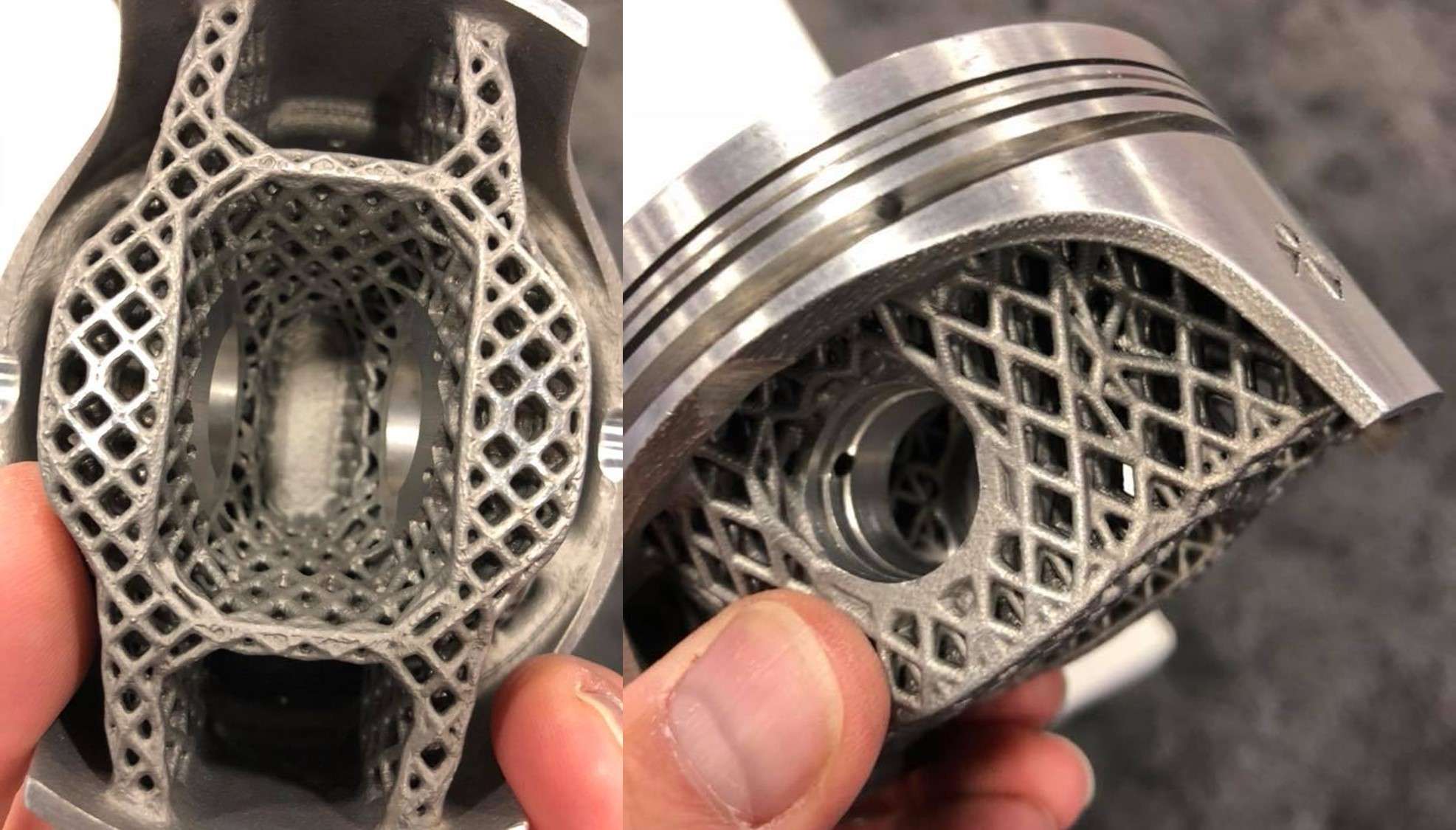
Can a printed aluminum piston really have the mechanical properties of a forged piston? Hard to believe as grain structure is so critical to strength.
Definitely not, however the point is to have lower temperatures due to better cooling and lower stresses due to a more optimal topology.
I have to say I am a bit dissapointed though, after all this talk of 3D printed pistons they have produced what is essentially a classic boxed bridge design with a standard diesel oil gallery. You can probably cast and machine that exact same shape but it's probably not as suitable for very limited production runs.
Can a printed aluminum piston really have the mechanical properties of a forged piston? Hard to believe as grain structure is so critical to strength.
Definitely not, however the point is to have lower temperatures due to better cooling and lower stresses due to a more optimal topology.
I have to say I am a bit dissapointed though, after all this talk of 3D printed pistons they have produced what is essentially a classic boxed bridge design with a standard diesel oil gallery. You can probably cast and machine that exact same shape but it's probably not as suitable for very limited production runs.
I'd be interested in what could be done with 3d printing that cannot be done with cnc now. You seem knowledgeable, can you tell us what Holy Grail can be unlocked with this tech?
I would almost expect that nickel plated, hollow glass microspheres mixed into a thick paste with flux, and cast/heated/aluminum poured on top to be the lightest and strongest way to make a piston, but it's still limited by casting methods. It would be 90% air tho.
Re: 3D printed pistons
Posted: 15 Jul 2020, 21:23
by e36jon
Mudflap is indeed the guy to ask. Consider my comments as coming from the cheap seats:
The advent of direct laser sintering (DLS) for 3D printing, where no subsequent heat treatment / infusion / etc. is necessary would seem to open up more possibilities than we've seen here or anywhere yet. There's a thread on here somewhere where the 3D printed steel piston that was rumored to be run by Ferrari when this current hybrid formula kicked off. There are some examples online of folks trying other alloys and geometries with this technology but I haven't heard of anything actually being used.
Another aspect of this DLS tech is the ability to use interesting sintered base material. Powder metallurgy is crazy-town when you start diving in. All sorts of hybrids that could not exist if melted together are possible with powder metallurgy. I have not heard of anything exotic happening in this vein for pistons or other race applications.
Lastly, per Mudflaps comments on the geometry not being very innovative / aggressive given what the DLS tech is capable of, I also think there will be some much more crazy examples coming. Pistons are tough though with all sorts of thermal and mechanical challenges, so I am not saying it will be easy...
Re: 3D printed pistons
Posted: 20 Jul 2020, 13:07
by etusch
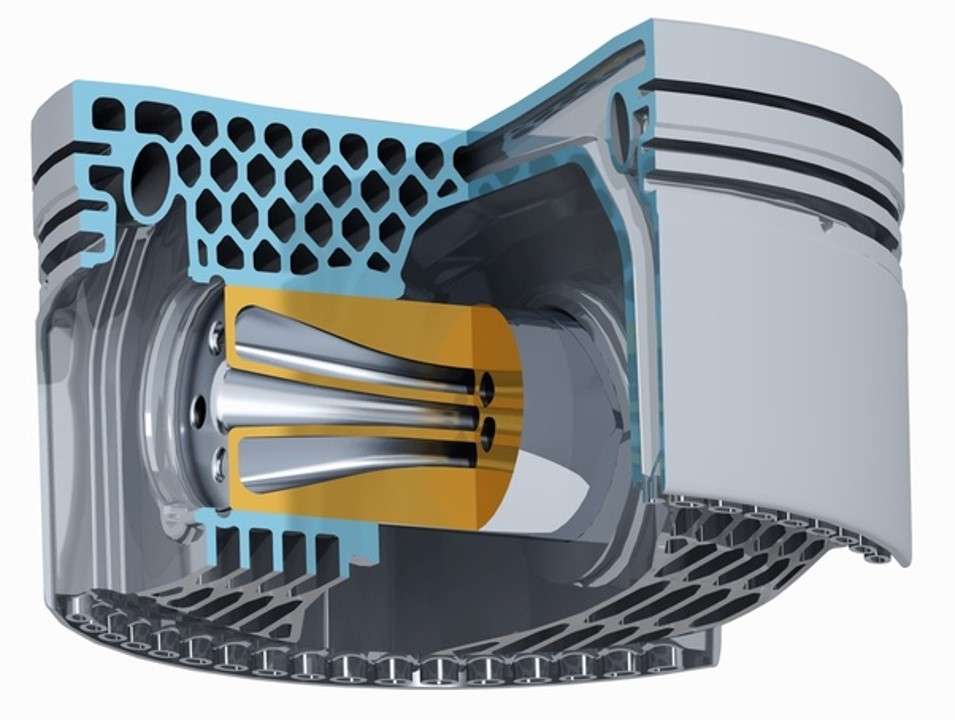
I watched a different video talking about mahle porsche 3d printed piston production. Narrator says outside of.piston is same because it will fit in combustion chamber. It differs at inside which contains coolint hole. It has material only if needed because of forces that part of piston must handle if no force there is no or lesser material.
He says.it is light weight.
if it is not complex enough I could not see any advantage. Of course this does not mean there is no advantage but just I can't see.
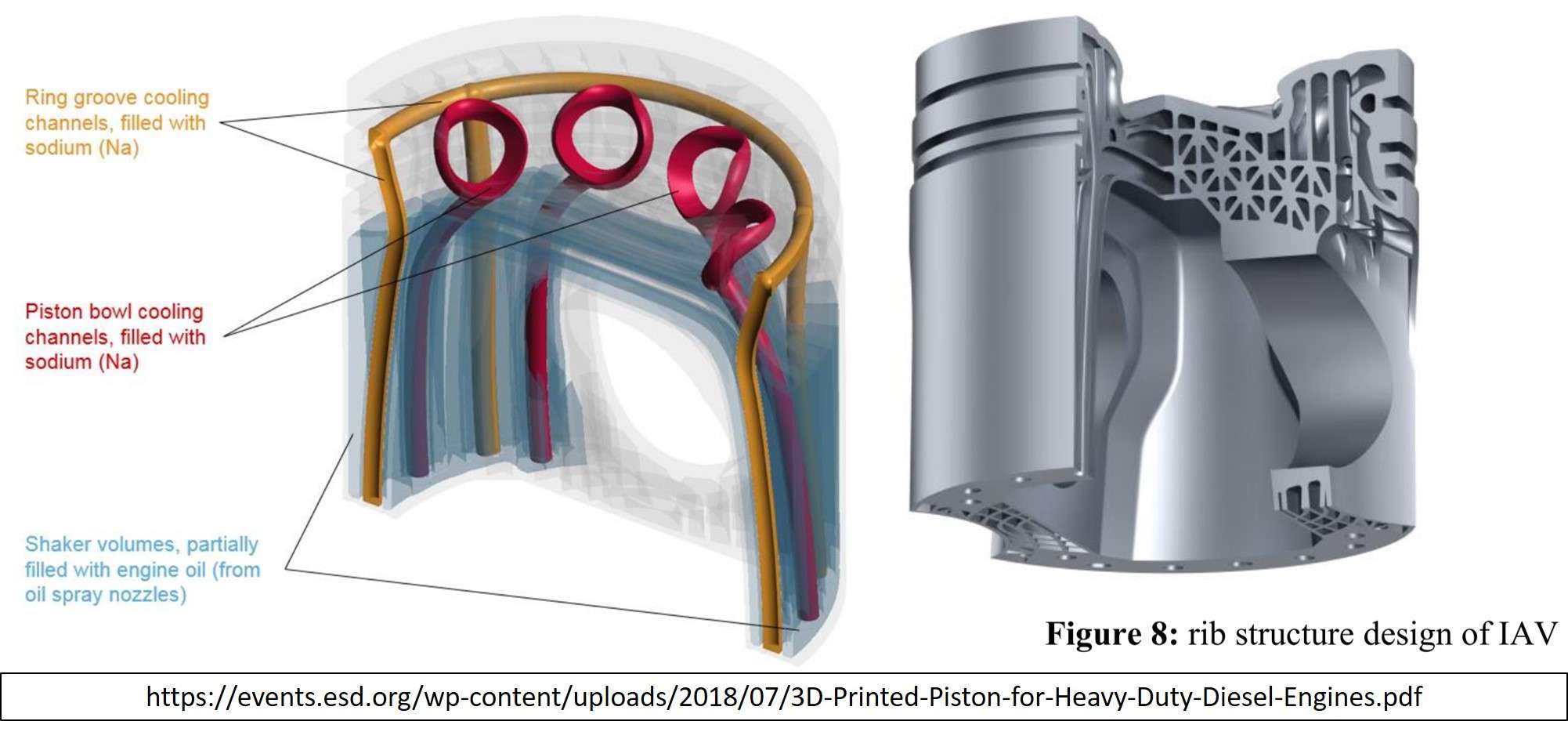
I wonder how they keep empty that cooling line when printing it with powder. I can not see they can use water cooling and it they use oil then where is the benefits?
Re: 3D printed pistons
Posted: 20 Jul 2020, 15:39
by Hoffman900
The box style piston has changed very little in the last 25 years or so, despite continuous R&D and advances in FEA.
I agree that topology improvements should help stress less and you could get a little more creative with cooling channels (though, they have been around for 40 years at this point in some capacity), but I think short of change in material, the overall design will look similar. It doesn't look far off from what you can see from high end billet pistons, imo.
Drag racers went super lightweight for years and top racers are going in a different direction, with very strong and heavy piston pins and light pistons. Top engine builders were finding they would make more power with heavier set-ups, and had found it had to do with keeping the ring land flat. Obviously, they have since refined this thought process. They typically don't have the cooling problems as they will just run extra fuel through the engine, and in classes where cylinder pressures are so severe, they just rebuild the engines between rounds.
In something like NASCAR, they have a minimum piston weights, so not much there, and they are seeing .1% blowby, so obviously the ring lands are staying intact. Pistons are already able to survive the cycle times they need to without cracking.
More than a year ago, I flew in a plane and in my side seat there were a young metallurgical engineer working at Mahle in the department making racing pistons.
At that time, in this forum, there were the discussion about the feasibility of steel pistons and I took the chance to ask him if Ferrari pistons were steel made and he confirmed me both Ferrari and Honda pistons were made by Mahle in steel. He didn't mentioned 3D printing as the manufacturing method but he was amazed by their complex shape.
Re: 3D printed pistons
Posted: 21 Jul 2020, 19:51
by e36jon
Greetings all
Apologies if the following images appear elsewhere. I tried searching and came up empty...
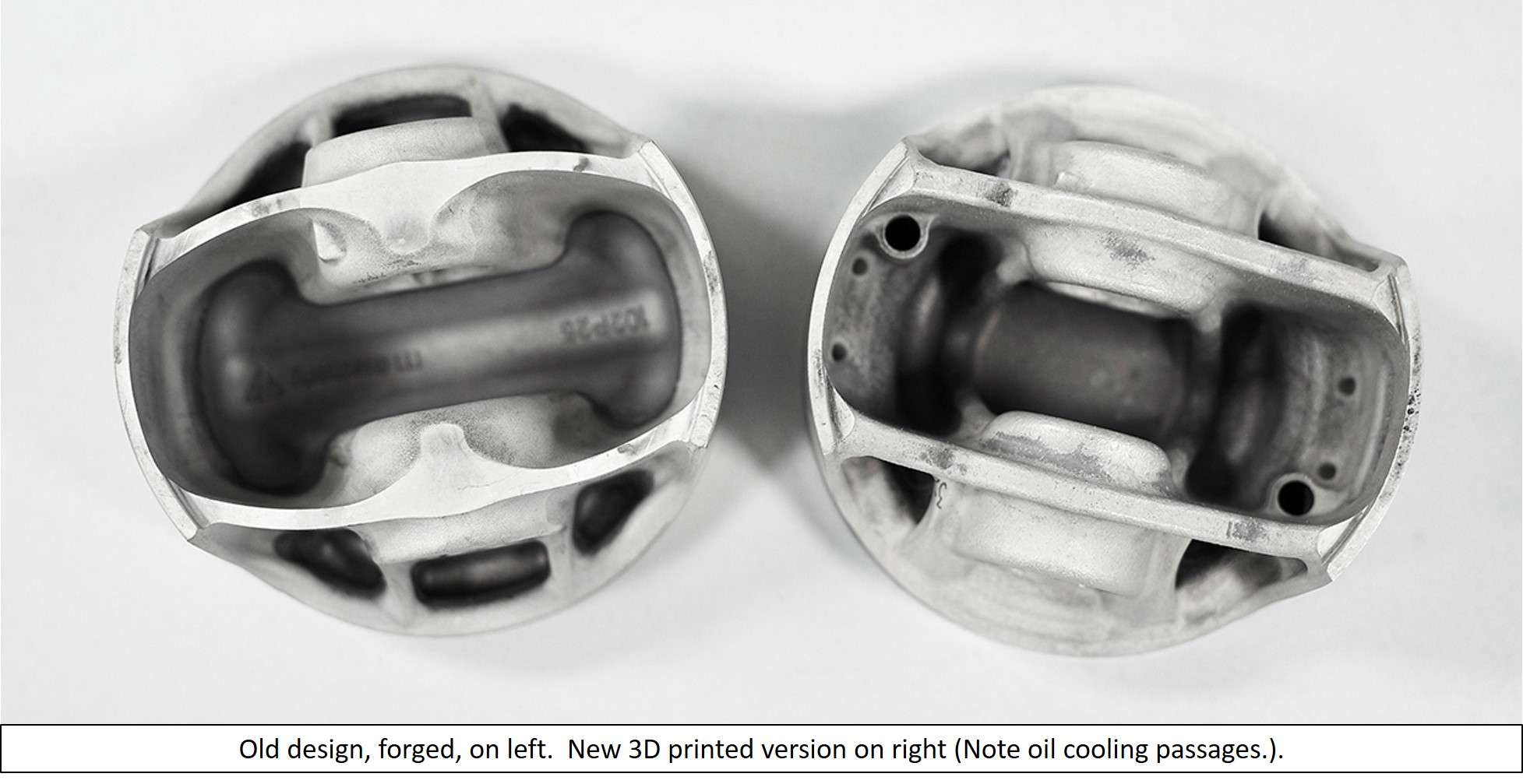
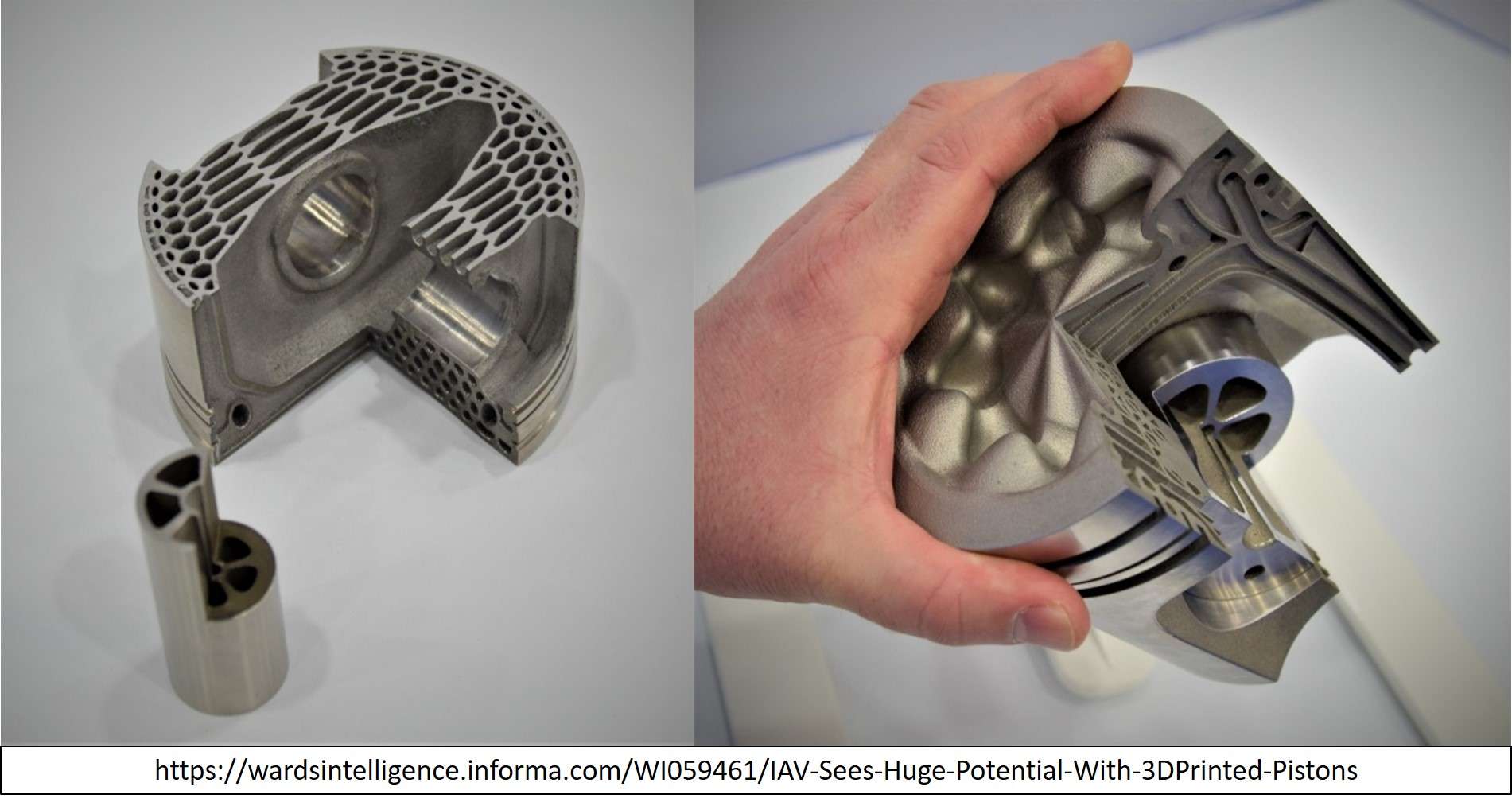
The Porsche 3D printed pistons. The top part of the image has the current non-printed piston on the left and the 3D printed piston on the right:
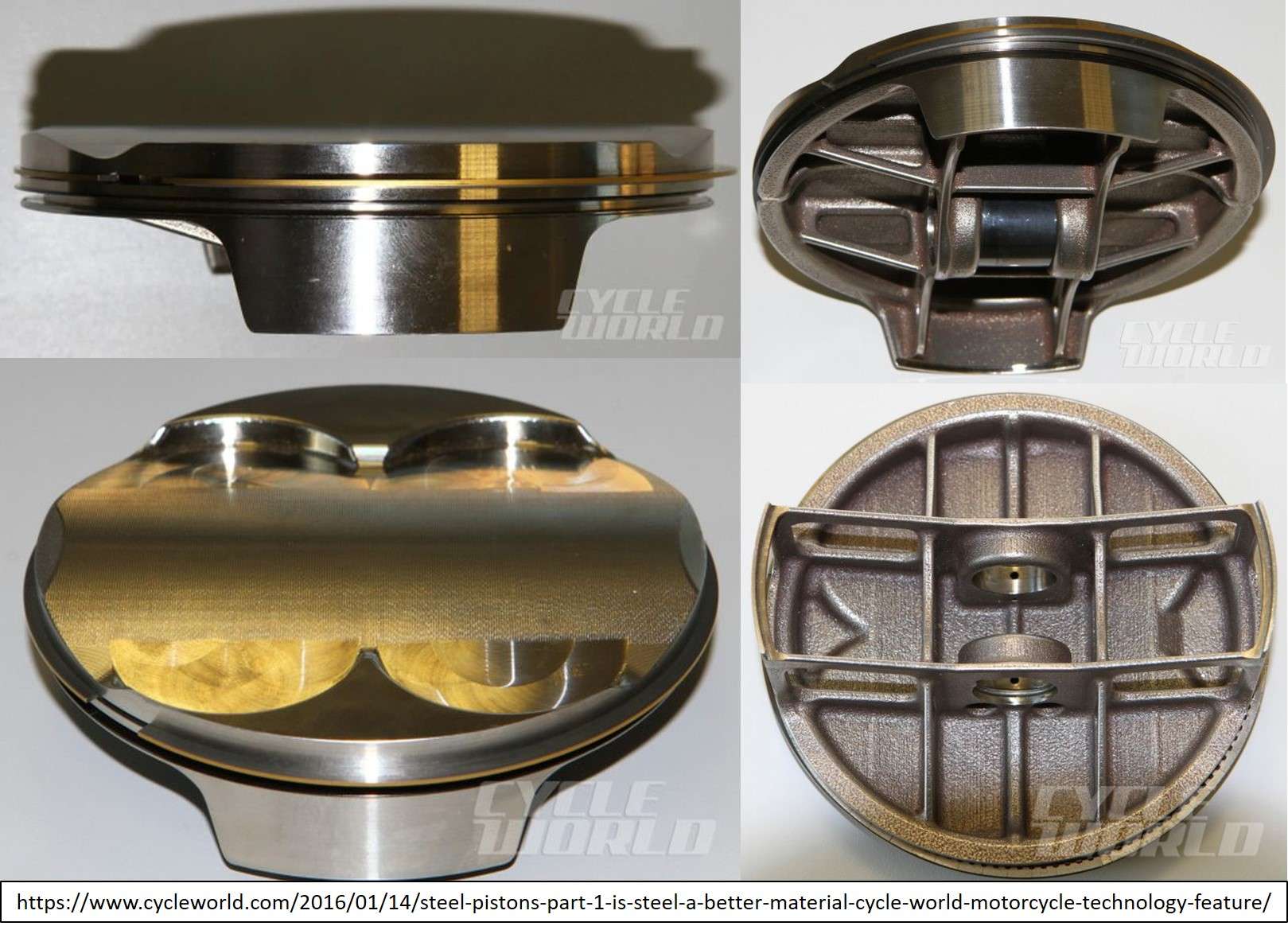
A 3D printed steel piston from a while ago. More info at the link.
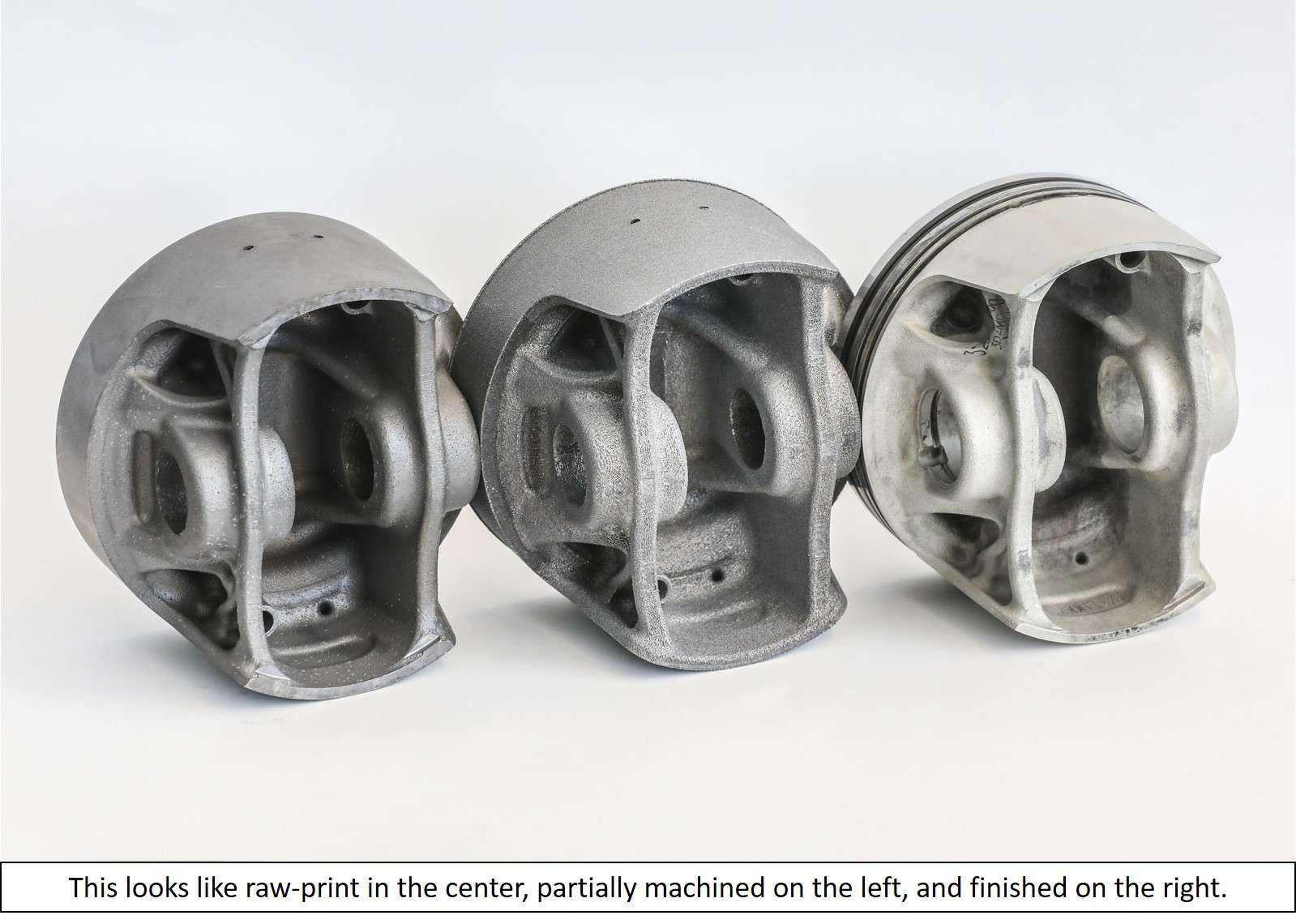
Some newer 3D printed pistons with more complex / interesting geometry that better represent what's possible. Automotive piston on the left and a much larger diesel piston on the right (How about that crown geometry! Wow...):
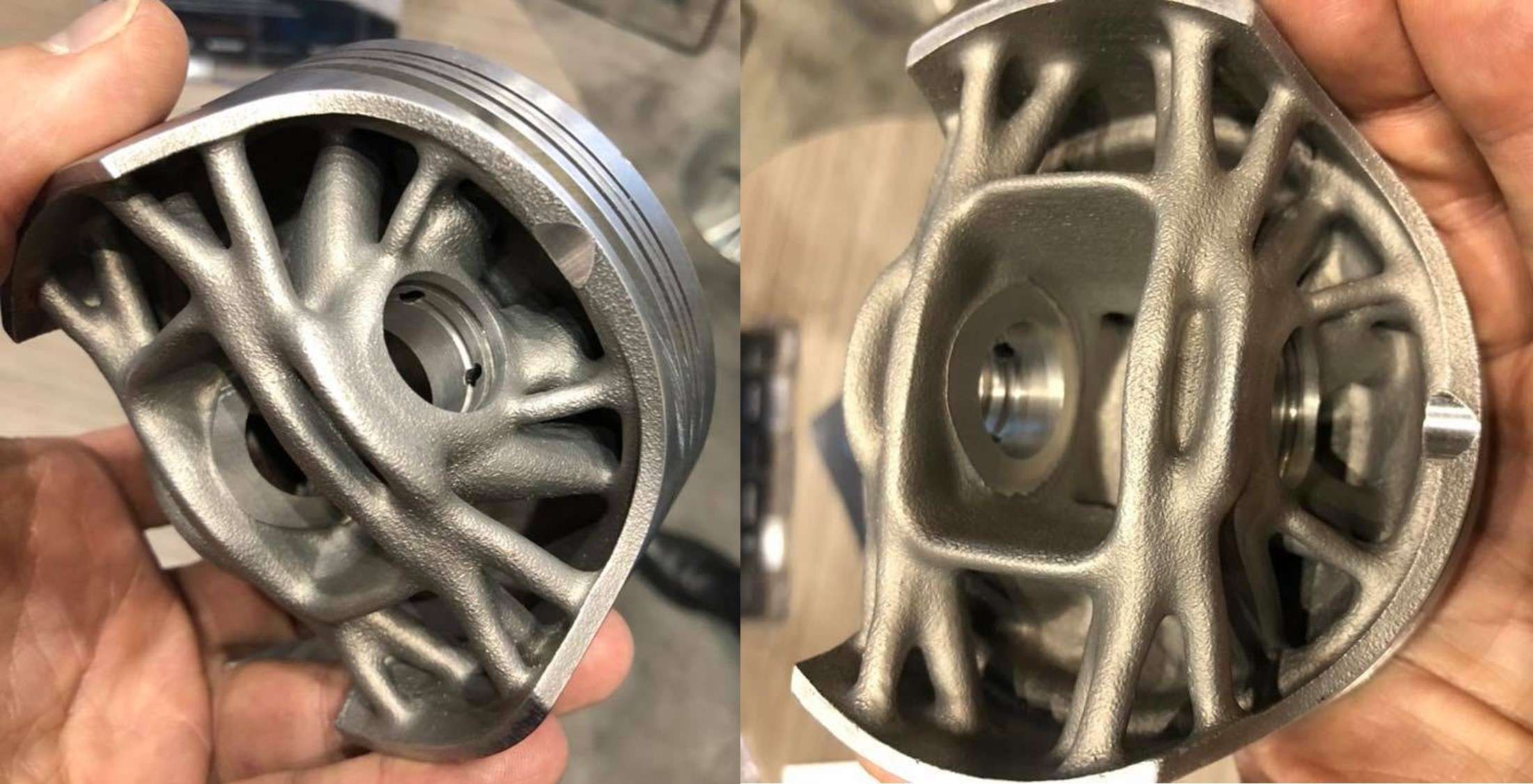
I found a couple more from a rapid prototyping tradeshow in 2018:
I hope the images help!
Re: 3D printed pistons
Posted: 21 Jul 2020, 22:03
by strad
When drag racing we often used the lightest pistons and had to watch out for the ring lands being pounded shut.
In the posted pictures I find the top of the shown piston interesting. How does that surface interface with flame propagation?
When drag racing we often used the lightest pistons and had to watch out for the ring lands being pounded shut.
In the posted pictures I find the top of the shown piston interesting. How does that surface interface with flame propagation?
Ring lands being pounded shut sounds like a detonation problem.
Most top natural aspirated drag racers (Pro Stock, Comp, etc.) and NASCAR, all contend with minimum weights by rules, but they will sacrifice a few grams of weight for a stronger part. Ring seal is the whole world to them and they all found with light pins / pistons, they would lose some. Consider NASCAR engines are only have ~.1% blowby, even after 700 miles or so, and that is pretty impressive. Strong compact graphite iron blocks help, and they're running 948mb of crankcase vacuum to get the low tension .5mm rings to seal.
Most top guys will tell you, light weight at the expense of strength was very 1990s / early 2000s thinking.
If 3D printing allows lighter pistons, but to be as strong as they are, then I think there is a chance you'll see them gain wider exceptance in classes that don't mandate minimum weight. There might be some advantages in the cooling channels as well that can't be machined in traditionally. NASCAR and the like aren't limited by piston cooling, but ultimately by peak cylinder pressure for the duty cycles needed from the rotating assembly. Drag racers could care less as they can just put more fuel through it or their run / rebuild times are so frequent.