Page 1 of 1
Machining in critical airflow areas
Posted: 11 Jan 2010, 10:05
by mx_tifoso
I was reading up on the S54 engine in the BMW E46 M3 and something that interested me was the subject of the combustion chamber and intake ports being machined.
Machined surfaces*. "Engineering finery": The combustion chambers and intake ports are completely machined, for smoothness that facilitates airflow.
RFDM - S54 Engine
Since the intake ports deal with airflow in a single direction at high speeds, is it important/critical to machine in a specific direction? Such as vertical in order to not have the surface texture interfere with the direction of the incoming air mass. Or does the direction even have a significant affect whatsoever?
Does the ultra smooth machined surface suffice regardless of the direction?
Take into account that I have no experience or knowledge on machining.
More on the E46 M3:
The Exhaust System for the New BMW M3
Re: Machining in critical airflow areas
Posted: 11 Jan 2010, 11:08
by xpensive
It can get a little complicated that mx, depending on wether the flow is laminar or turbulent,
when a higher "sand roughness" can actually decrease resistance in the latter case.
Search for "Johann Nikuradse diagram" on the web.
Re: Machining in critical airflow areas
Posted: 11 Jan 2010, 11:24
by CMSMJ1
They'll be machined as opposed to cast?
I doubt they will be mirror polished as well. You need a touch of the rough to optimise flow.
I ported my racebike heads and basiucally removed all of the casting flash and made the surface a uniform roughness/smoothness. Not polished.
Re: Machining in critical airflow areas
Posted: 11 Jan 2010, 15:17
by Jersey Tom
I would say that directionality of the toolpaths is not an issue. With a good machine you can have very good, low RMS surface finishes. Wouldn't even notice it.
Re: Machining in critical airflow areas
Posted: 11 Jan 2010, 16:09
by marcush.
look there especially in the archieves:
www.theoldone.com
the guy does some interesting things ...never polished example pic:
http://www.theoldone.com/components/cyl ... rInt11.jpg
Re: Machining in critical airflow areas
Posted: 11 Jan 2010, 16:43
by Pandamasque
Behold, I give you the most aerodynamically advanced production car

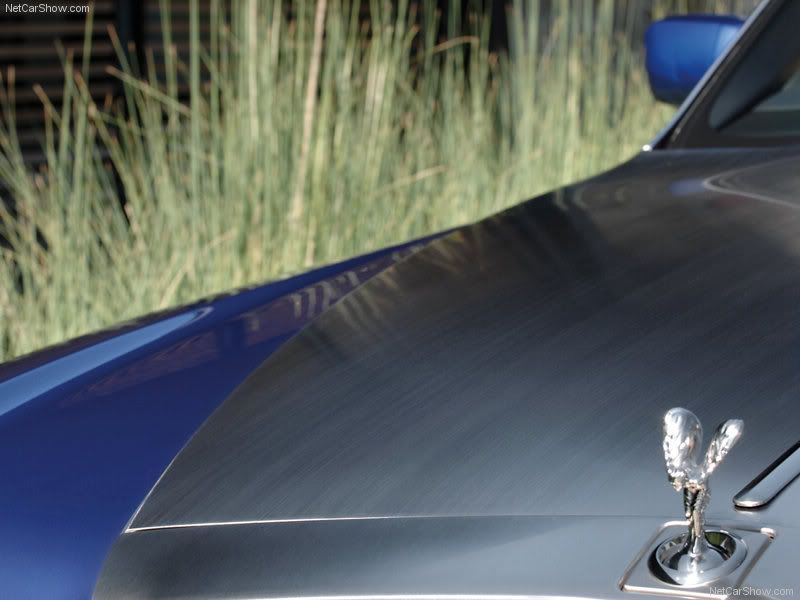
Re: Machining in critical airflow areas
Posted: 11 Jan 2010, 16:46
by xpensive
Didn't Honda try a similar aerodynamic-tweak on their F1-car a couple of years back, panda?
Re: Machining in critical airflow areas
Posted: 11 Jan 2010, 16:49
by Pandamasque
Yes but they got the proportions all wrong, plus the nose wasn't machined in the direction of the airflow. I bet this one is way faster.
Re: Machining in critical airflow areas
Posted: 13 Jan 2010, 04:38
by PlatinumZealot
I don't think the machining will affect the flow if it is under a certain critical roughness If i remember..

there is a roughness vs diameter value where the flow doesn't improve when you further smoothen the surface.
Re: Machining in critical airflow areas
Posted: 13 Jan 2010, 07:57
by xpensive
Pandamasque wrote:Yes but they got the proportions all wrong, plus the nose wasn't machined in the direction of the airflow. I bet this one is way faster.
That depends on the Reynolds number panda, above 2300, they might be better off going sideways?
Re: Machining in critical airflow areas
Posted: 03 Feb 2010, 05:25
by martij
All issues of the desirability of smooth surfaces aside, surface finishes below .8um (32uin) are not terribly difficult to machine in most steels. This is not mirror finish but will generally feel smooth. At that scale relative to the bore of the port I doubt a finer finish would do much good.
Re: Machining in critical airflow areas
Posted: 06 Feb 2010, 14:00
by Edis
Surface texture won't have any significant effect, and the flow in the intake port is turbulent so there is no point in having an intended roughness from that perspective (increased roughness only increase skin drag). In can have some advantages in that it prevents wall wetting but normally the CNC machined surface is enough for that.
The obvious advantages with CNC machined ports is that all ports will be practically identical with a smooth surface finish. The 'wall' between the two ports can also be machined to be very sharp.
With the S54 the inlet ports are fully machined, most likely done from two directions (from the combustion chamber side and from the inlet side). The exhaust port is partially machined and the combustion chambers appear to be machined aswell.