The best thing to do is add one feature at a time. Hopefully DRCorsa has the computing time.
Yes, a Gurney or slot Gurney change the environment at the diffuser exit, but there are indications from the CFD I posted that the aero design at the exit is an important part of making the concave shape work. So at some point is must be added to the simulation.
We would be well served to learn what makes the diffuser function most efficiently. With that we can make better judgement about how other parts of the car might effect it.
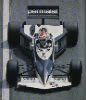
Its a step (not a slot) in the transition, the floors curls round and then creates this step before the steepest gradient of the diffuser. This detail acts 'like' a gurney to keep the flow attached to the roof of the diffuser.
My observations suggests details like this are still used.
scarbs wrote:Its a step (not a slot) in the transition, the floors curls round and then creates this step before the steepest gradient of the diffuser. This detail acts 'like' a gurney to keep the flow attached to the roof of the diffuser.
My observations suggests details like this are still used.
Nice detail. But don't think it works like a gurney - they are usually located on the high pressure side.
Boundary layer should be at least few milimeters thick at this point, so i think it's nice trick to simply get rid of it and start with full speed flow.
But you can see clearly that the diffuser has 3 curves. A convex, a step, then a concave.
The step is interesting becuase it's actually an indentation. I can't even guess what it's purpose is. I'll have to go with scarbs for now until i test it.
It works as much as a gurney as anything that has an identical shape to it will. Actually what a better way to create a low pressure differential than having an aerodynamic void, around a swirling mass of high pressure? At least that's what it appears to me like they were trying to achieve. Also it seems they're trying to direct the diffuser exit towards the center of the car. Question: Why would you want to direct the airflow of the diffuser towards the center of a chassis?
Take this with the grain of salt that I haven't designed any F1 diffusers, especially the ones pictured. As far as the step, I have a few guesses, I've done things like that for front diffusers to pick up a little velocity at an edge or reduce pitch sensitivity. There is a big gain in downforce from an additional degree of angle but if you start riding really close to stall you can get bad behavior when the car pitches if you wash out diffuser, sometimes little tricks like that will cause a "softer" stall and make that peak value window bigger. Then you get the car to live in the peak value range without making the car stiffer or losing rake options because they hurt aero. You gotta test, test, test because it could be any one of a few other possibilities as well.
About the concave shape: flow separation is the result of a rate of change that is too high in the pressure gradient, not any specific angle. If you look at that honda example above, the diffuser is contracting in plan view at the same time you see the concave shape in side profile. To target the maximum downforce value you need to ride the limit of that pressure gradient before the flow seperates over as much surface area as possible. One way to do that is to increase volume in third dimension even if rules (or packaging) constrain you in another.
Think of this like water flowing over a bump. You have a nice gradual bump and the fluid just rises and falls. If you have a very agressive curve on the bump, the water will start tumbling off the back side, however if you also start constricting the flow down from plan view at the same time as you start to recede on the back side of bump, it wont separate. Hope that helps.
Last edited by gixxer_drew on 10 Dec 2011, 02:23, edited 1 time in total.
BreezyRacer wrote:Nice thinking Drew! Good thoughts to ponder ..
Any time! I think this is also a good example of how having a tool like CFD, or a high end wind tunnel still means you need a good aerodynamicist. You cant just test every single shape combination at every single attitude. Even at the level of F1, the possibilities become infinite. Compute / tunnel time in contrast, is always finite and costly. Intuition is key to guiding things in a useful direction. All the results are interpretive so a computer can't figure it out either. I get results all the time that had lesser values, but made a bunch of lights go on about how that can lead to a better total result (a quicker car).