Radiator angle and aero balance

Here are our CFD links and discussions about aerodynamics, suspension, driver safety and tyres. Please stick to F1 on this forum.

Post Tue Mar 20, 2012 12:25 pm

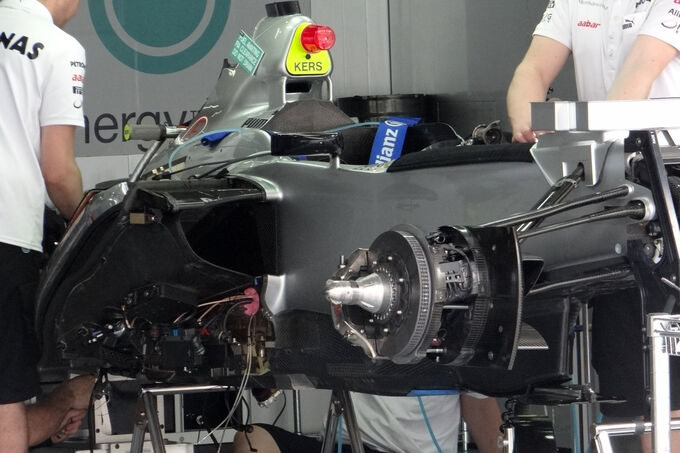
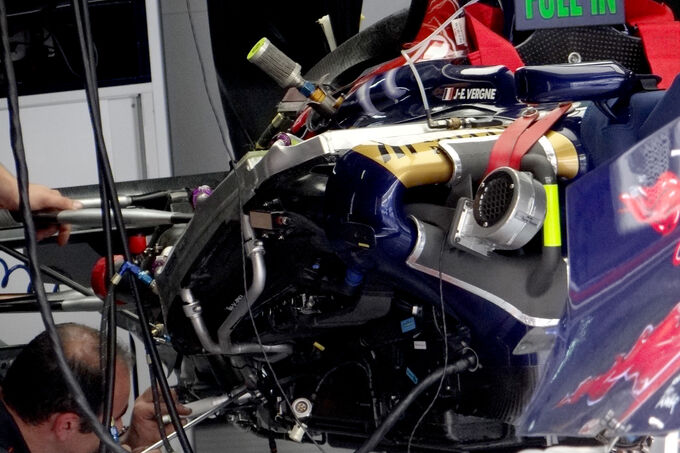
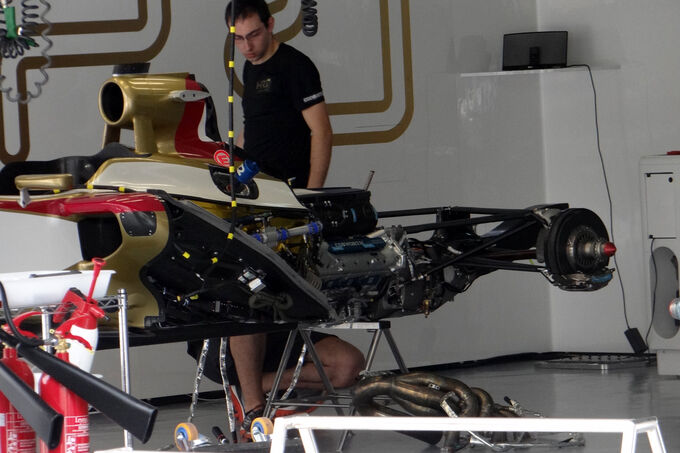
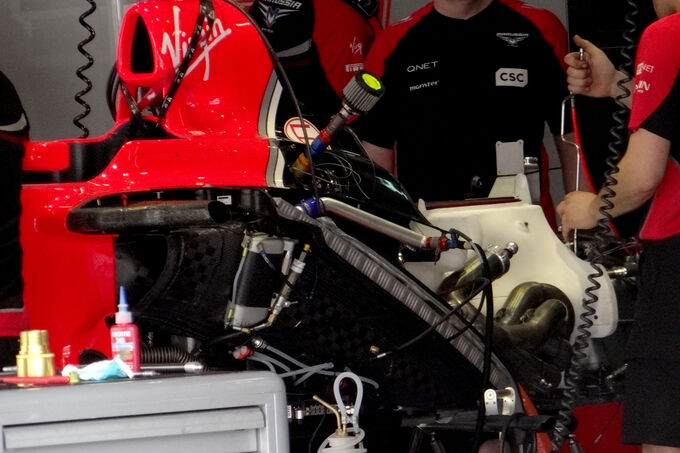
This year there is an interesting diversification between radiators' angle for different teams.

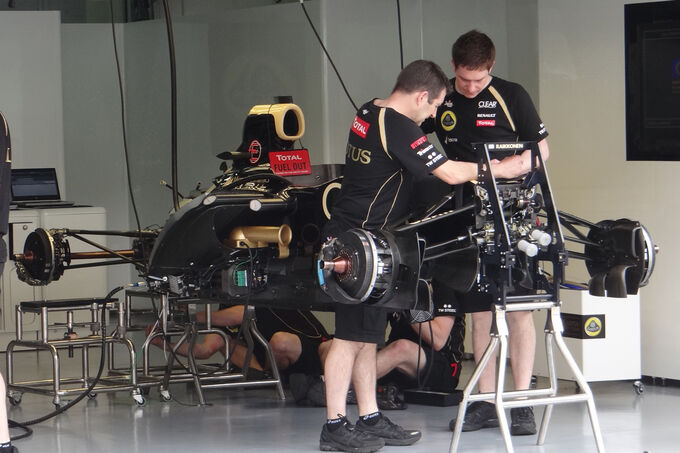
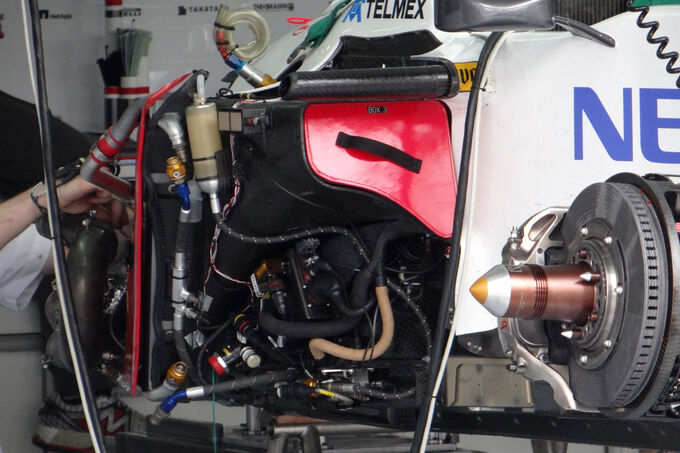
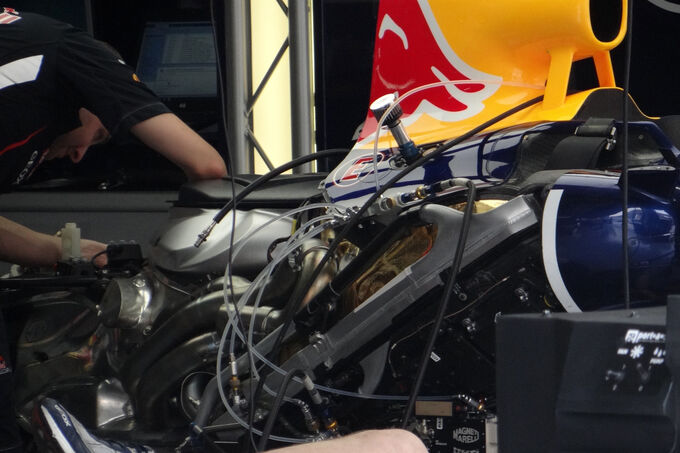
For example we have seen in melbourne pitlane that rbr has kept the "conventional" angled radiator layout, where has ferrari (and consequently sauber and toro rosso) have gone for a now unconventional 90s style vertical layout, and mclaren (and iirc lotus) have a split layout with a vertical radiator near the floor and a very angled, almost horizontal one on top of it.

When speaking about radiator and internal flow influence on aero, the first factor that comes to mind is drag, to which radiators are great contributors.

But I think that one area some teams have looked at with special attentior this year is radiator angle influence on aero balance.

If we model the radiator as a porous jump, we see that flow passing through it exerts a force on it which is roughly normal to the radiator face: this is an aerodynamic force acting on the car, which can represented in terms of lift, drag and moment. The inclination of the radiator affects the percentage of lift vs drag (no lift for vertical radiator), and the distance of the center of the radiator from the contact patches of the wheels in side view determine the moment, i.e. the contribution to aero balance.

The picture is more complicated that this, because also pressure gradient along the inlet especially have to be taken into account.
High and low preesure zones will compensate for the lift contribution of the radiator (momentum equation is always valid), but for example a more horizontal radiator will have staggered pressure gradients in side view between the top and the bottom surface of the inlet, and this also will generate some torque.

It is worth noting that, in addition to the force acting on the internal part of the car as a result of the variation in momentum of the internal flow, there is also a torque acting on the car as a result of this flow, and it could be useful to exploit it for example to move balance a bit towards the rear, as I think verybody agrees that one of the aero themes at the beginning of this season is trying to gain some rear balance (maybe 1-2%).

It will be interesting to see if ferrari f2012's evolution involves also a rethinking in radiator angle.
shelly
 
Joined: 5 May 2009

Post Wed Mar 21, 2012 11:00 pm

Do you have some photos ? (especially the E20 and the STR7)
Blackout
 
Joined: 9 Feb 2010

Post Thu Mar 22, 2012 1:40 am

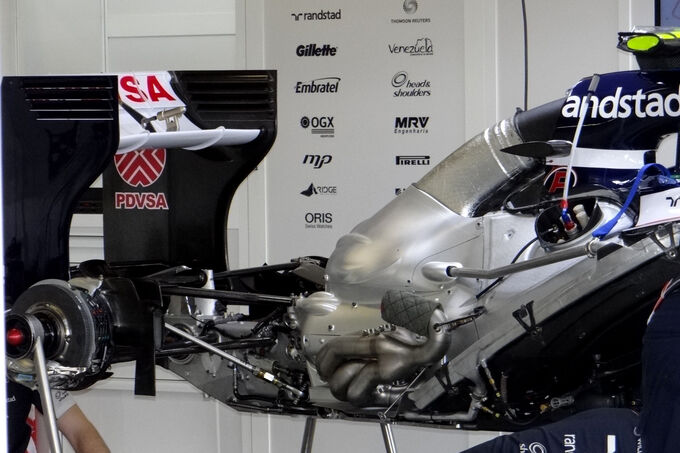
Best I can find thus far. Will update when I find better ones. Right click>view image

McLaren
Image


Lotus
Image


Ferrari
Image


Sauber
Image

Red Bull
Image

FI
Image

Williams
Image

Mercedes AMG
Image

STR
Image

HRT
Image

Marussia
Image
Last edited by Crucial_Xtreme on Thu Mar 22, 2012 12:01 pm, edited 9 times in total.
Crucial_Xtreme
 
Joined: 15 Oct 2011
Location: Charlotte

Post Thu Mar 22, 2012 11:03 am

Blackout
 
Joined: 9 Feb 2010

Post Thu Mar 22, 2012 5:42 pm

shelly wrote:But I think that one area some teams have looked at with special attentior this year is radiator angle influence on aero balance.


1) Angle of attack of the radiator: The force acting on the forward radiator surface, is it affected by pressure and/or velocity?

2) Expand on the benefit of the pressures on both sides of the radiator. I do not see how any net benefit makes it to the wheels.

Brian
hardingfv32
 
Joined: 3 Apr 2011

Post Fri Mar 23, 2012 12:28 pm

@brian:

1)the aero behaviour of the radiator can be modelled by a relation between the flow through the radiator and the pressure drop across its faces. The realtion is uqdratic (delta pressure proportional to v through squared).

I a basic mode the variation is integrated across the radiator face and gives a resulting force normeal ro the face of a radiator. So this force is an aro force as the force acting on a wing, and its moment to the tyres contatc patches affects balnce (this in response to your 2)).

A more refined model could take into account behaviour of the flow inside the radiator fins.

If we think of the system inlet +radiator+outlet, I think that different angle of the radiator will give different moments, also because of the s-shaped path of the flow and because of the offsetting in longitudinal direction of the high pressures before the radiator face.

By omparison, a vertical radiator with symmetric inlet and outlet would have just the contribution to aero balnce of its drag (horizontal force acting with a arm equal to the distance from the ground of the center of the radiator).

Looking at the pictures crucial posted, it seems to me that mclaren lotus and toro rosso have placed the radiators higher than the step plane level. If this is not my mistake in interpreting the pictures, it is an interesting choice for packaging.
For toro rosso the expalination is straghtforward because of their undercut-double floor, but if this is true for the other two cars I can not find at the moment a better aswer than kers batteries packaging.

Could be related to internal aero maybe.
shelly
 
Joined: 5 May 2009

Post Thu Apr 19, 2012 6:50 pm

Updating this thread with better pictures. As Shelly mentioned in another thread, rather interesting McLaren's radiator is almost completely horizontal. Back to Ferrari, rumor is they will change the vertical radiator position, although it doesn't seem to effect the Sauber.


Image

Image

Image

Image

Image
Crucial_Xtreme
 
Joined: 15 Oct 2011
Location: Charlotte

Post Thu Apr 19, 2012 8:00 pm

The teams have been using side pod mounted radiators for decades. The flows are well modeled and test in the wind tunnels. I would say they have a clear understanding of what to do with the radiators to get the flows they require to integrate with the rest of the car.

Brian
hardingfv32
 
Joined: 3 Apr 2011

Post Thu Apr 19, 2012 10:14 pm

hardingfv32 wrote:The teams have been using side pod mounted radiators for decades. The flows are well modeled and test in the wind tunnels. I would say they have a clear understanding of what to do with the radiators to get the flows they require to integrate with the rest of the car.

Brian


Perhaps the changed flow 'patterns' from the front wing, the square pirellis, and the increased demand for airflow around/ under the sidepods to the rear of the car, are screwing with their understanding...

Regards,
Kurt
bettonracing
 
Joined: 12 Oct 2007

Post Thu Apr 19, 2012 11:07 pm

bettonracing wrote:Perhaps the changed flow 'patterns' from the front wing, the square pirellis, and the increased demand for airflow around/ under the sidepods to the rear of the car, are screwing with their understanding...

Regards,
Kurt


I was thinking that if told what the input flow patterns are the correct duct can be designed. But maybe the intake flow patterns are not that easy to discern.

Brian
hardingfv32
 
Joined: 3 Apr 2011

Post Fri Apr 20, 2012 8:16 am

Yes sidepod mounted rariators are there from the 70s. But after some years in which the standard position was fixed we are seeing this year different approaches.
shelly
 
Joined: 5 May 2009

Post Fri Apr 20, 2012 3:32 pm

Maybe something different is available with the radiator construction. Say fins that are at angles to the normal radiator axis.

Brian
hardingfv32
 
Joined: 3 Apr 2011

Post Sat Apr 21, 2012 11:16 am

hardingfv32 wrote:Maybe something different is available with the radiator construction. Say fins that are at angles to the normal radiator axis.

Brian

I remember reading that that was illegal somewhere, but I'd have to look through the regs.
Owen.C93
 
Joined: 24 Jul 2010

Post Wed Jul 11, 2012 10:15 am

Crucial_Xtreme on 19 April wrote:... Back to Ferrari, rumor is they will change the vertical radiator position, although it doesn't seem to effect the Sauber.

....

They continue with the vertical layout and I doubt it will be changed in 2012.
Image
Silverstone
Forum guide: read before posting

Join the chatroom during GP weekends!

"You do it, then it's done." - Kimi Räikkönen
mx_tifoso
 
Joined: 30 Nov 2006
Location: North America

Post Wed Jul 11, 2012 11:37 am

shelly wrote:If we model the radiator as a porous jump, we see that flow passing through it exerts a force on it which is roughly normal to the radiator face: this is an aerodynamic force acting on the car, which can represented in terms of lift, drag and moment.


You might be confusing the radiator angle and the angle of the fins of the radiator. If the fins are still parallel to the ground, surely they will not induce lift or.....downforce. (But you might not be, and I might be misunderstanding you!)
peanutaxis
 
Joined: 23 Jun 2012

Next

Return to Aerodynamics, chassis and tyres

Who is online

Users browsing this forum: CCBot [Bot], Huntresa, Tim.Wright, turbof1 and 13 guests