This is all speculation. Being the third in the field is all Ferrari can do next year. They will reduce the distance but it will still be the weakest PU in the grid.
Yes predictions about power gain is all speculation and we have to wait and see whether the Ferrari PU will be the weakest PU again.
Re: Ferrari Power Unit Hardware & Software
Posted: 02 Feb 2021, 20:32
by ispano6
Apologies if this is old news.
So according to this youtube video from Autosport, Ferrari are not introducing a split-turbo architecture for 2021.
1)It is introducing a "superfast cylinder head" which will help achieve greater "fuel atomization" and higher combustion chamber pressure in order to get closer to the 500bar limit.
2) New piston crown + New intake ducts + New alloys
3) slightly smaller turbine to improve electrical charging for a more efficient ERS
Apologies if this is old news.
So according to this youtube video from Autosport, Ferrari are not introducing a split-turbo architecture for 2021.
1)It is introducing a "superfast cylinder head" which will help achieve greater "fuel atomization" and higher combustion chamber pressure in order to get closer to the 500bar limit.
2) New piston crown + New intake ducts + New alloys
3) slightly smaller turbine to improve electrical charging for a more efficient ERS
500 bar limit is in regards to line pressure in the high pressure fuel pump. The higher the fuel pressure the better the fuel atomizes. You push the fuel harder through the injection nozzle causing it to disperse into smaller droplets than at a lower pressure. Meaning the Ferrari engine is using a fuel delivery system that uses a higher pressure, closer to the regulation limits. This is not without drawbacks, as higher fuel pressure requires more energy to compress. If not careful with very high pressure and too high a temperature, fuel can enter a strange state that is not quite gas and not quite liquid. AKA supercritical state.
Re: Ferrari Power Unit Hardware & Software
Posted: 03 Feb 2021, 06:10
by Slo Poke
If this car is fast and wins races, suspicions that concern the dark creepy corridors of the paddock, confirm the fuel saga of 17-18 as farcical.
If this car is fast and wins races, suspicions that concern the dark creepy corridors of the paddock, confirm the fuel saga of 17-18 as farcical.
I highly doubt we'll be seeing wins from Ferrari this season, so the questions regarding their 'fuel saga' will still remain for many seasons to come. I do hope that Alfa Romeo and Haas can gain some ground with the expected increase in performance for the new season; Anything to make the midfield battle more interesting, since that is where I expect most of the action to take place!
If this car is fast and wins races, suspicions that concern the dark creepy corridors of the paddock, confirm the fuel saga of 17-18 as farcical.
I highly doubt we'll be seeing wins from Ferrari this season, so the questions regarding their 'fuel saga' will still remain for many seasons to come. I do hope that Alfa Romeo and Haas can gain some ground with the expected increase in performance for the new season; Anything to make the midfield battle more interesting, since that is where I expect most of the action to take place!
Exactly that Schippke, exactly that! Try not to neglect the pointier bit though,.. as there may be something of interest thereabouts.
Apologies if this is old news.
So according to this youtube video from Autosport, Ferrari are not introducing a split-turbo architecture for 2021.
1)It is introducing a "superfast cylinder head" which will help achieve greater "fuel atomization" and higher combustion chamber pressure in order to get closer to the 500bar limit.
2) New piston crown + New intake ducts + New alloys
3) slightly smaller turbine to improve electrical charging for a more efficient ERS
500 bar limit is in regards to line pressure in the high pressure fuel pump. The higher the fuel pressure the better the fuel atomizes. You push the fuel harder through the injection nozzle causing it to disperse into smaller droplets than at a lower pressure. Meaning the Ferrari engine is using a fuel delivery system that uses a higher pressure, closer to the regulation limits. This is not without drawbacks, as higher fuel pressure requires more energy to compress. If not careful with very high pressure and too high a temperature, fuel can enter a strange state that is not quite gas and not quite liquid. AKA supercritical state.
I think the main reason why the pressure is high is so that the spray can happen faster. Lower pressure will atomize well too, but won't be fast enough to complete within the injection window at higher rpms.
For giggles I would say it is a twin screw compressor spun by the turbine.
I can not understand what you are actually saying (I am not on your level of tech knowledge).
Please can you explain, I will appreciate it.
Re: Ferrari Power Unit Hardware & Software
Posted: 10 Feb 2021, 22:16
by NL_Fer
I would expect the 2021 PU to be competing with the rest of the field. The ban in their fuelsystem cam very late, after the 2020 Barcelona test. No time to redesign the engine for the legal fuel flow. So for 2020 is running sub-optimal
For giggles I would say it is a twin screw compressor spun by the turbine.
I can not understand what you are actually saying (I am not on your level of tech knowledge).
Please can you explain, I will appreciate it.
A twinscrew compressor designed to turn at 50,000 rpms, driven by a double flow turbine.
In this way a common angular speed (rpm) between components is retained as per regulations and a bit more efficiency is to be had. Rotating mass will be higher but it will not be as detrimental because the system will be kept in narrow speed range.
Advantges:
Fits inisde the Vee ofthe engine with intercoolers above it and cross-flow intake runners above that.
More linear characteristics to air flow and rpm
More reliability of MGUH.
More efficient compression ( less heat) smaller intercoolers
For giggles I would say it is a twin screw compressor spun by the turbine.
I can not understand what you are actually saying (I am not on your level of tech knowledge).
Please can you explain, I will appreciate it.
A twinscrew compressor designed to turn at 50,000 rpms, driven by a double flow turbine.
In this way a common angular speed (rpm) between components is retained as per regulations and a bit more efficiency is to be had. Rotating mass will be higher but it will not be as detrimental because the system will be kept in narrow speed range.
Advantges:
Fits inisde the Vee ofthe engine with intercoolers above it and cross-flow intake runners above that.
More linear characteristics to air flow and rpm
More reliability of MGUH.
More efficient compression ( less heat) smaller intercoolers
Would this not have more mass to be spun up by the motor when engine RPM is down?
Partly off set I suppose by also having more mass to drive the generator and compressor 'off throttle'.
For giggles I would say it is a twin screw compressor spun by the turbine.
I can not understand what you are actually saying (I am not on your level of tech knowledge).
Please can you explain, I will appreciate it.
A twinscrew compressor designed to turn at 50,000 rpms, driven by a double flow turbine.
In this way a common angular speed (rpm) between components is retained as per regulations and a bit more efficiency is to be had. Rotating mass will be higher but it will not be as detrimental because the system will be kept in narrow speed range.
Advantges:
Fits inisde the Vee ofthe engine with intercoolers above it and cross-flow intake runners above that.
More linear characteristics to air flow and rpm
More reliability of MGUH.
More efficient compression ( less heat) smaller intercoolers
You do realize twin screw compressors are incredibly bulky. Centrifugal compressor is by far the best choice for this efficiency formula.
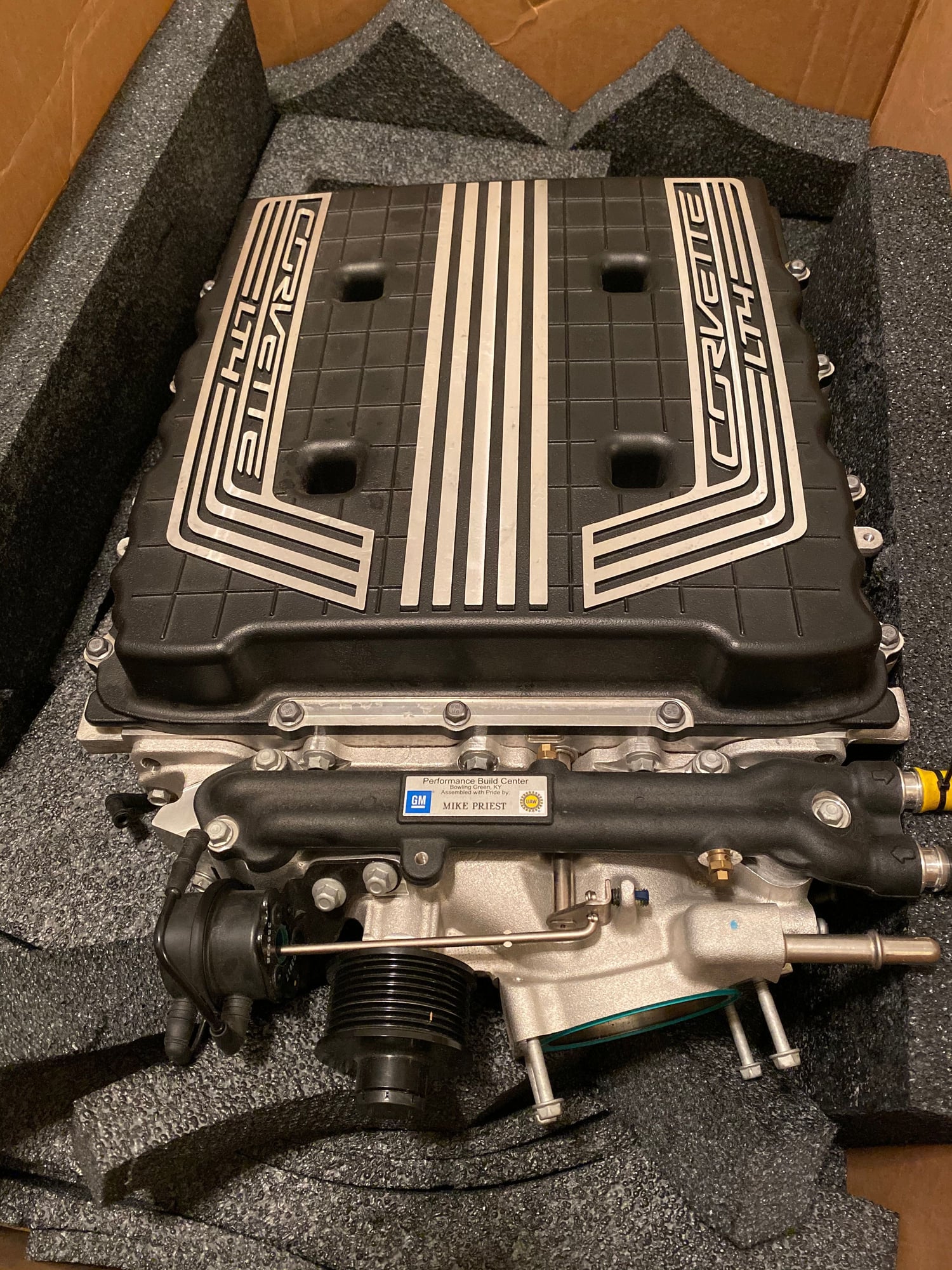
This is the twin screw supercharger on the C7 Z06 Vette. That engine makes 630bhp, and it takes that big ass blower to do it, the F1 engines need more air than that supercharger can provide. True F1 has a money is no object mentality, still I doubt you could make it small enough to fit within the V and flow enough air.
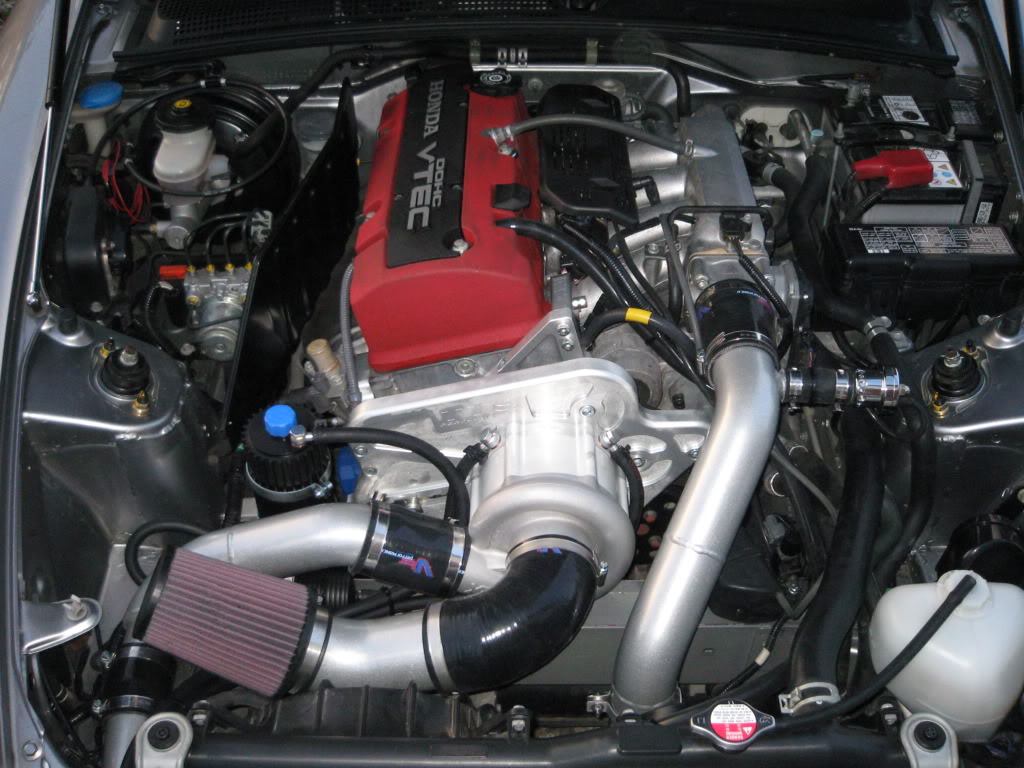
Here's a centrifugal compressor that flows more air than the twin screw pictured above. Notice how much more compact it is.