Page 1 of 6
2018 aero developments
Posted: 22 Feb 2018, 18:29
by godlameroso
2018 mid wing has to be the big talking point, another thing of note is the much more efficient cooling and shrink wrapped engine covers.
I suppose microtube heat exchangers have become the norm, which could be why cooling solutions are so compact.
Re: 2018 aero developments
Posted: 23 Feb 2018, 01:02
by godlameroso
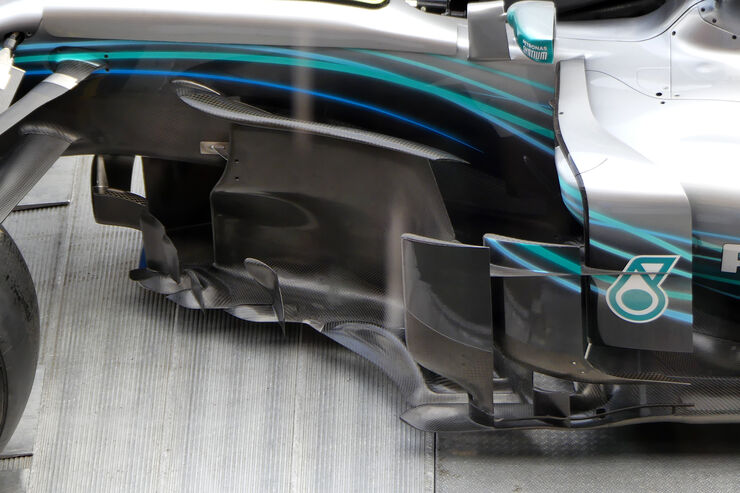
The main purpose of the bargeboards, increase the pressure in the sidepod undercut, the higher the pressure, the lower the pressure at the edge of the floor, particularly at the location of that horizontal diffuser. This sucks air into the floor, essentially the cars from a top down perspective can be seen as two cars. Front wing bargeboards, to the driver is the front car, Sidepod inlets, to rear wing is the rear car. Well these cars are certainly long enough to be two cars.
Re: 2018 aero developments
Posted: 23 Feb 2018, 01:49
by roon
godlameroso wrote: ↑22 Feb 2018, 18:29
2018 mid wing has to be the big talking point...
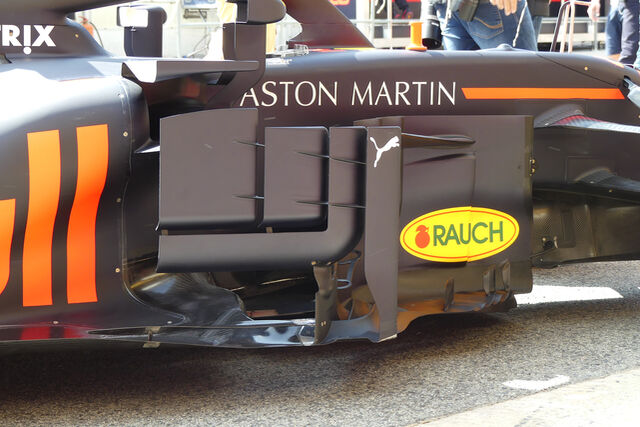
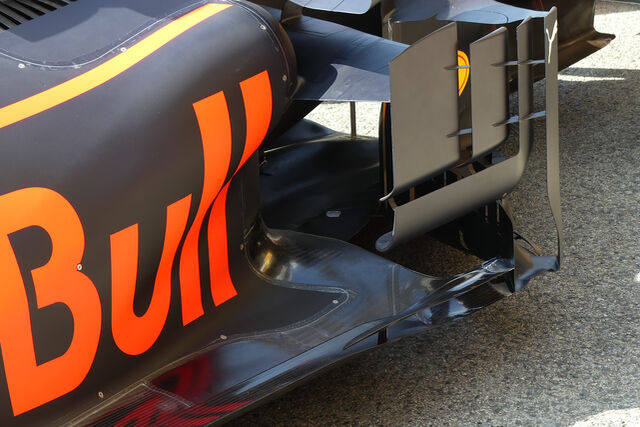
It seems like RB has taken this the farthest (of the cars seen thus far). They have the longest horizontal wing elements in this region of the car. Two of them, stacked upon the de facto third: the floor corner. The top mid-wing is especially long. If airflow is trending downward through that region, it is quite a big negative lift device.
Re: 2018 aero developments
Posted: 20 Mar 2018, 12:48
by dren
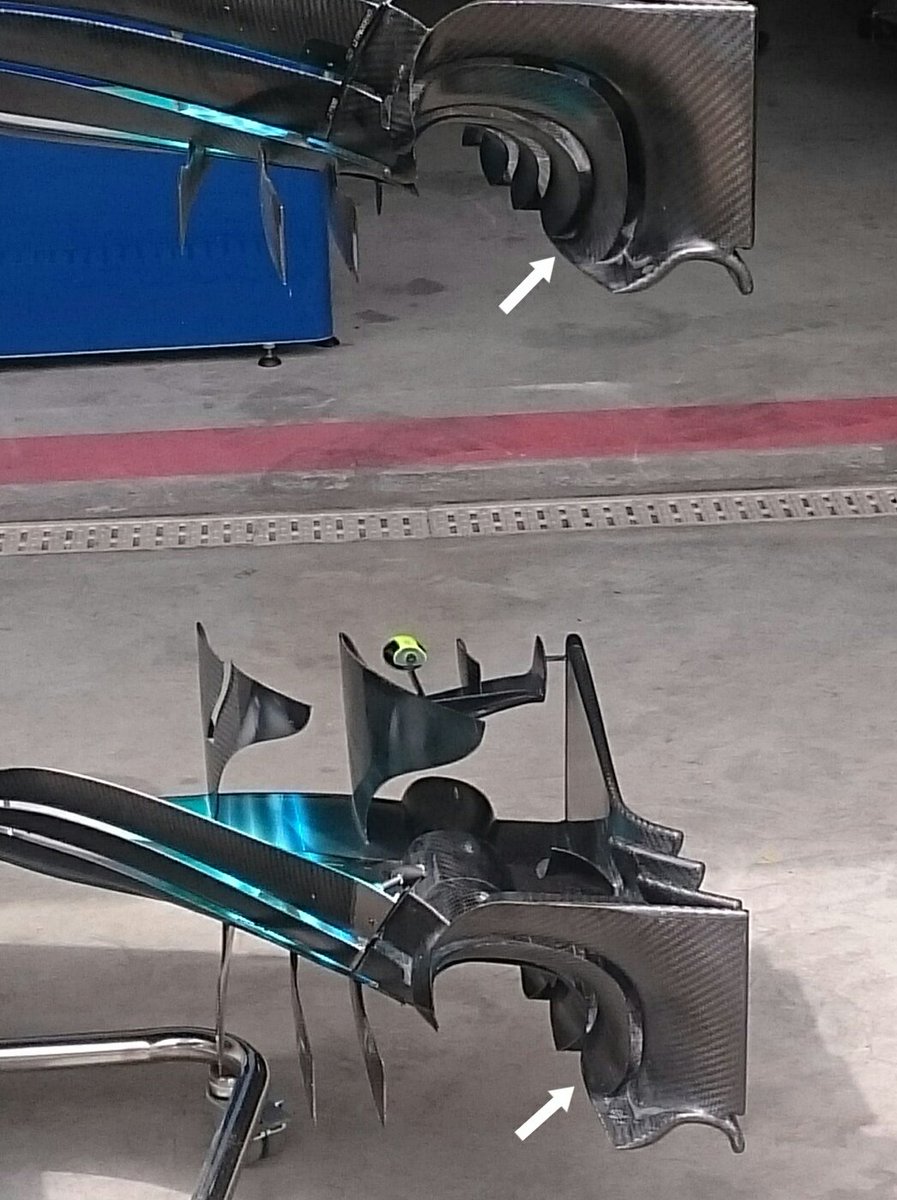
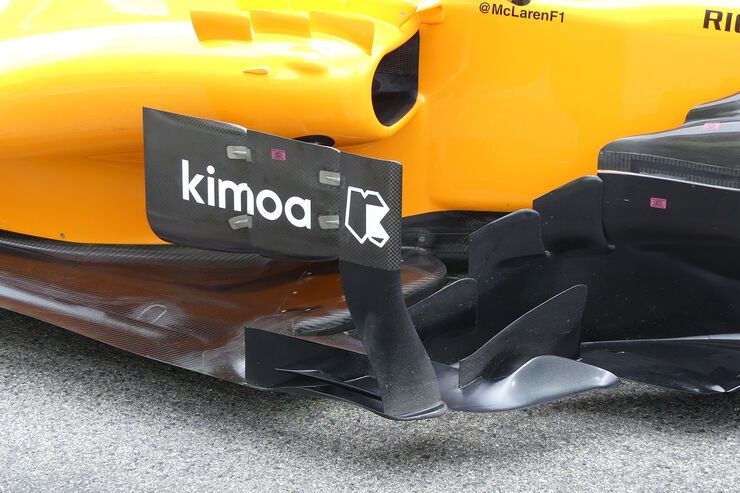
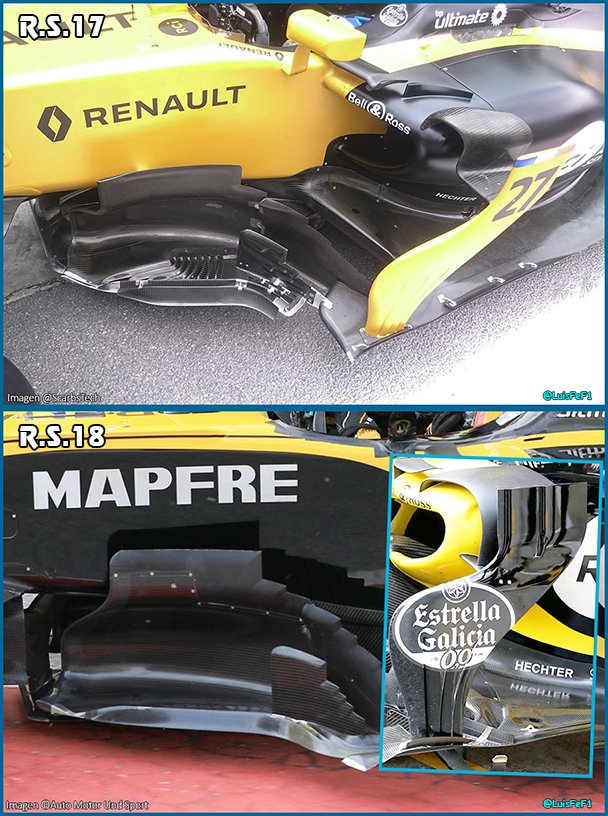
What are the slots in the horizontal lower portion of the barge boards doing? It seems this is a development that all cars are taking. Are those slots cleaning up the disturbed flow behind the wheels, or creating a stronger vortex along the barge boards?
Re: 2018 aero developments
Posted: 20 Mar 2018, 14:46
by godlameroso
I would think part of what they do is channel more air to the floor. If you look at the slots and leading edge of the floor they are shaped to catch air, in the style of a ground effect craft. Which is really just a diffuser that travels backwards.

Re: 2018 aero developments
Posted: 20 Mar 2018, 16:03
by jjn9128
roon wrote: ↑23 Feb 2018, 01:49
It seems like RB has taken this the farthest (of the cars seen thus far). They have the longest horizontal wing elements in this region of the car. Two of them, stacked upon the de facto third: the floor corner. The top mid-wing is especially long. If airflow is trending downward through that region, it is quite a big negative lift device.
It's a common misconception that lift is bad on an F1 car. Lift in the right place can actually produce more downforce, and the mid-chassis is a region the designers want to create lift. Starting at the cape/batwing/whatever under the nose to the bargeboards and the side pod leading edge flaps (SPLEF). Creating downwash, with an outwash, in this area is useful to push the front wing, suspension and wheel wakes away from sensitive parts of the car. It also will draw cleaner airflow from the top of the chassis down into the cooling inlets and around the sides of the car. It's another misconception that the high noses (2012 not 1991) were to get more air under the floor, instead it was to get more air under the chassis to work the outwash devices.
godlameroso wrote: ↑20 Mar 2018, 14:46
I would think part of what they do is channel more air to the floor. If you look at the slots and leading edge of the floor they are shaped to catch air, in the style of a ground effect craft. Which is really just a diffuser that travels backwards.
I think you're seeing patterns/similarities where they don't exist. In that ground effect craft what you have are two buoyancy pontoons on the ends of the 'wings', for landing on water. The wing doesn't work like a diffuser, instead the main 'ground effect' is ram pressure rather than the venturi effect. I assume you're comparing that to the hammer head (the small wing shaped element at the end of the bargeboard) if you look at the direction of flow it's fairly simple to see that's pushing air away from the floor, curling it upwards, along with the scroll at the side of the floor, away from the underbody. It's better to consider the bargeboard as a turning vane, changing the direction of the flow. The complex cutouts in the footplate of the bargeboard will create vortices which travel under the floor, it's going to help flow remain attached in the diffuser. This is one of the best images I've ever found for describing the flow from the bargeboards under the floor. It's a little old now but the same principals will be adapted for the current regulations.

Re: 2018 aero developments
Posted: 20 Mar 2018, 18:23
by godlameroso
The floor of the barge boards with all the slots send air downward, and the leading edge of the floor is raised, if that craft flew backwards it would get sucked to the ground. Build one yourself with cardboard and glue and see for yourself.
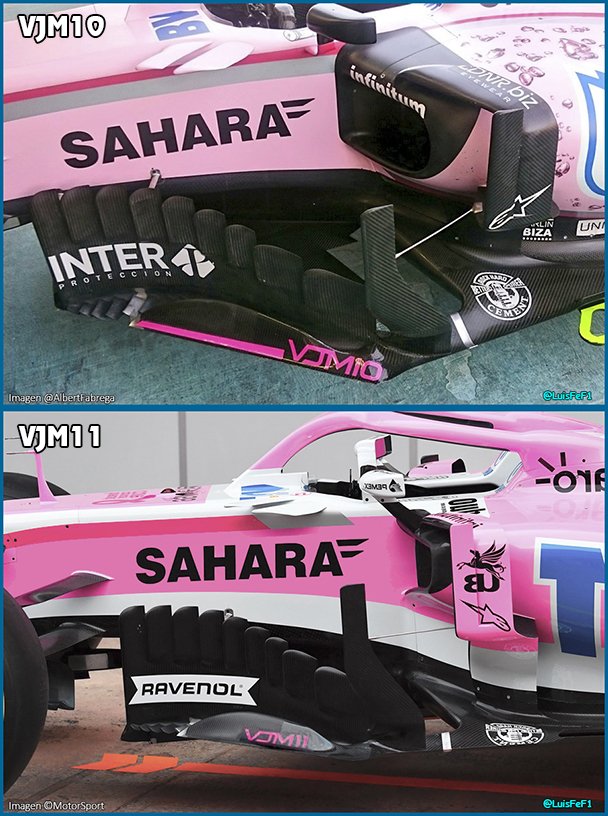
Look leading edge of the floor on the FI is also raised, I bet they all are, and that raised area on the side of the floor behind the side pod endplates is probably a diffuser. By lowering the pressure in the leading edge of the floor airflow will favor entering via the floor thus providing more energy for the main diffuser at the rear.
Re: 2018 aero developments
Posted: 20 Mar 2018, 18:42
by godlameroso

In this iconic image you see the little slots on the floor of the bargeboard aim air downward as well.
Re: 2018 aero developments
Posted: 20 Mar 2018, 18:47
by godlameroso
Re: 2018 aero developments
Posted: 21 Mar 2018, 20:11
by roon
jjn9128 wrote: ↑20 Mar 2018, 16:03
roon wrote: ↑23 Feb 2018, 01:49
...negative lift device.
It's a common misconception that lift is bad on an F1 car.
Negative in the sense of opposites, not of desirability. Downforce.
Re: 2018 aero developments
Posted: 21 Mar 2018, 20:46
by Vanja #66
godlameroso wrote: ↑20 Mar 2018, 18:47
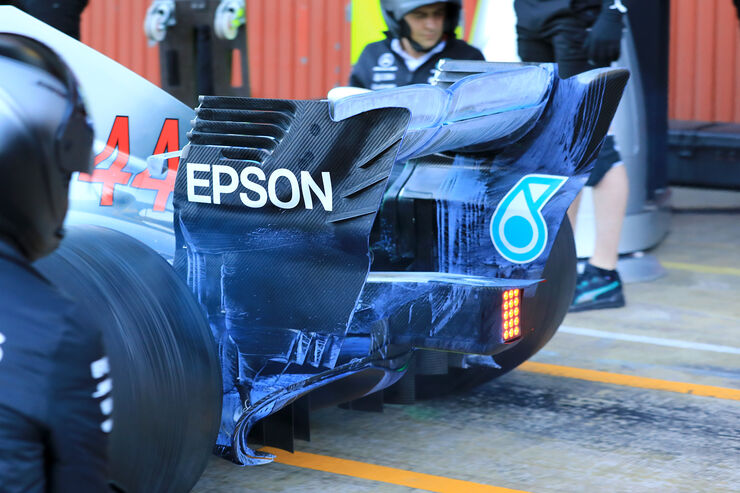
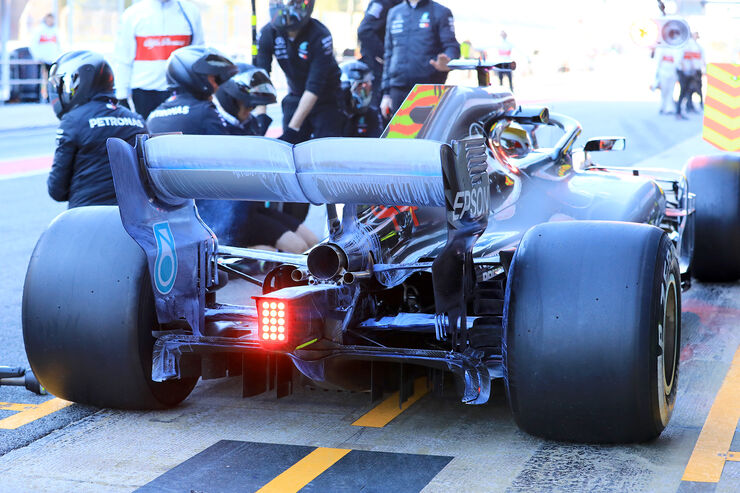
Another thing I've noticed is that Mercedes has adopted the outwash tunnel on their front wing onto their rear diffuser.
I believe this design direction was taken already in 2017, by Mercedes and other teams. It's about generating more suction and introducing higher energy air from above diffuser to draw out the air from diffuser. Due to diffuser box being so much bigger from last year, teams find it more effective to use this direction than the usual, because this makes the expansion inside the diffuser more effective.

We all know that rear wing works very well with diffuser, the same goes here - only in vertical direction other than horizontal.

It doesn't really have much to do with feathers on wingtips of birds.
Re: 2018 aero developments
Posted: 21 Mar 2018, 21:09
by jjn9128
roon wrote: ↑21 Mar 2018, 20:11
jjn9128 wrote: ↑20 Mar 2018, 16:03
roon wrote: ↑23 Feb 2018, 01:49
...negative lift device.
It's a common misconception that lift is bad on an F1 car.
Negative in the sense of opposites, not of desirability. Downforce.
Gosh how did I misread that. Sorry.
Re: 2018 aero developments
Posted: 09 Apr 2018, 05:28
by godlameroso

Remember these horns?
If the part near the BMW logo was raised and tapered down it'd look an awful lot like today's bargeboards.
Re: 2018 aero developments
Posted: 19 May 2018, 21:56
by godlameroso
Re: 2018 aero developments
Posted: 24 May 2018, 18:57
by godlameroso

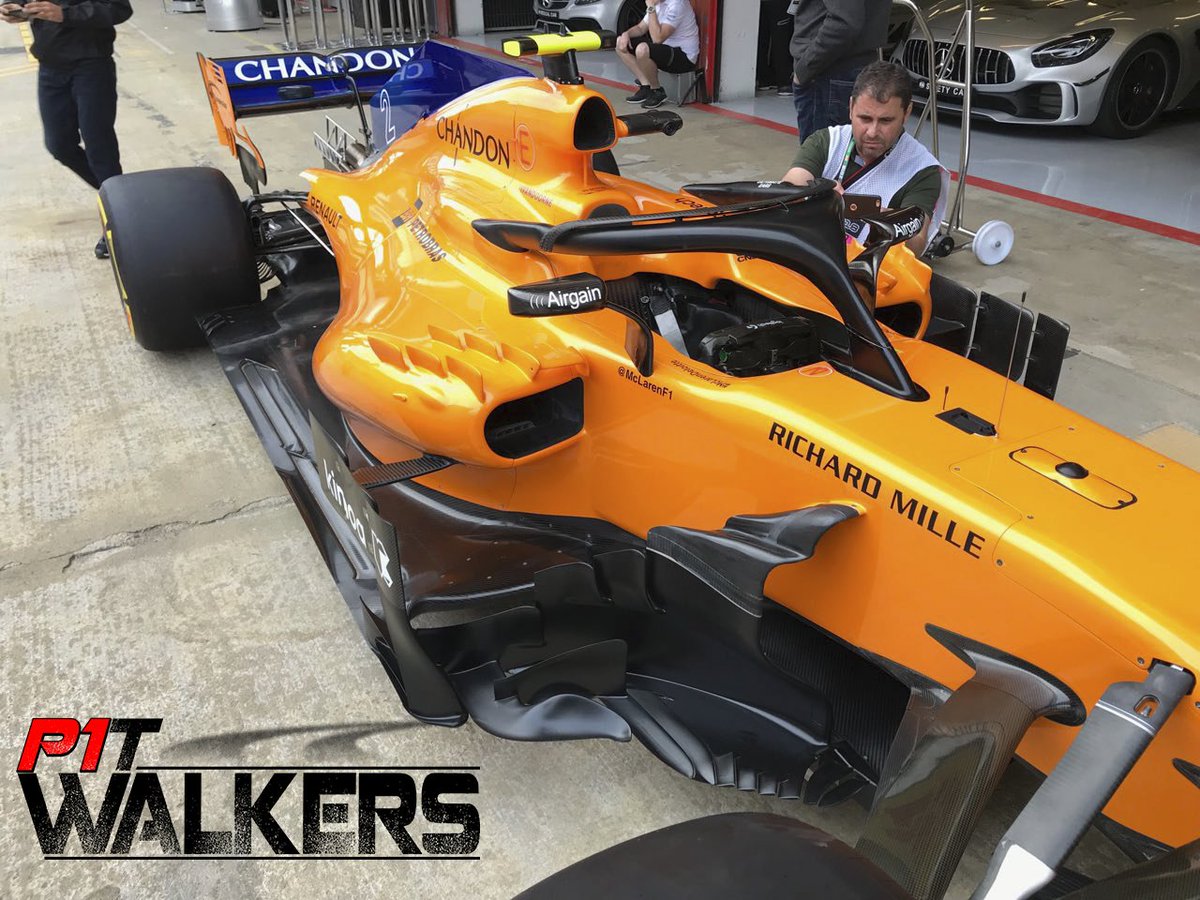
Remove the area circle/ in red, try to remake that area to resemble the part circled in yellow(ie a wing), minus the end plate, so that airflow can follow the contour of the bargeboard. .3 second gain?
It seems to work for these guys.
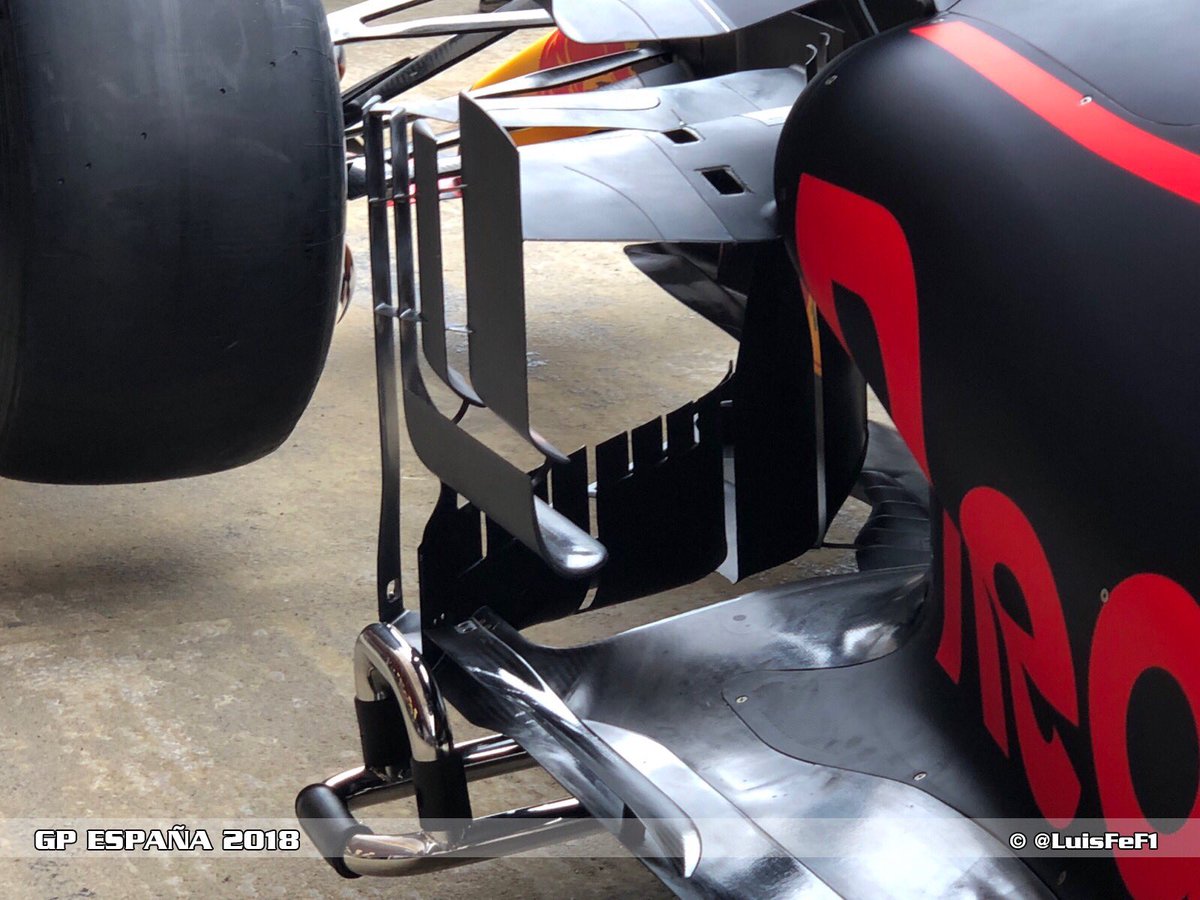
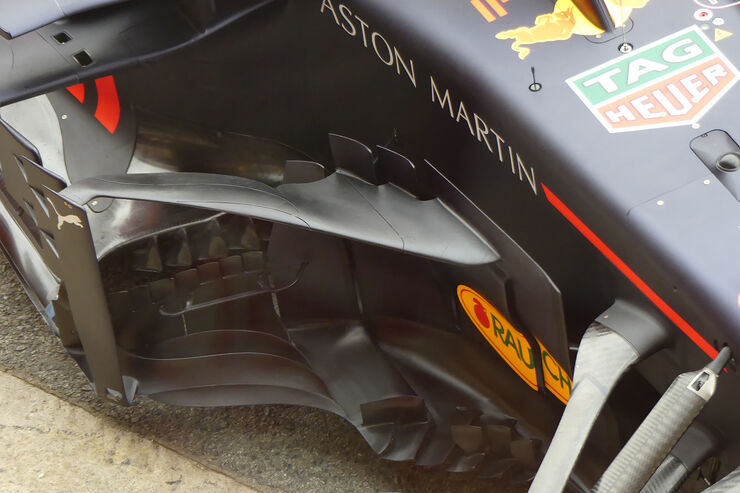
The teams that have that vertical plate like the McLaren are all slow and draggy cars. The McLaren, the Renault, Williams, all have that vertical plate, all the teams that streamlined that area, and tried to turn it into as much wing as possible are the fastest cars on the grid.
Sure it's a compromise, you could send more air to the back of the car using the McLaren way, but it adds drag, and what the other teams are doing ultimately brings a net gain in downforce. The small vertical vortex generators channel airflow in that region, which works much better than a vertical plate as it avoids any transient flow stagnation.