TECH REVIEW: How did Red Bull and Mercedes improve their cars for the Singapore Grand Prix?

Although the F1 season is nearing its conclusion, Mercedes and Red Bull are still pushing with the development of their cars, while the majority of the rival teams have long abandoned their work on their current machines.
What makes the Marina Bay Circuit a unique track?Marina Bay is one of the twistiest circuits on the calendar, its 4.940 kilometres featuring 19 corners since modifications made in 2023 reduced the number from 23. This was done by putting a 400 metre-long straight into the section after turn 16.
The track surface has the same characteristics as the neighbouring city streets, with very low roughness, while the many road markings can pose an additional hazard in the rain. There is not much in the way of run-off areas and the barriers are very close, even though, in parts the track is actually quite wide.
There are four DRS zones, but overtaking is still generally a rarity. The increase in the pit lane speed limit from 60 to 80 km/h should have a significant effect on strategy, with a one-stop almost obligatory.
Two teams with upgradesWith only six more races left in 2025 and the incoming technical overhaul for the coming season, it is not surprising that only two teams brought upgrades for last weekend's Singapore Grand Prix.
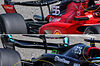
Red Bull have developed a new front wing with increased camber on some wing sections to extract more load whilst maintaining flow stability.
"An evolution of the design, taking further research to increase the camber of some wing sections to extract more load whilst maintaining flow stability."
In addition, Red Bull also brought a reliability upgrade, equipping the RB21 with a larger top body exit on the engine cover for better cooling at Marina Bay.
"Enlarged exit from the overall top body, which is more efficient than opening louvres or creating larger louvres to raise the overall cooling capacity."
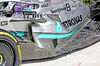
Elsewhere, Mercedes have also brought a reprofiled front wing to Singapore. The new design features reduced local load in the hope of achieving “an appropriate car balance for this circuit”.
"The reprofiled front wing drops the local load to allow an appropriate car balance to be achieved for this circuit," noted Mercedes.