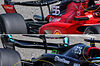
F1TECH: Haas introduced its biggest upgrade package of 2026 in Montreal

Haas arrived in Montréal with one of its largest upgrade packages of the season — a new floor, revised sidepod inlets, a reshaped engine cover, and several smaller refinements around the rear of the VF 26.
On paper, this was a significant aerodynamic step. In practice, however, the American team struggled for pace throughout the Canadian Grand Prix weekend, suggesting that the package has not yet delivered the intended performance.
1. Revised Sidepod Inlet — Performance / Flow ConditioningThis is a major aerodynamic concept shift. A deeper undercut and stronger downwash are designed to energise the airflow feeding the floor and diffuser which have become once again more important under the revised technical regulation.
But such changes require precise correlation between CFD, wind tunnel, and track behaviour. If the real world flow structures differ even slightly, the floor can lose stability, causing inconsistent rear grip — exactly the symptoms Haas drivers reported.
“The revised bodywork enables a more pronounced undercut along the lower surfaces, which, combined with increased top surface downwash, channels higher energy airflow towards the rear of the car, allowing the bespoke floor design to operate more efficiently,” Haas explained.
2. Coke / Engine Cover — Performance / Flow ConditioningThis complements the sidepod changes. The engine cover’s geometry helps guide airflow toward the beam wing and diffuser roof. If the new flow field does not match the floor’s sensitivity, the car can become unpredictable in slow corners.
3. New Floor Body — Performance / Local LoadThis change was the core of the upgrade. A new floor is still a powerful development tool in the post ground-effect era. However, it is also the most sensitive. If the upstream flow (from the sidepods and engine cover) is not perfectly aligned, the diffuser can stall or produce inconsistent load. Haas’ lack of pace suggests the new floor is not yet operating in its intended aerodynamic window.
“Revised floor geometry, with new floor board, new floor edge splits and a more aggressive diffuser promoting up and side wash. The new floor was developed in conjunction with the updated bodywork, enhancing mass flow and stability, and promoting more efficient extraction and overall load generation.”
4. Rear Suspension Fairings — Performance / Flow ConditioningThis is a necessary downstream adjustment. But if the upstream flow is unstable, these refinements cannot compensate. The rear of the VF 26 appeared nervous in Montréal, indicating that the flow conditioning is not yet optimised.
“The updated floor and bodywork required a realignment of the suspension fairings, enabling improved flow conditioning in this region and extracting additional performance from the overall package.”
5. Rear Corner Winglets — Performance / Local LoadThese are small but important devices that help stabilise the diffuser’s wake. If the incoming flow is inconsistent, these winglets lose authority — contributing to the traction and stability issues Haas experienced in Montreal.
“The modified incoming flow field required a realignment of the inboard drum devices to maintain their aerodynamic effectiveness and ensure consistent performance within the updated overall flow conditions.”