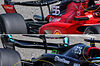
F1TECH: Red Bull reverts to previous rear wing as team introduces revised pylon design for Belgian Grand Prix

Red Bull has abandoned its experimental rear wing specification for this weekend's Belgian Grand Prix, reverting to a previous design after the controversial concept was linked to two high-profile incidents involving Max Verstappen earlier this season.
The team has also introduced a subtle aerodynamic update to the rear wing's supporting pylons, aiming to increase aerodynamic load while maintaining airflow stability.
Return to proven rear wingFor the Spa-Francorchamps weekend, Red Bull has elected to shelve its Ferrari-inspired "Macarena" rear wing, returning instead to its earlier specification.
The decision follows a pair of failures involving the experimental design. Verstappen suffered a dramatic rear wing malfunction during qualifying for the Austrian Grand Prix before experiencing another failure during the British Grand Prix, incidents that prompted the team to reassess the concept.
While the innovative rear wing remains part of Red Bull's development programme, the team has opted for the proven specification until it can fully understand the cause of the failures and ensure the design can operate safely under race conditions.
The lower-downforce demands of Spa make rear wing efficiency particularly important, but reliability has understandably taken priority after the recent setbacks.
Revised pylon profilesAlthough Red Bull has returned to its previous rear wing assembly, it has not arrived in Belgium without new aerodynamic developments.
The Milton Keynes-based outfit has revised the profiles of the rear wing pylons, which connect the wing assembly to the car. Under the current regulations, the pylons now make contact with the underside of the rear wing mainplane, making the interface an increasingly important aerodynamic area.
According to Red Bull's technical submission, the changes are intended to increase aerodynamic load while preserving stable airflow.
"Given the pylons now by regulation contact the mainplane underside, the interface is sensitive and revised with pylon changes to existing element profiles seeking to extract more load and at least maintain flow stability."
By refining the pylon geometry, Red Bull hopes to improve the aerodynamic efficiency of the rear wing without compromising consistency across varying ride heights and operating conditions.