
- Login or Register
No account yet? Sign up
In hungry they're gonna be around the weight limit.avada wrote: ↑04 Jul 2026, 15:53Talk of Honda is carefully avoided.abhi1200 wrote: ↑30 Jun 2026, 11:01Undercut: Adrain Newey interview and upcoming upgrade and work on 27 car.
https://www.astonmartinf1.com/en-GB/new ... ee-you-now
"On the chassis side, we're quite a long way overweight. Some of that comes from the PU integration issues with Honda, "
Gone because they added something to manage vibrations, with a weight penalty. It sounds like a workaround, not a fix.
"The main structural elements remain the same – the chassis and gearbox architecture don't fundamentally change – but we've taken weight out of both, which required re-homologating and crash testing the forward chassis.
"The front suspension is unchanged. The rear suspension is slightly revised. We've developed a new nose and substantially revised aerodynamic surfaces. So, while the core structure is similar, it's a big aerodynamic package coupled with significant weight reduction. The target is to get very close to the weight limit."
Again? In Spain, Stroll ended Alonso's streak of 42 consecutive Grands Prix outqualifying him. Before that, the previous time Stroll outqualified Alonso was at Silverstone in 2024. Silverstone seems to be one of Stroll's strongest tracks.
](./images/smilies/eusa_wall.gif "Brick wall")
So if I follow right you call this casing the rear monocoque?Farnborough wrote: ↑02 Jul 2026, 07:28What was historically called the gearbox in this type of car, literally a casing in conventional sense to make the "gearbox" in truest sense, with suspension pickup points plus other structural mounts for wing etc, has evolved into a separate structure now and with the gearset/transmission inserted in a wholly contaned "cassete" mounted inside the structure we can see at rear of car.diffuser wrote: ↑02 Jul 2026, 03:21Nope, I haven't.zoroastar wrote: ↑01 Jul 2026, 08:15
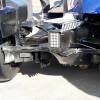
havent you noticed the rear wishbone wrapped in foam and duct tape since miami?
honestly, the crash structure has to be a solid mounting area. if the other end is mounted to the hub (or whatever its called) i dont see that there would be any difference in vibrations. id think the gearbox casing would be subject to more vibration than a solid part of the chassis thats made to withstand impacts.
be glad when hungary gets here though.
The gearbox casing is a structural part of the chassis, but it isn't the gearbox itself. The gearbox is housed inside the casing. Over the years, teams have packaged other components inside the gearbox casing alongside the gearbox. I'm not sure exactly how the gearbox internals are supported within the casing.
For years, teams have mounted the rear suspension directly to the gearbox casing because it's a structural member. In any case, the tub is on the opposite side of the ICE. It's located almost directly behind the driver's head, only a couple of centimeters farther rearward.
The rear structure now effectively a smaller version of main chassis tub and, rigidly mounted to rear of PU to facilitate any load path of suspension aero etc at the rear.
Mounting of rear upper suspension wishbone/links to the wing pylon is simply an extension of the monocoque casing up into that elevated position (likely for suspension geometry/aero combined effect) and much the same as a lower mounting point on other design.
The whole car consists of front monocoque, attached to PU (with PU as fully stressed structural component) then rear monocoque attached to the PU to facilitate ALL rear load geometry and chassis duty.
Maybe they have an abundance of great engineers, but are lacking a decent manager.diffuser wrote: ↑02 Jul 2026, 16:38In his interview on F1technical, Newey said that Mike Krack is excellent at representing the team. Which I read as, him saying that he's not in any rush to find a replacement. He also noted—I'm paraphrasing—that while the FIA requires every team to have someone designated as "team principal," the role itself isn't formally defined. Regardless of how you interpret the title, the buck stops with me. So AMR F1 are looking for a face that wouldn't have any power. So why in the world would you go spend all that money on Horner just to tie his hands and why would Horner accept such a job?
Wheatley has worked with Newey for more than 2 decades. It sounds to me as they know each other well and know what each otherare looking for.
But how can they do that with the same engine? Taking so much weight out of the chassis that it compensates for the weight penalty caused by the integration issues?diffuser wrote: ↑04 Jul 2026, 17:25In hungry they're gonna be around the weight limit.avada wrote: ↑04 Jul 2026, 15:53Talk of Honda is carefully avoided.abhi1200 wrote: ↑30 Jun 2026, 11:01Undercut: Adrain Newey interview and upcoming upgrade and work on 27 car.
https://www.astonmartinf1.com/en-GB/new ... ee-you-now
"On the chassis side, we're quite a long way overweight. Some of that comes from the PU integration issues with Honda, "
Gone because they added something to manage vibrations, with a weight penalty. It sounds like a workaround, not a fix.
Does he mean ADUO instead of PUAC? The latter doesn't make sense to me.
Yes, exactly this.avada wrote: ↑04 Jul 2026, 18:28So if I follow right you call this casing the rear monocoque?Farnborough wrote: ↑02 Jul 2026, 07:28What was historically called the gearbox in this type of car, literally a casing in conventional sense to make the "gearbox" in truest sense, with suspension pickup points plus other structural mounts for wing etc, has evolved into a separate structure now and with the gearset/transmission inserted in a wholly contaned "cassete" mounted inside the structure we can see at rear of car.diffuser wrote: ↑02 Jul 2026, 03:21
Nope, I haven't.
The gearbox casing is a structural part of the chassis, but it isn't the gearbox itself. The gearbox is housed inside the casing. Over the years, teams have packaged other components inside the gearbox casing alongside the gearbox. I'm not sure exactly how the gearbox internals are supported within the casing.
For years, teams have mounted the rear suspension directly to the gearbox casing because it's a structural member. In any case, the tub is on the opposite side of the ICE. It's located almost directly behind the driver's head, only a couple of centimeters farther rearward.
The rear structure now effectively a smaller version of main chassis tub and, rigidly mounted to rear of PU to facilitate any load path of suspension aero etc at the rear.
Mounting of rear upper suspension wishbone/links to the wing pylon is simply an extension of the monocoque casing up into that elevated position (likely for suspension geometry/aero combined effect) and much the same as a lower mounting point on other design.
The whole car consists of front monocoque, attached to PU (with PU as fully stressed structural component) then rear monocoque attached to the PU to facilitate ALL rear load geometry and chassis duty.
What is it made of also CF composite?

He has no clue. Why listen to him?