F1TECH: Things to know about Red Bull's comprehensive upgrade package for Suzuka

Red Bull arrived at Suzuka with a tightly focused upgrade package aimed at stabilising the RB22’s aerodynamic platform and improving cooling efficiency at one of the most demanding circuits on the calendar.
After a difficult start to the 2026 season — marked by inconsistent balance, narrow operating windows and a lack of race‑stint competitiveness — the team has opted for a set of interconnected revisions designed to improve flow conditioning around the car and address the specific thermal challenges of the Japanese Grand Prix.
New sidepod inlet and engine cover
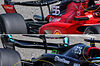
The most visible change is the reworked sidepod inlet. Red Bull’s revised geometry is shaped to ingest higher‑pressure air from upstream, improving the quality and stability of the flow entering the cooling system and feeding the aerodynamic surfaces downstream.
The team’s simulations and early‑season data suggested that the previous inlet design was not delivering the efficiency required, particularly in medium‑speed sections where the RB22 struggled with airflow separation. The new profile aims to correct that, giving the car a cleaner, more predictable aerodynamic baseline.
This change naturally cascaded into a redesign of the coke/engine cover area. Because the sidepod inlet dictates how the bodywork tapers toward the rear, Red Bull adapted the surfaces to match the new geometry.
The goal is twofold: to maintain cooling performance while also improving the aerodynamic quality of the flow as it travels toward the beam wing and diffuser.
Updated floor
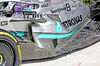
The floor has also been updated, again as a consequence of the sidepod changes. The upper surface has been reshaped to integrate with the new bodywork, extending forward toward the chassis to take advantage of the improved airflow.
Red Bull’s engineers believe the revised geometry will allow the floor to generate more consistent load, particularly in the high‑speed sequences that define Suzuka’s first sector.
Revised rear cornerFinally, the team introduced a rear‑corner cooling update, a circuit‑specific tweak aimed at managing brake temperatures. Red Bull have revised the inlet and exit geometries of the rear wheel bodywork to better suit the brake material requirements for this event.
While not a performance upgrade in the traditional sense, maintaining optimal brake temperatures is essential for consistency over long runs, an area where Red Bull have been uncharacteristically vulnerable this season.