VERSTAPPEN’S PASS ON HAMILTON: WHAT THE TELEMETRY SHOWS AND HOW THE BATTERY DEFICIT DEVELOPED
Max Verstappen’s pass on Lewis Hamilton into Turn 1 at the beginning of lap 16 of the Hungarian Grand Prix initially looked like a straightforward combination of greater straight-line speed and later braking. However, the onboard footage, Sky Sports F1 analysis and publicly available telemetry suggest a more complex explanation involving energy management and Hamilton’s driving sequence on the preceding laps.
1. The initial theory: Hamilton used boost to clear a backmarker
On lap 14, his first lap on the Hard tyres after leaving the pits, Hamilton had to overtake Arvid Lindblad. During the live commentary, David Croft suggested that Lewis might have used “a little press of the boost” — a brief override of the automatic deployment strategy — to complete the pass quickly and reach cleaner air.
Crofty did not present this as a confirmed fact; he explicitly said “maybe”. Nevertheless, the theory was plausible because additional electrical deployment would have consumed part of the available battery energy.
2. Anthony Davidson’s correction: it was not the boost button
Anthony Davidson’s subsequent analysis substantially changes that interpretation. According to Davidson, one of the first thoughts — including from Race Control — was that Hamilton had pressed the boost button. A closer examination of his steering-wheel inputs showed that Lewis had actually operated the Straight Mode control and pressed it again before braking for Turn 12, allowing the active aerodynamic elements to return to their cornering configuration.
In other words, the steering-wheel input was not an activation of boost but an early deactivation of Straight Mode. Davidson also explained that Hamilton was not suffering from the suspected battery deficit at that particular point in the lap.
The problem apparently developed afterwards. The pass on the backmarker unfolded somewhat unexpectedly, Hamilton took a different line through Turn 14 and remained off the throttle for longer than usual. According to Davidson, this allowed the turbo to de-spool. When Hamilton returned to the throttle, bringing the power unit back into its operating range placed an additional demand on the battery. As a result, he no longer had the amount of electrical power normally available and became vulnerable to Verstappen.
Crofty and Davidson therefore do not provide two equally supported explanations. Crofty offered a live hypothesis; Davidson subsequently corrected it using the onboard footage and Hamilton’s steering-wheel inputs.
3. What Hamilton’s laps 14 and 15 show
The telemetry comparison clearly identifies the two laps:
– Hamilton lap 14: 1:43.085, red — an out-lap affected by the pit exit and traffic;
– Hamilton lap 15: 1:24.937, white — a representative racing lap.
[IMAGE 1 – Full telemetry comparison between Hamilton’s lap 14 (red) and lap 15 (white)]
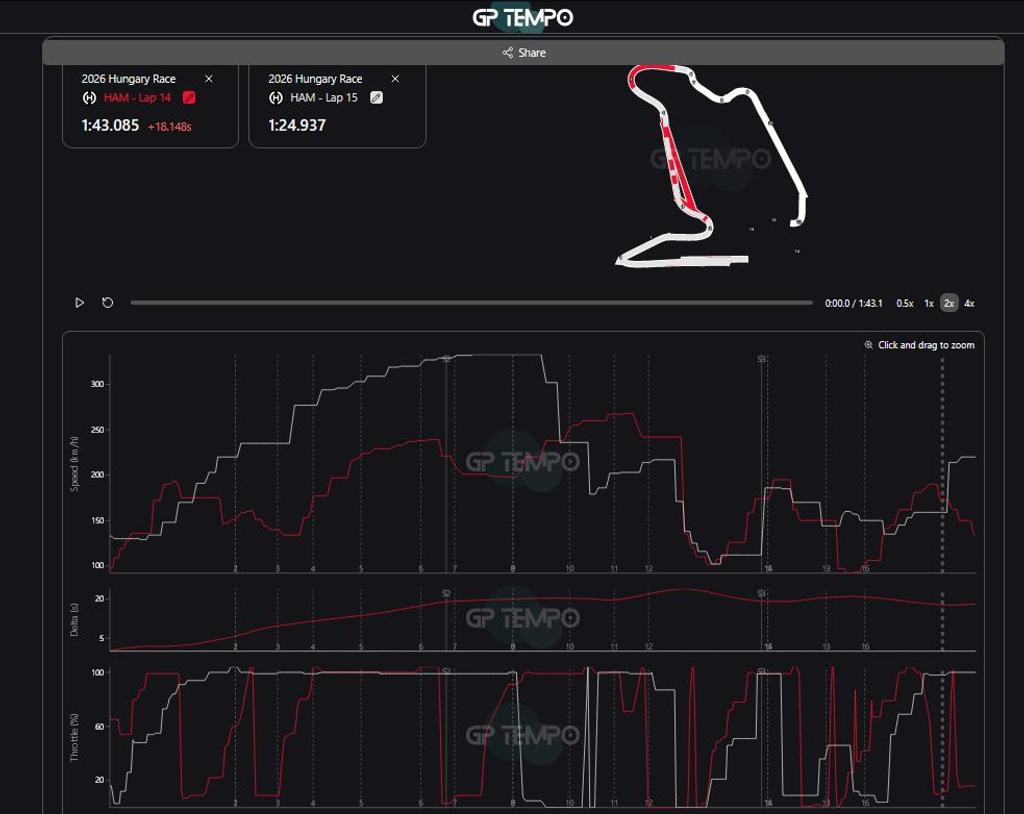
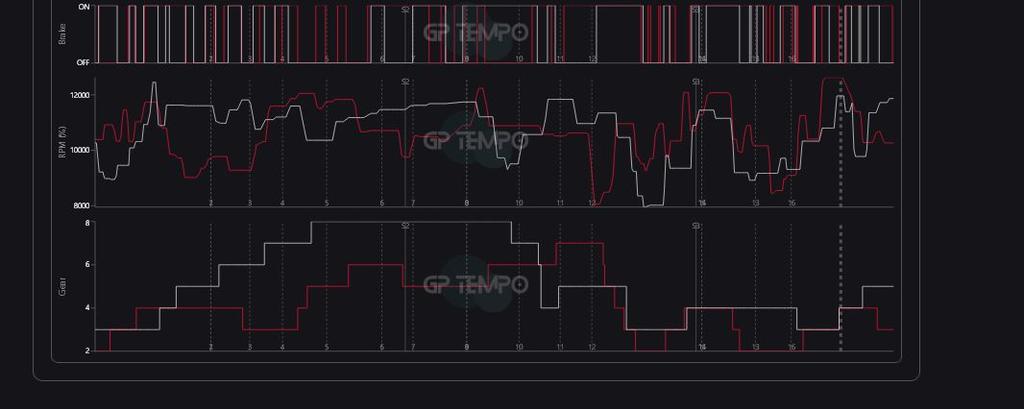
Lap 14 cannot be compared point by point with lap 15 because it is an out-lap and the public telemetry alignment is imperfect. Nevertheless, the throttle trace in the final part of lap 14 shows significant variation, a longer period off throttle and a progressive return to power. This is consistent with Davidson’s description of an unusual line, turbo de-spooling and additional battery demand when Hamilton accelerated again.
[IMAGE 2 – Detailed view of the final part of Hamilton’s laps 14 and 15]
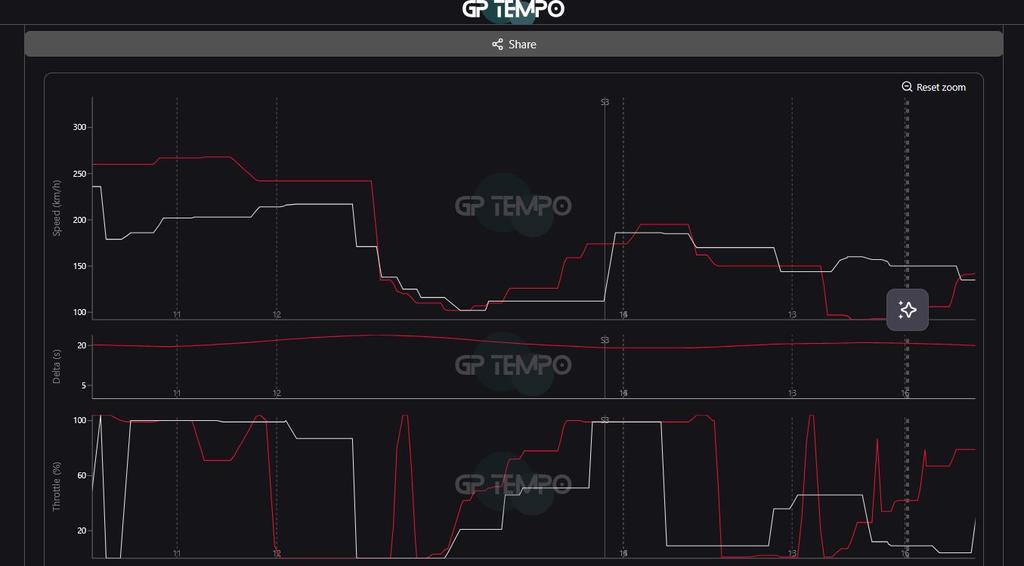
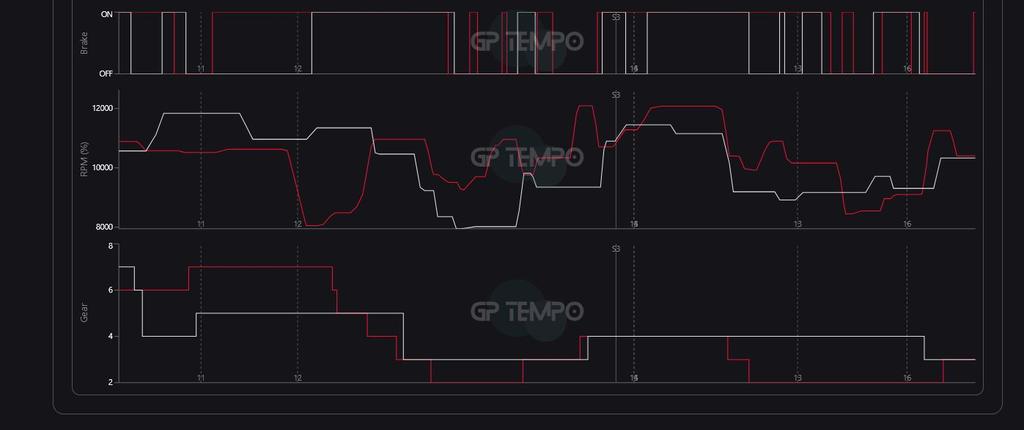
However, the public data does not include battery state of charge, MGU-K deployment or harvesting power, or the selected ERS map. It supports Davidson’s description of Hamilton’s driving profile but cannot directly display the corresponding energy flow.
4. Verstappen’s advantage on the overtaking lap
The direct comparison on lap 16 provides the most important evidence:
– Hamilton: 1:26.092, red;
– Verstappen: 1:24.985, blue.
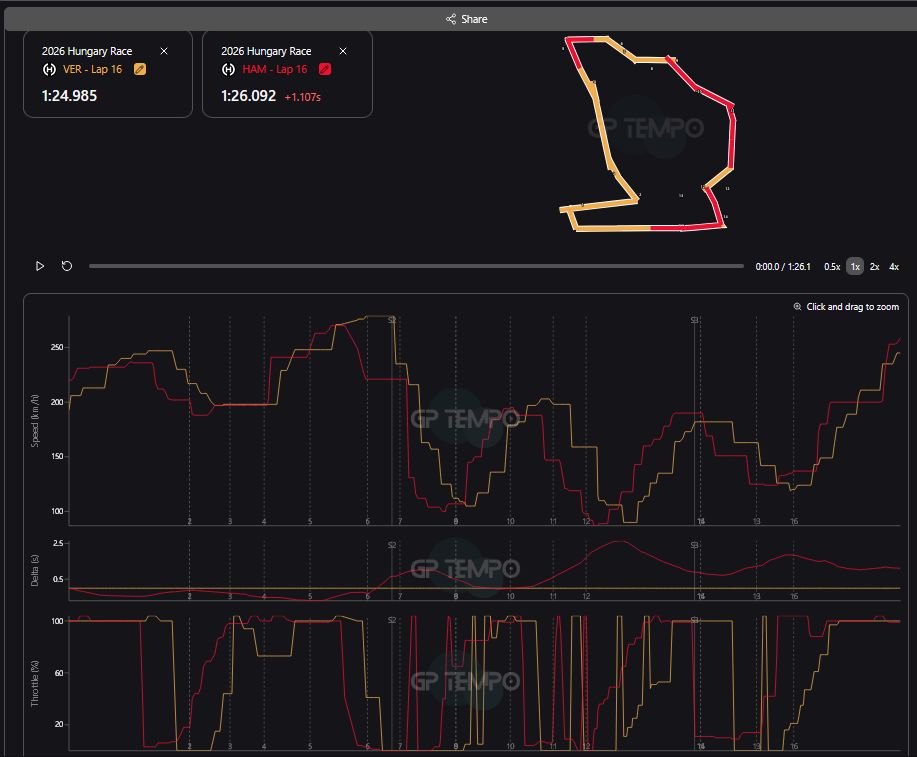
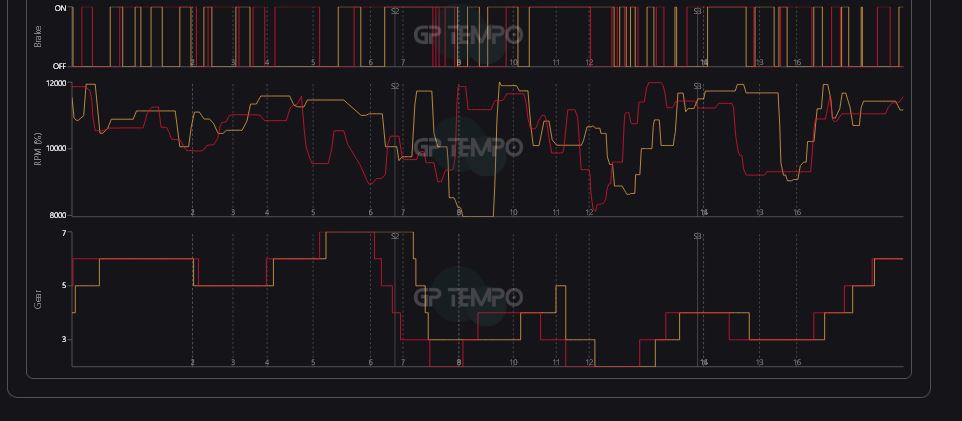
[IMAGE 3 – Full telemetry comparison between Hamilton and Verstappen on lap 16]
On the approach to Turn 1, Verstappen has an advantage of approximately 9–11 kph. He also remains at full throttle for significantly longer, whereas Hamilton lifts earlier. Max therefore possessed a meaningful longitudinal advantage before the final braking phase began.
[IMAGE 4 – Detailed view of the straight and the approach to Turn 1 on lap 16]
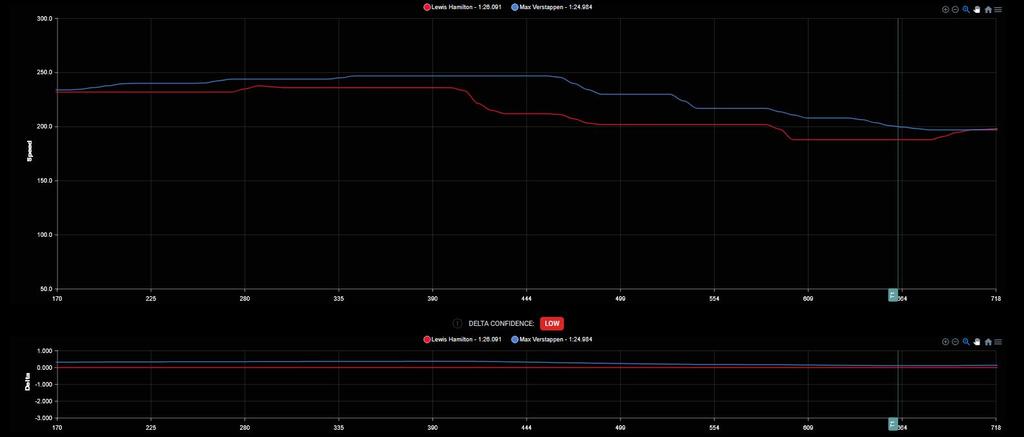
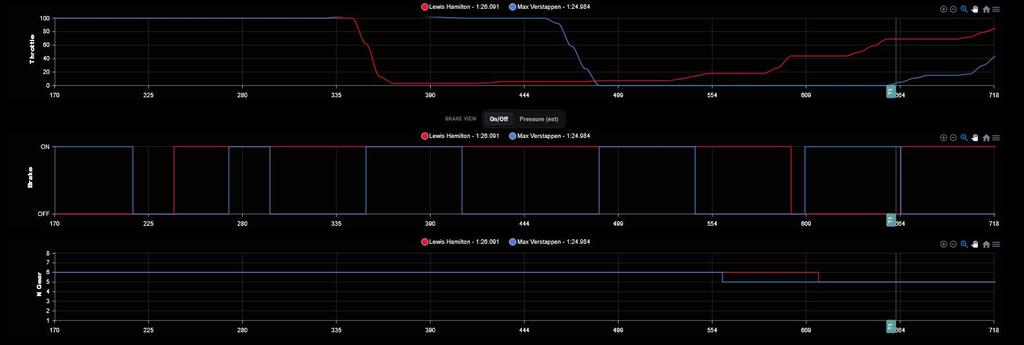
The pass was not produced solely by Verstappen’s bravery under braking. He arrived at the braking zone with an advantage already established on the straight, while Hamilton had less electrical power available and had therefore become vulnerable.
5. Did Verstappen use super-clipping?
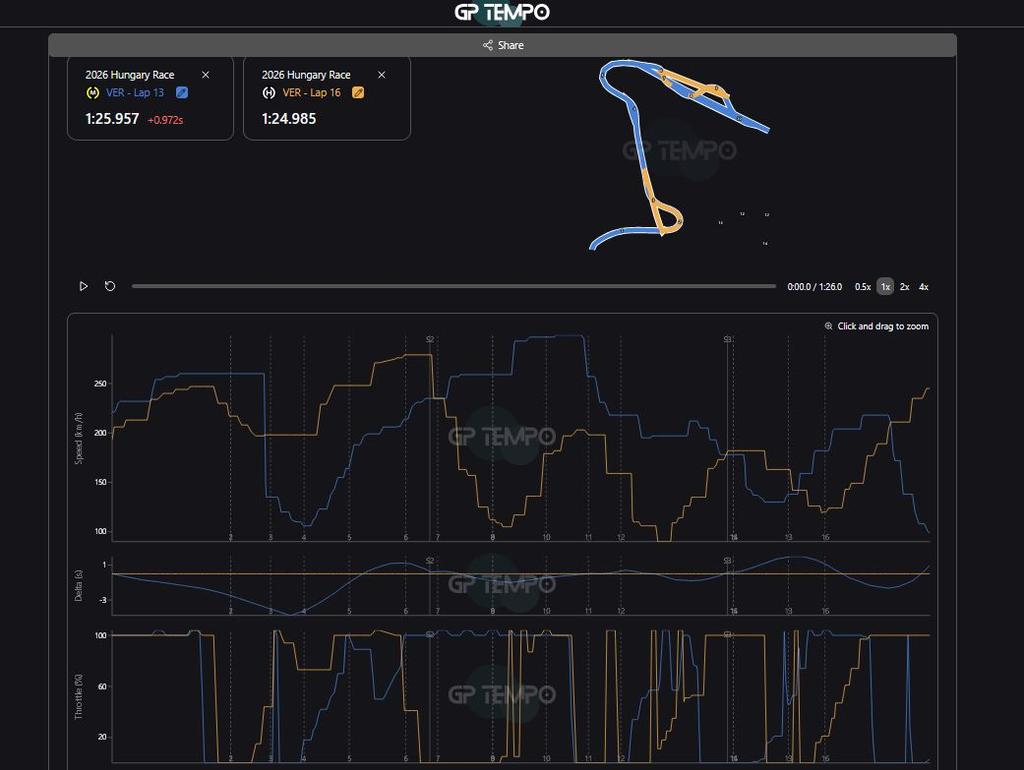
To investigate whether Max employed a different energy strategy, his laps 13 and 16 can be compared:
– lap 13: 1:25.957, blue;
– lap 16: 1:24.985, orange.
[IMAGE 5 – Full telemetry comparison between Verstappen’s laps 13 and 16]
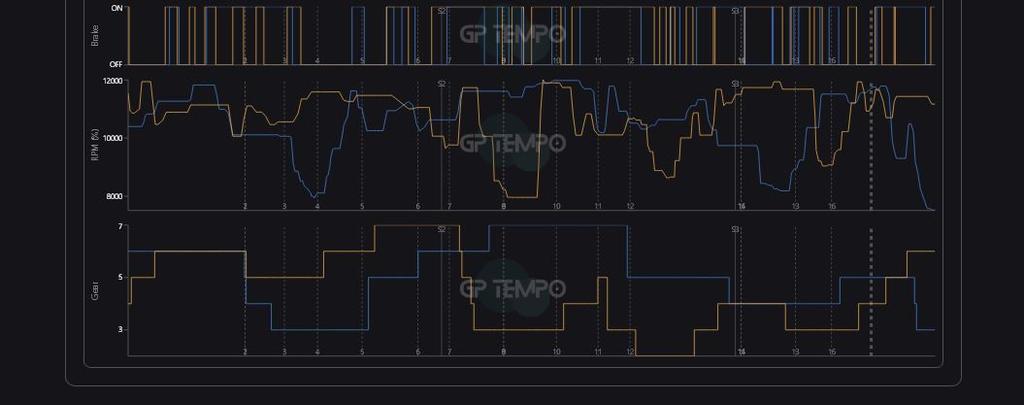
Super-clipping occurs when the MGU-K harvests energy while the driver remains at full throttle. Part of the power that would otherwise reach the rear wheels is converted into electrical energy. Consequently, the car’s speed may plateau or even fall despite a 100% throttle trace.
[IMAGE 6 – Detailed comparison of Verstappen’s speed, throttle, RPM and gear traces on the straight towards Turn 1]
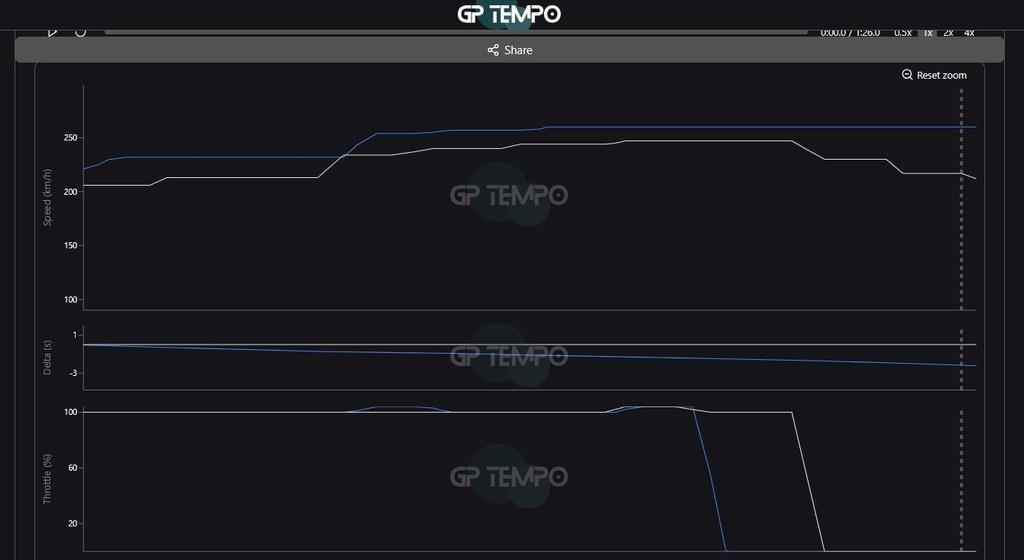
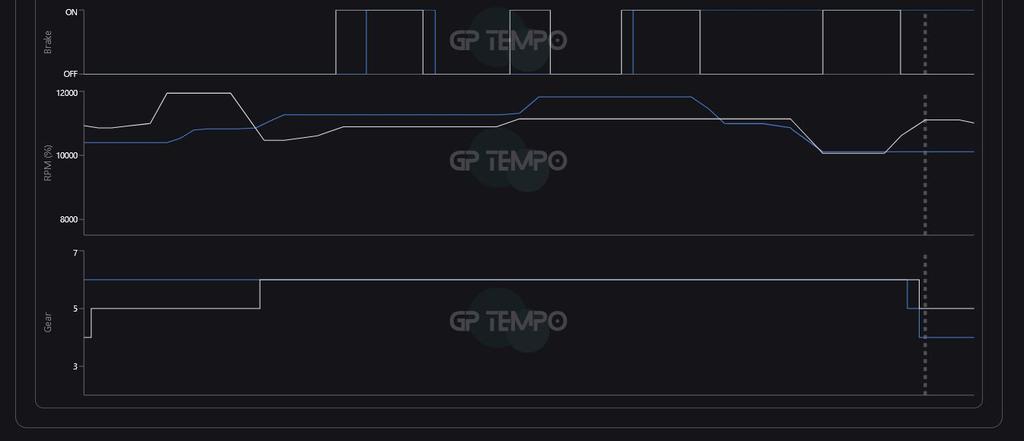
On lap 16, Verstappen reaches a lower speed on the straight than on lap 13 despite remaining at full throttle. This profile is consistent either with stronger super-clipping or with reduced electrical deployment. Public telemetry cannot reliably distinguish between those two possibilities.
Crucially, any super-clipping would not itself have created Max’s speed advantage over Hamilton. By definition, super-clipping sacrifices power at the wheels in order to harvest energy. The comparison instead suggests that Verstappen was running a different energy-management strategy and that, despite being slower than on his own lap 13, he still retained an advantage of approximately 9–11 kph over Lewis.
It is plausible that Verstappen’s available energy and deployment strategy were prepared during his lap-15 out-lap, but the public telemetry cannot demonstrate this directly.
6. Conclusion
The strongest reconstruction is therefore as follows:
– Hamilton’s supposed boost activation was, according to Davidson, an initial misidentification of the Straight Mode control;
– Lewis’s energy deficit developed later, following an unexpected pass, a different line through Turn 14 and a longer period off throttle;
– returning to power after the turbo had de-spooled placed an additional demand on the battery;
– at the beginning of lap 16, Hamilton did not have his usual electrical power available;
– Verstappen approached Turn 1 approximately 9–11km/h faster and remained at full throttle for longer;
– Max’s braking and execution completed a pass whose advantage had already been established on the straight.
The explanation is therefore more nuanced than either “Max simply braked later” or “Lewis consumed his boost while overtaking a backmarker”. The evidence points towards a combination of Hamilton’s temporary energy deficit, Verstappen’s different deployment/harvesting strategy and Max’s decisive execution in the braking zone.
One limitation must remain explicit: publicly available telemetry does not include battery state of charge or detailed ERS energy flows. It can reveal the consequences and establish whether expert explanations are consistent with the speed, throttle and RPM traces, but it cannot directly prove how much electrical energy was harvested or deployed.


](./images/smilies/eusa_wall.gif "Brick wall")