F1TECH: The upgrades Ferrari brought to Silverstone

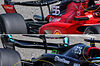
Ferrari has continued its steady development push into the heart of the 2026 Formula 1 season with another targeted aerodynamic and thermal efficiency upgrade, this time focused on the rear corner of the SF-26 ahead of the British Grand Prix at Silverstone.
Following a significant upgrade package introduced at the Barcelona-Catalunya Grand Prix and a revised front wing arriving in Austria, this latest change continues Ferrari’s trend of refining specific performance zones rather than relying on a single large-step update.
The new rear corner package is designed with two clear objectives: improving local cooling performance and increasing aerodynamic efficiency.
Rear corner focus: cooling meets aero efficiencyAt the centre of the update are revised brake cooling inlets and outlets. These have been increased and reshaped to improve airflow management through the rear braking system.
Better airflow through this region helps stabilise brake temperatures, although it is interesting that Ferrari brought the upgrade to a circuit where drivers usually hardly touch the brakes for most of the laps.
However, Ferrari’s development does not stop at thermal management. The revised geometry is also intended to reduce aerodynamic disruption caused by cooling airflow. By optimising how air enters and exits the brake duct area, engineers can minimise drag and keep the flow cleaner as it moves toward the rear of the car.
Lower deflector and winglet rework
Alongside the cooling changes, Ferrari has introduced a redesigned lower deflector in the rear corner. This component plays a crucial role in controlling airflow around the tyre wake — one of the most turbulent regions of a modern F1 car.
By reshaping the deflector and adjusting its interaction with the surrounding bodywork, Ferrari aims to improve local downforce generation while also managing how airflow is guided toward the diffuser. Even small gains here can translate into better stability in medium and high-speed corners, something particularly valuable at Silverstone’s flowing layout.
The update is completed by a re-optimised rearward winglet cluster. These small aerodynamic elements work collectively to condition airflow and enhance the efficiency of downstream aero surfaces. Ferrari’s revised arrangement suggests a focus on extracting more performance from existing flow structures rather than dramatically altering the overall concept.