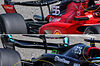
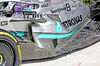
DOWNFORCE: Who is running what downforce level at the Autodromo Hermanos Rodriguez?


With the unique location of the Autodromo Hermanos Rodriquez, teams always have to find ways to regain downforce as a result of the thin air while also cutting drag due to the long main straight. F1Technical's senior writer Balazs Szabo reveals what rear wing configuration teams have elected to run this weekend.
Mexico City’s Autodromo Hermanos Rodriguez is one of the most unique tracks on the F1 schedule. The Mexican circuit belongs to the group of relatively short tracks with its length of 4.304 kilometres. It means that driver will need to complete a total of 71 laps to cover the entire race distance.
However, its main peculiarity is its altitude, which at over 2,200 metres above sea level means the air is very rarefied. Therefore the cars generate less downforce, making car set-up and technical management particularly demanding for the teams.
Mexico’s 2,285-meter altitude means that air density is 20.7% lower than at sea level. Lower air density, and therefore less oxygen, means that everything suffers - although, as ever, some cars suffer more than others.
As a result of this unique location, cars generate a lot less downforce, and cooling is also much less effective. Due to the less air density, the air has less cooling effect which means that both engine and brake cooling tend to be very marginal at Mexico.
The layout and the long start-finish straight would require a less loaded rear wing, but the air density makes the Autodromo Hermanos Rodriguez a maximum downforce setup track. However, the altitude means that cranking on Monaco-spec wing levels still gives top speeds higher than Monza.